Tag: Boucherouite

  • Boucherouite Rugs: Morocco’s Rag Rugs Explained

    Boucherouite Rugs: Morocco’s Rag Rugs Explained

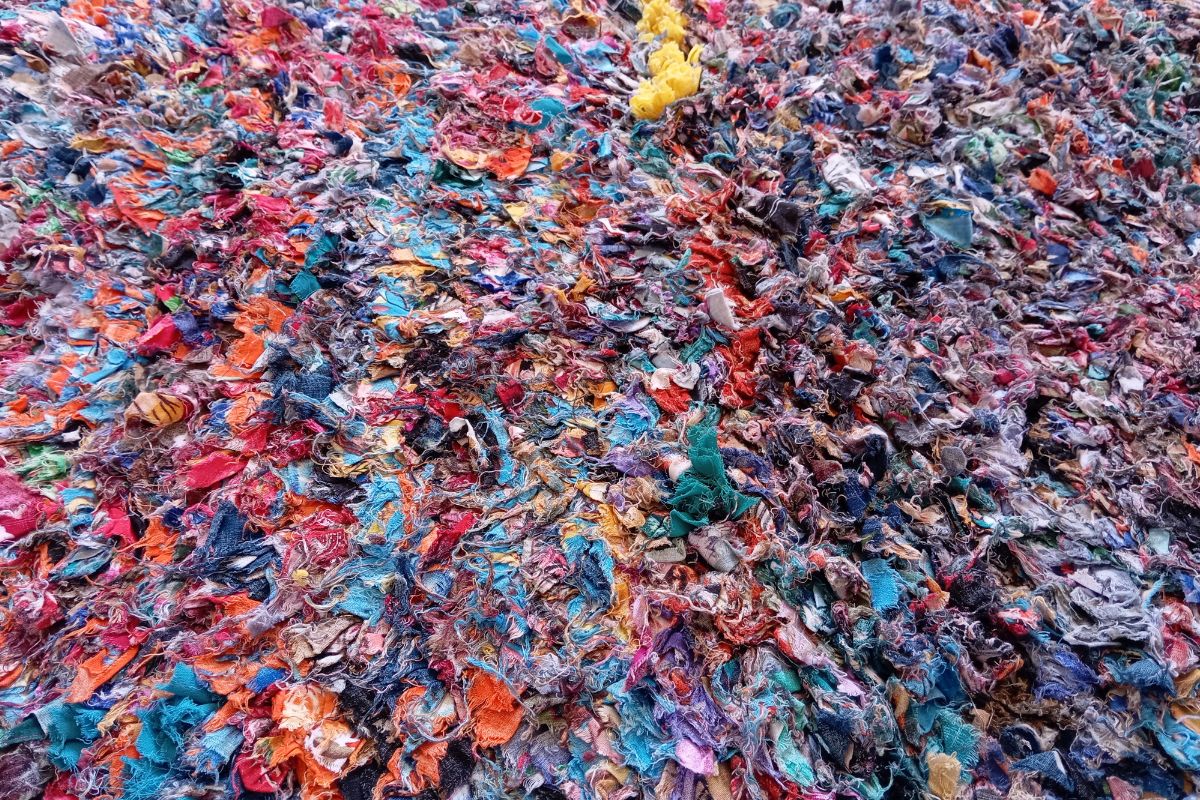
    A Boucherouite rug is a Moroccan rag rug woven from recycled fabric scraps, and it is bright, bold, and genuinely one of a kind. Instead of raw sheep's wool, weavers use torn strips of old clothing, leftover yarn, cotton, and synthetic remnants, knotting them into a dense, multicolored surface. The name comes from the Moroccan Arabic phrase often written as "bu sherwit," meaning a scrap of torn or used clothing. That practical, thrifty origin is the whole point of the style: a Boucherouite is a real Berber weaving tradition built from whatever a household had on hand, which is why no two look the same.

    If you found one of these rugs through a photo and thought "what is this, and why does it look so different from every other Moroccan rug," this guide walks through the origin, the materials, the look, the care, and the one question buyers ask most: is it less authentic because it isn't wool.

    What a Boucherouite rug actually is

    Most of Morocco's famous rugs are woven from sheep's wool. A Boucherouite is the exception. It is a pile or flat-woven rug whose "yarn" is reclaimed textile: strips cut from worn-out clothing, blankets, and fabric offcuts. Weavers commonly mix in cotton, wool, nylon, polyester, and sometimes shiny lurex thread or even plastic from packaging. The scraps are torn or cut into ribbons, then hand-knotted or woven onto a simple loom, usually by women weaving for their own homes rather than for sale.

    That mixed-material makeup is the defining feature. A Beni Ourain rug is defined by its cream wool and minimal design; a Boucherouite is defined by the opposite, a maximal patchwork of recycled color with no single fiber ruling the piece. Because the raw material is whatever was available, the same rug can hold a dozen different textiles at once. That is not a flaw. It is the tradition working exactly as intended.

    Where the style comes from, and why

    The honest version of the origin story is a practical one, and it is worth telling plainly rather than dressing it up as pure artistic vision.

    For generations, Berber (Amazigh) weavers made rugs from wool they spun themselves. Through the middle of the 20th century, as many families moved away from nomadic herding toward town life and wage work, wool became harder and more expensive to come by. Weavers did what resourceful people everywhere do: they used what they had. Old djellabas, worn sweaters, cotton shirts, and market-bought secondhand clothing were torn down and rewoven into floor coverings. Sources generally place the rise of Boucherouite in this period, roughly the 1960s and 1970s, with early momentum in Morocco's Central Plains around Beni Mellal and Boujad before the practice spread into the Middle and High Atlas regions near Azilal and Marrakesh.

    For a long time these rugs carried little commercial value. They were domestic objects, not souk merchandise, and shopkeepers did not display them. Collector and design interest arrived later, spreading through Europe, the United States, and Japan, which is when the Boucherouite went from household necessity to sought-after textile. Keep that timeline in mind when you see a rug described as "antique." The style itself is only decades old, so most genuine pieces are vintage at the oldest, not centuries-old heirlooms.

    For the fuller picture of how this style sits alongside the wool-based traditions, see our overview of Moroccan rug styles.

    What it looks like, and why no two are alike

    Here is a point most seller pages skip past: there is no "standard" Boucherouite look, because the style is improvised by design.

    A wool Beni Ourain has a recognizable template, ivory ground with a thin diamond lattice. A Boucherouite has no template. The weaver works with whatever colors and textures are in the scrap pile, and the pattern emerges as she goes. The results tend to share a family resemblance rather than a fixed formula:

    • Color: saturated and clashing on purpose. Hot pink next to lime, red beside turquoise, stripes that change halfway across the rug when one fabric ran out and another began.
    • Pattern: loose and spontaneous. Chevrons, uneven stripes, blocks, and scattered motifs, rarely perfectly symmetrical.
    • Texture: varied within a single rug, because cotton, nylon, and wool strips do not sit the same way.

    So when you compare two Boucherouite rugs and they look nothing alike, that is expected. Uniqueness is not a premium feature layered on top of the style. It is the style. Anyone claiming a "classic" or "correct" Boucherouite pattern is applying a rule the tradition never had.

    Is a Boucherouite less authentic because it is not wool?

    This is the question that trips up new buyers, so it deserves a direct answer: no. A Boucherouite is a real Berber weaving tradition, not an imitation or a lesser rug.

    The word "authentic" gets used loosely in the rug trade, and it is worth being precise about what it can and cannot mean. If "authentic" is taken to mean "made from handspun wool in an old nomadic style," then of course a rag rug does not qualify, but that is the wrong test. Boucherouite weaving is authentic on its own terms: made by Amazigh weavers, in Morocco, using a genuine and well-documented practice with its own name and history. The recycled-material story is not a compromise of its value. It is the source of it. These rugs are prized precisely because they turn thrift and improvisation into something original.

    A fair, non-salesy way to hold this: judge a Boucherouite as a Boucherouite. Ask whether it is well made, hand-woven, and honestly described, not whether it matches a wool rug it was never trying to be. Atlas Rug Guide does not appraise or authenticate individual rugs, and no online guide can confirm a specific piece for you. For a high-value purchase, a hands-on expert is the right call.

    Caring for a rug made of mixed fibers

    Care is where the recycled makeup genuinely matters, and where generic "how to clean a Moroccan rug" advice can steer you wrong. A wool rug and a nylon-heavy rag rug do not behave the same way, so the fiber mix should guide how you treat it.

    A few principles that travel well across most Boucherouite rugs:

    • Know what you are cleaning first. A small, mostly cotton rug tolerates more than a wool-heavy or lurex-flecked one. When you do not know the mix, treat the rug as delicate.
    • Vacuum gently, without a rotating beater brush, which can catch and pull the knotted strips. A suction-only setting or a handheld attachment is safer.
    • Blot spills, do not rub. Use a cloth with mild soap in cool water, and test on a hidden corner first, since mixed dyes can bleed and reclaimed fabrics may not be colorfast.
    • Air it out by taking it outside and shaking it rather than beating it hard.
    • Be cautious with machine washing. Some small, cotton-dominant Boucherouite rugs are washed on a gentle cold cycle and dried flat, but this is not safe across the board. Heat and agitation can shrink wool content, distort the weave, or set dye bleeding. When in doubt, hand wash cool or use a rug cleaner familiar with mixed-fiber textiles.
    • Store rolled, not folded, in a breathable cotton or muslin wrap, never sealed plastic, which traps moisture.

    The short version: the same trait that makes these rugs interesting, the fiber mix, is exactly why you cannot treat them like a uniform wool rug.

    Where a Boucherouite fits in a modern home

    Because the color does the talking, a Boucherouite tends to work best as the loud element in a calm room. Set against neutral walls, a pale sofa, and plain flooring, its clashing palette reads as intentional art rather than chaos. Many people use them in high-traffic, forgiving spaces such as kitchens, hallways, kids' rooms, and studios, partly because the busy pattern hides everyday wear and the cotton-heavy examples are easier to clean than fine wool.

    If your taste runs quieter, the same room might call for a wool piece instead. It is worth comparing the mood of a rag rug against a minimal Beni Ourain rug or a hand-painted Azilal rug before you commit, since these styles sit at very different ends of the Moroccan rug spectrum. The rule of thumb is simple. Let the Boucherouite be the star and keep everything around it quiet.

    What to look at before buying one

    A Boucherouite is judged differently from a wool rug, so the usual wool-rug tests do not all apply. A few honest signals to check:

    • Handmade, not printed. The back should show the woven or knotted structure and irregularities, not a flat machine-printed pattern.
    • Secure edges and a stable weave. Because the materials are reclaimed and varied, construction quality varies too. Look for tight, even knotting and finished sides rather than loose, fraying strips.
    • Honest description. A trustworthy seller will call it what it is, a recycled-textile rug, and will not oversell it as antique or as handspun wool.
    • Condition of the fibers. Reclaimed cloth ages unevenly, so check for thin spots and weak areas, especially on vintage pieces.

    Note that a common wool test, the burn test for fiber content, does not map cleanly onto a Boucherouite, since the rug is a deliberate blend of natural and synthetic fibers. A mixed result tells you almost nothing here, which is one more reason these rugs need their own eye rather than borrowed wool-rug rules.

    FAQ

    What does "Boucherouite" mean?
    It comes from a Moroccan Arabic term often written as "bu sherwit," meaning a scrap or piece of torn, used clothing. The name literally describes the material: rags.

    What are Boucherouite rugs made of?
    Recycled textiles. Weavers use torn strips of old clothing and leftover yarn, commonly mixing cotton, wool, nylon, polyester, and sometimes lurex thread. The exact blend depends entirely on what scraps were available.

    Are Boucherouite rugs authentic Moroccan rugs?
    Yes. They are a genuine Amazigh (Berber) weaving tradition from Morocco, developed mainly since the mid-20th century. Being made from recycled material rather than pure wool does not make them less authentic; it is the defining feature of the style.

    Can you wash a Boucherouite rug?
    Some small, cotton-heavy examples can handle a gentle cold wash and flat drying, but this is not safe for every rug, especially those with wool or lurex. Because the fibers are mixed, the safest default is gentle vacuuming, spot-blotting with mild soap, and a spot test before any wet cleaning.

    Why do no two Boucherouite rugs look the same?
    Because they are improvised. There is no fixed pattern or color scheme. Each weaver works with whatever scraps she has, so every rug is a one-off. Uniqueness is built into the tradition rather than added as a premium.
  • Moroccan Rug Styles: The Complete Guide to Every Type

    Moroccan Rug Styles: The Complete Guide to Every Type

    The four Moroccan rug styles you will run into most often are Beni Ourain, Boucherouite, Azilal, and Boujad, and each one comes from a different part of Morocco with its own look. Beni Ourain rugs are thick cream wool with simple black geometric lines. Boucherouite rugs are bright and busy, woven from recycled fabric scraps rather than pure wool. Azilal rugs have a natural wool background scattered with colorful, freehand motifs. Boujad rugs run warm, in pinks, reds, oranges, and purples. Sort them by material, pile height, and color palette, and the whole category stops feeling like one blurry "Moroccan rug" and starts making sense.

    Here is the fast version before we go deeper.

    Style Region reported Base material Palette Feel underfoot Best for
    Beni Ourain Middle Atlas Natural undyed wool Cream with black or brown lines Thick, plush, high pile Living rooms, bedrooms, cold floors
    Boucherouite Made across Morocco Recycled cloth, cotton, sometimes synthetic scraps Bold, mixed, no fixed palette Thin to medium, uneven Color accents, playrooms, low-traffic spots
    Azilal High Atlas Natural wool ground with dyed wool or cotton motifs Ivory base, bright abstract accents Medium pile Rooms that want art on the floor
    Boujad Central plains near Boujaad Sheep wool Pink, red, orange, purple Low to medium pile Warm, bohemian, layered interiors

    A note on how this guide is written: Atlas Rug Guide does not sell rugs. Almost every other page you will find on this topic is a rug seller's blog, which is fine, but it means the "best" style is usually the one that seller happens to stock. Here, no style is being sold to you. Where a fact is genuinely contested or thinly sourced, this guide says so instead of pretending it is settled.

    What "Moroccan rug" actually means

    "Moroccan rug" is not a single product or a certified category. It is a shorthand for a wide family of hand-weaving traditions practiced by the Indigenous Amazigh (Berber) peoples of Morocco, most of them in and around the Atlas Mountains, where each tribal area developed its own visual language over generations. Amazigh weaving is also found in Algeria and Tunisia, but the largest and most varied production comes from the Moroccan Atlas, as reported by Berber-rug specialists.

    That matters for one practical reason: the style names are descriptive, not regulated. "Beni Ourain," "Azilal," and "Boujad" point to a region or a group of tribes and the general weaving tradition there, not to a stamped, guaranteed grade. Two rugs sold under the same name can look quite different, and origin dates you see repeated online (everything from "a few centuries" to "thousands of years") are rarely sourced and rarely agree. Treat the names as a helpful map, not a certificate.

    Beni Ourain: the cream wool classic

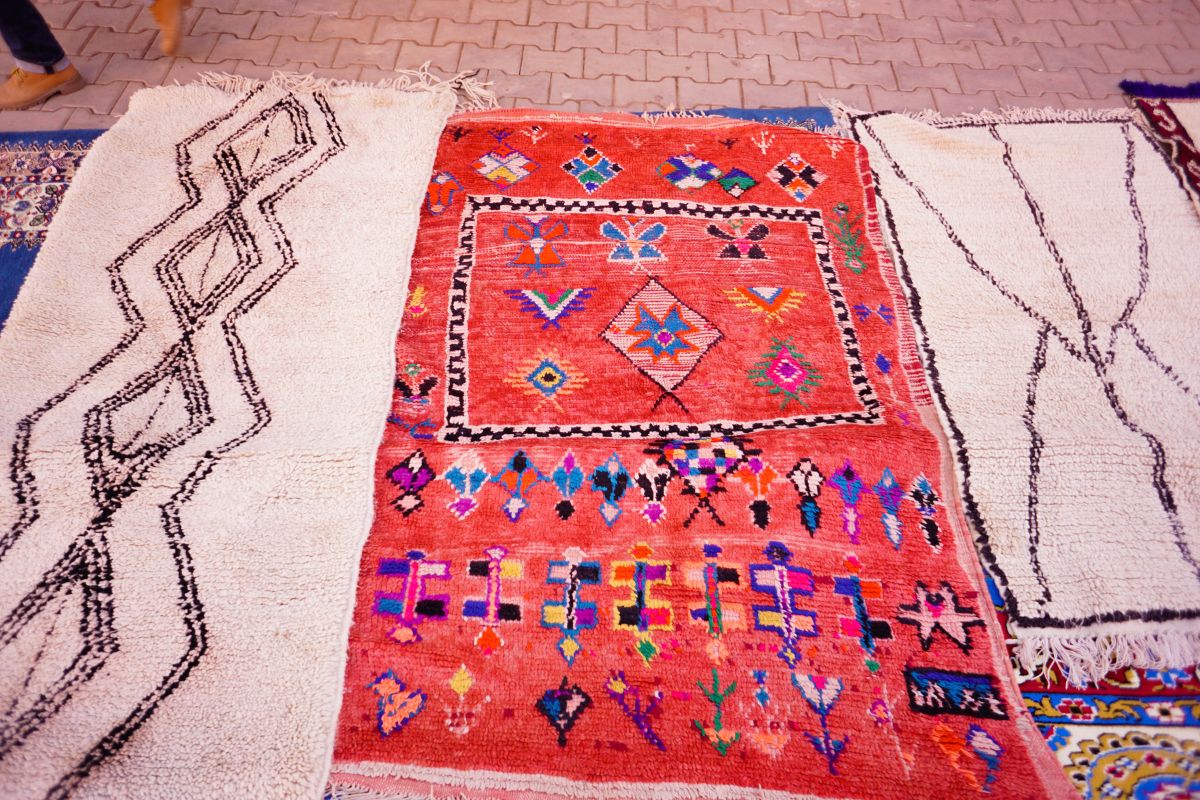
    Beni Ourain is the style most people picture first: a thick, ivory or cream wool pile marked with thin black or dark brown geometric lines, often diamonds or loose lattice patterns. The rugs are made from natural, undyed sheep wool, which is where the soft off-white ground comes from.

    The name refers to the Beni Ourain (also written Beni Ouarain), described by rug specialists as a confederation of Amazigh tribes in the lower Middle Atlas Mountains, in the area between Fez and Taza. The plush, warm pile has a functional origin: these were floor and sleeping coverings made to insulate against hard mountain winters, not decorative objects first. Because the palette is so restrained, Beni Ourain reads as calm and modern, which is why it shows up constantly in minimalist interiors.

    Best use: high-traffic living rooms and bedrooms where you want warmth and a neutral base. For the full breakdown of knots, wool grades, and how vintage pieces differ from new production, see our deep-dive Beni Ourain rug guide.

    Boucherouite: color from recycled cloth

    Boucherouite is the outlier of the group, and the most misunderstood. Instead of wool pile, these rugs are woven from whatever fabric was on hand: strips of old clothing, cotton, fabric scraps, and sometimes nylon or plastic. The name itself comes from a Moroccan Arabic term for a scrap or torn piece of used cloth, which tells you exactly what they are made from.

    That origin is the opposite of luxury. Boucherouite rugs grew out of thrift, made in households where wool was scarce or too valuable to use on the floor, so weavers improvised with textile leftovers. The result is unpredictable: saturated, clashing color, loose or improvised patterns, and a texture that changes across the rug. No two are alike, and there is no "correct" Boucherouite palette.

    Best use: a jolt of color in an otherwise quiet room, kids' spaces, or as a layered accent. Keep them out of the highest-traffic paths, since mixed materials wear less evenly than dense wool. Our Boucherouite rug guide covers materials, washing cautions, and why condition varies so much piece to piece.

    Azilal: the painterly one

    Azilal rugs sit between Beni Ourain's restraint and Boucherouite's chaos. They usually start from a natural, undyed ivory wool ground, then add sparse, freehand motifs in dyed wool or cotton: diamonds, lines, hooks, and abstract shapes that look almost drawn on. The effect is closer to a canvas than a carpet.

    The name comes from the Azilal region, which specialists place in the High Atlas, northeast of Marrakech, on the seam between the High and Middle Atlas. One reported detail worth knowing: Azilal rugs stayed largely off the international market until the late 20th century, which is part of why they feel fresher and less formula-driven than the more commercialized styles. Weavers there are described as using a single knotted line worked between woven rows, a technique passed down among women in the region.

    Best use: a room that wants one expressive, art-like piece without going full rainbow. See the Azilal rug guide for how to read the motifs and tell older pieces from newer, brighter production.

    Boujad: warm tones from the central plains

    Boujad (also spelled Boujaad) rugs are the warm-blooded ones, built on pinks, magentas, reds, oranges, and purples, often layered over each other so the color feels sun-faded and lived-in. They are woven in sheep wool at a low to medium pile.

    The name comes from the town of Boujaad, and here is a genuinely contested point this guide will not paper over: many sources place Boujad production in the central plains at the foothills of the Middle Atlas, while some sellers loosely file these rugs under the Haouz region near Marrakech. The town of Boujaad sits in Morocco's central plains, not in Marrakech, so the "central plains" description is the more precise one. Rug specialists also note these rugs are made by Arab and Arabised Berber tribes, a reminder that Moroccan weaving traditions are not all strictly Amazigh.

    Best use: bohemian and maximalist rooms, or as a warm layer over a neutral floor. The Boujad rug guide goes deeper on the dye story and why mid-century pieces are collected.

    The part sellers skip: handmade versus machine-made imitation

    Here is the section most "types of Moroccan rugs" articles leave out, because most of them are trying to sell you a rug. A large share of "Moroccan rugs" sold online, especially the cheapest ones, are machine-made imitations produced in factories, often outside Morocco, from synthetic fibers designed to mimic the look. They can copy the pattern. They do not copy the construction.

    You do not need a "burn test" or any of the unsourced tricks that circulate online to see the difference. A few honest signals do most of the work:

    • The back. A handmade rug shows individual knots and slightly irregular rows on the reverse. A machine-made one looks mechanically uniform, sometimes with a grid backing or glued layer.
    • Regularity. Handwoven pieces have small imperfections: a line that wobbles, a motif that is not perfectly symmetrical. Flawless, ruler-straight repetition is a machine tell.
    • Edges and fringe. Authentic rugs have hand-finished edges and fringe that is part of the weave, not a separately sewn-on strip.
    • Material and weight. Real wool (or genuine recycled cloth, for Boucherouite) feels denser and warmer than thin synthetic pile.

    One honest limit: photos and words can only take you so far. Atlas Rug Guide is a reference, not an appraisal or authentication service, and no online guide can certify a specific rug you are looking at. For a high-stakes purchase, a hands-on inspection by a specialist beats any checklist, including this one. What this guide can do is stop you from mistaking a mass-produced copy for the tradition it is imitating.

    How to choose a Moroccan rug style for your room

    Skip the "which is best" question, because it depends entirely on your space. Choose by use instead:

    • Want warmth and a calm, neutral base? Beni Ourain. Thick wool, quiet palette, forgiving in busy rooms.
    • Want the floor to be the color? Azilal for an art-like, controlled pop, or Boucherouite if you want maximum, unpredictable energy.
    • Want warm, cozy, lived-in tones? Boujad, especially layered over a plain floor or a larger neutral rug.
    • High-traffic hallway or entry? Favor dense wool pile (Beni Ourain, some Boujad) over thinner recycled-cloth Boucherouite, which wears less evenly.

    Match the pile height to the room too. Thick pile feels great in a bedroom and reads busy in a small office; a lower pile is easier under doors and dining chairs.

    FAQ

    What are the main types of Moroccan rugs?
    The most common named styles are Beni Ourain (thick cream wool with black geometric lines), Boucherouite (bright rugs made from recycled cloth), Azilal (ivory wool grounds with colorful freehand motifs), and Boujad (warm pink, red, and purple tones). Other styles exist, but these four cover most of what people mean by "Moroccan rug."

    What is the difference between Beni Ourain and Azilal rugs?
    Beni Ourain rugs are minimalist: undyed cream wool with a few dark geometric lines. Azilal rugs keep a similar natural wool base but add bright, abstract colored motifs, so they read as more artistic and less neutral. Beni Ourain comes from the Middle Atlas; Azilal comes from the High Atlas region.

    Are Moroccan rugs always handmade?
    Traditionally yes, they are handwoven by Amazigh (Berber) weavers. But many rugs sold as "Moroccan" online are machine-made imitations in synthetic fibers. Check the back for irregular hand knots, look for small imperfections in the pattern, and feel the material to tell a genuine handmade rug from a factory copy.

    What is a Boucherouite rug made of?
    Recycled textiles: strips of old clothing, cotton, fabric scraps, and sometimes synthetic material. The style grew out of thrift, when wool was scarce or too valuable, so weavers used whatever cloth they had. The name itself comes from a Moroccan Arabic word for scrap or torn cloth.

    Why do Boujad rugs vary so much in color?
    Boujad rugs are built on warm dyed wool, and many are vintage pieces where the color has softened over decades, so pinks, reds, and purples layer and fade differently in each rug. Because they are one-of-a-kind handmade pieces, no two share the exact same palette.