Tag: moths and pests

  • How to Store a Wool Rug for a Season or a Year

    How to Store a Wool Rug for a Season or a Year

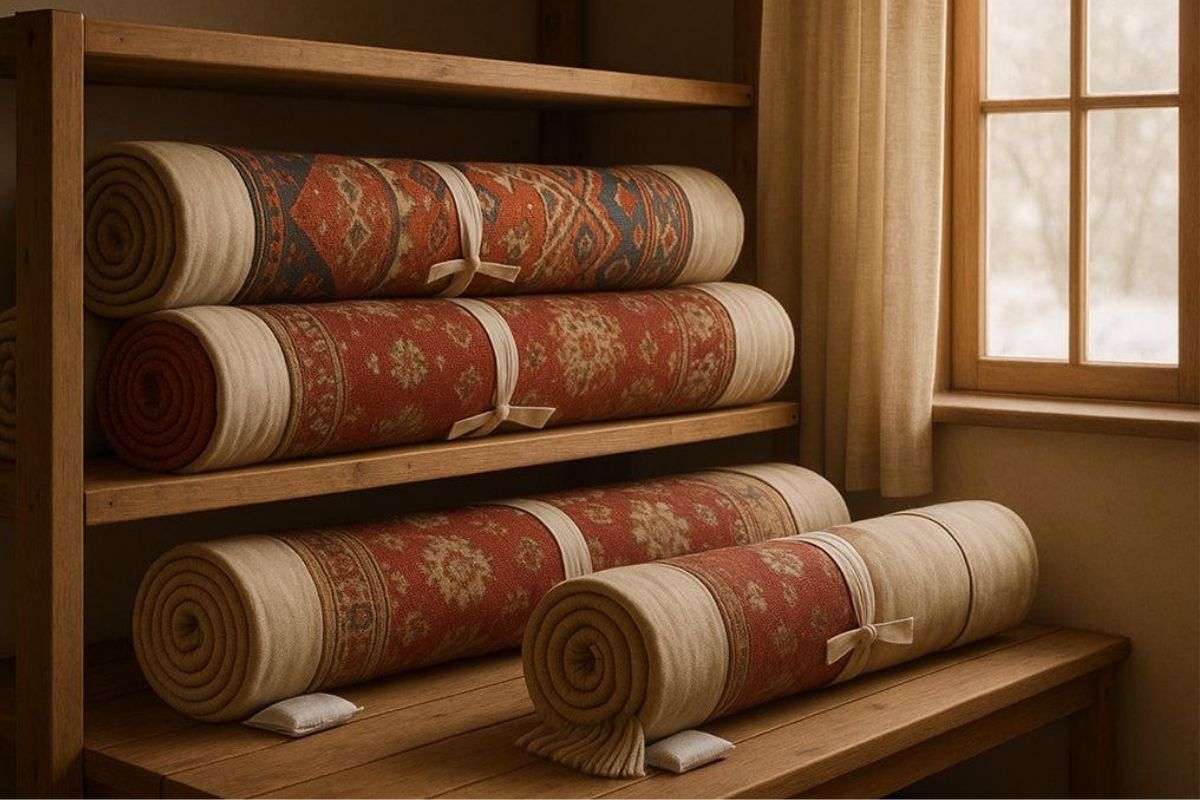
    Clean it and let it dry completely, then roll it, never fold it, with the pile facing in. Wrap it in a breathable material such as a cotton sheet or muslin rather than sealed plastic, and keep it off the floor in a dry, ventilated space out of direct sun. Check on it two or three times over the storage period rather than shutting the door and forgetting about it. Wool is a protein fiber, and the two things that actually damage it in storage are moisture trapped against the fiber and a dark, undisturbed space that carpet moth larvae find ideal. Get those two conditions right and time alone does very little harm.

    Why wool behaves differently in storage than a synthetic rug would

    Wool is a protein fiber, structurally closer to hair than to a plastic filament, and that single fact is what every piece of manufacturer wool-care guidance is built on. A synthetic rug rolled up in a garage for a year is mostly indifferent to the experience. A wool rug is not. The fiber absorbs and holds moisture more readily than synthetic pile, which is why a damp storage space produces mildew on wool well before it would show on a nylon or polypropylene rug. The same protein structure, keratin, is also the food source for carpet moth larvae. That is a separate risk from moisture, but it is made worse by the same conditions: dark, still, and undisturbed for months at a time. The University of Kentucky Extension Entomology fact sheet on clothes moths (ENTFACT-609) notes that "edges and undersides of rugs, or sections beneath furniture are more likely to be attacked," precisely because those are the areas that go longest without disturbance. A rolled rug in storage is that same condition applied to the entire piece.

    Before it goes anywhere: clean it and let it dry completely

    Storing a soiled rug is the single most avoidable mistake here. Body oils, food residue and pet dander left in the pile are exactly what draws moths to a stored rug, and rug-manufacturer storage guidance, Jaipur Rugs' own care guide is one example, is consistent on this point: clean the rug, either a thorough two-sided vacuum or a professional wash, before it goes into storage rather than after it comes back out. Cleaning products that quietly destroy wool covers what is safe to use on the fiber if you clean it yourself, and the same rule applies here as everywhere else on this site: test any product on a hidden corner first, and if the rug is old, valuable or naturally dyed, a professional wash before storage is the safer route. Washing a wool rug at home, or not walks through that decision.

    Drying matters as much as cleaning. A rug that goes into storage even slightly damp is a rug that grows mildew inside its own wrapping, out of sight, for months. Air it in a dry space until it is genuinely dry all the way through, not just dry on the surface, before you wrap anything.

    Roll it, don't fold it

    A hand-knotted rug is built from knots tied onto foundation threads, and a fold puts a sharp, permanent crease across every one of those threads in a single line. Rolled storage spreads the same mechanical stress evenly around a curve instead of concentrating it at a crease, which is why rug-manufacturer and rug-care guides are consistent on rolling over folding for anything beyond a few days. Roll with the pile facing inward, and use a wide cardboard or plastic tube as a core if you have one. A tighter roll puts more stress on the foundation than a looser one does.

    Wrap it right: breathable, not sealed plastic

    This is the point where storage advice most often contradicts itself, and it is worth resolving directly. Plastic sheeting feels protective. For long-term storage of a wool rug, it is closer to the opposite: a sealed plastic wrap traps whatever moisture is already in the fiber, or that gets in through a temperature swing between seasons, against the wool for months at a time. That trapped moisture is what produces both the musty smell and the fiber breakdown that ruins a stored rug. Rug-manufacturer storage guidance is consistent that a rug should be wrapped in something breathable, a cotton sheet or muslin, that lets residual moisture escape instead of sealing it in.

    That is not the same recommendation as the plastic wrap used during an active moth treatment. Professional guidance for treating an infestation that is already present, such as the routine published by Sonya Winner Rug Studio, does call for wrapping a treated rug in plastic for one to two weeks at a time between a spray application and a re-check. That is a short, active step, not a way to store a clean, dry rug for a season. It is an easy mix-up, since both involve plastic and both involve wool. The difference is duration and purpose: days to weeks during active treatment, never months of passive storage.

    A cedar block or a lavender sachet tucked into the wrapping is a reasonable, mild addition. Extension entomologists generally describe cedar and lavender as deterrents rather than a treatment for an infestation that is already established, since neither is a registered pesticide, so add one if you like but don't rely on it if you already suspect moths are active. If that is the situation you are actually in, carpet moths: how to tell if you have an active infestation is the page to read before you wrap anything.

    Where to keep it

    Dry and ventilated matters more than any specific room. A climate-controlled closet or a spare room beats a damp basement or an uninsulated attic that swings from freezing to hot across the year, because both standing damp and repeated condensation from temperature swings feed the same mildew risk as sealing a rug in plastic. Elevate the rolled rug off the floor, on a shelf or a pallet rather than directly on concrete or bare boards, and keep it out of direct sun even while it is only waiting to be moved, since sun fading does not pause because a rug happens to be propped against a window.

    Checking on it while it's stored

    A rug that gets checked periodically is a rug where a problem is caught at a few square inches instead of spreading through the whole roll. Unroll it, look and smell, two or three times over a season or a year rather than only at the end. This is also the moment you would catch the earliest sign of either mildew, a musty smell or discoloration, or moths, fine webbing, small pale cases, sandy grit near the edges, all covered in detail on the carpet moth infestation page.

    When to call a professional before storing, not after

    The riskiest version of this whole process is storing an old, valuable or naturally dyed rug without a professional clean first, because a stain or residue that would be routine to address before storage becomes a much harder problem after months sealed against the fiber. How to care for a Moroccan wool rug sets out the wider routine this fits into, and a specialist rug cleaner, not a general carpet cleaning service, is the right call for anything you are not confident handling yourself.

    FAQ

    Can I store a wool rug in a plastic storage bag?
    Not for long-term storage. A sealed plastic bag traps any residual moisture against the fiber, and that trapped moisture is what produces mildew and odor over months. Wrap it in a breathable material like cotton or muslin instead.

    How often should I check on a stored wool rug?
    Two or three times over the storage period is a reasonable interval, enough to catch mildew or an early moth problem before it spreads through the whole rolled rug.

    Should I fold or roll a wool rug for storage?
    Roll it, with the pile facing inward. Folding puts a permanent crease across the knots and foundation threads at the fold line, which rolling avoids.

    Do cedar blocks stop moths from getting into a stored rug?
    They act as a mild deterrent rather than a treatment. If you already suspect an active infestation, cedar alone will not resolve it. Check for the signs of active damage first.

    How long can a wool rug safely stay in storage?
    There is no fixed safe limit as long as it went in clean and completely dry, is wrapped in breathable material, and is checked periodically. The conditions matter far more than the duration itself.
  • How to Get Rid of Carpet Moths in a Wool Rug

    How to Get Rid of Carpet Moths in a Wool Rug

    Clean the rug hard, take away the dark and the stillness, then use cold or a professional cleaner. In practice that means vacuuming both faces of the rug and the floor underneath it, working the edges and everything that sits beneath furniture, then sealed freezing for items small enough to fit a freezer, or a specialist rug cleaner for the rug itself. Sprays, foggers and mothballs are the popular answer and the weakest one, for reasons the extension services state plainly, and mothballs carry a legal restriction most people have never read.

    This page covers treatment of a hand-knotted wool rug. It does not identify insects, and it does not give a chemical protocol. Where a number appears below, the source that published it is named next to it.

    First, work out whether the carpet moths are still active

    Treatment and repair are different jobs. Bare patches with no webbing, no casings and no grit are usually damage that stopped years ago, and they need a repair conversation rather than a treatment. Fine silk webbing low in the pile, small pale cases at the base and sandy grit along the edges mean it is active now, and that is what the rest of this page is for. If you have not made that call yet, how to tell whether a carpet moth infestation is active sets out the signs and where to look for them.

    If wool items elsewhere in the house are also being eaten, this has stopped being a rug problem and become a household one. That belongs with a pest control professional, not with a rug site.

    Why the rug is the target, and why the room is the real problem

    The larvae feed on keratin, the protein in wool, hair and feathers. Synthetic pile is not food. A hand-knotted wool rug is, and a fleece that has kept its natural grease is a better meal than a heavily processed one, which is an uncomfortable side effect of everything that makes good rug wool worth paying for.

    Location does the rest. The University of Kentucky's entomology fact sheet on clothes moths (ENTFACT-609) puts it in one sentence: "Edges and undersides of rugs, or sections beneath furniture are more likely to be attacked." Larvae want dark and undisturbed. A rug that has not moved since it was laid supplies both, and the open center of the room, which is the part everybody cleans, is the part they were never in.

    That is why the treatment is mostly about the parts of the rug you never look at.

    Vacuuming is the treatment, not the preparation

    Most pages treat vacuuming as step zero before the real work. It is closer to being the real work. UC IPM's Pest Notes on clothes moths says of clearing an infested room, "The vacuum cleaner is the best tool for most of this cleaning," and ENTFACT-609 says vacuuming floors, carpets and inside heating vents "effectively removes larvae as well as hair and lint, which could support future infestations."

    Done properly on a rug, that means all of this:

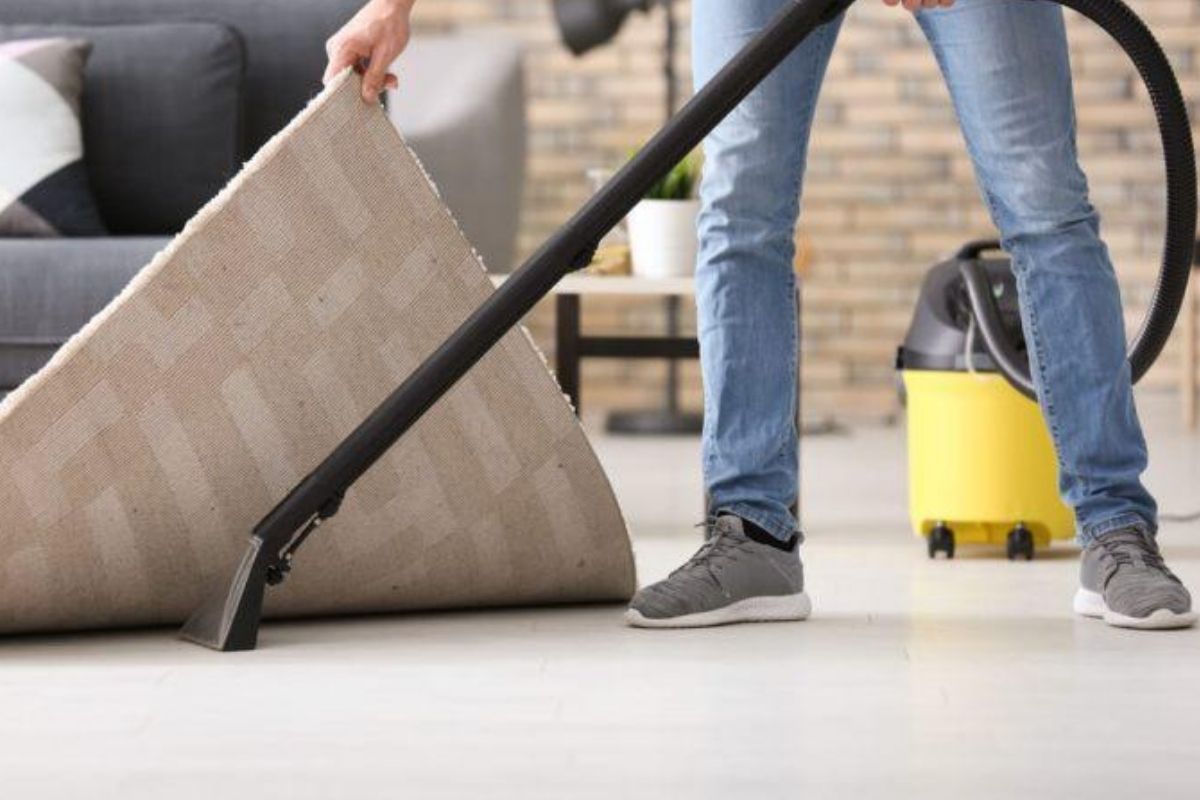
    • The underside of the rug, not just the top. Turn it over.
    • The floor beneath the rug, including the gaps between boards and the edge of the room where the floor meets the baseboard.
    • Under every piece of furniture standing on it, which means moving the furniture rather than reaching around it.
    • The perimeter of the room, behind doors, and any heating vents nearby.
    • Slowly, and more than once over the same ground. Larvae sit at the base of the pile, so surface passes miss them.

    Then dispose of what you collected. UC IPM's instruction after vacuuming an infested area is to "dispose of the bag's contents promptly, since it can include eggs, larvae, or adult moths." Empty it outside, into a bag you seal, and do not leave a full canister sitting in the house.

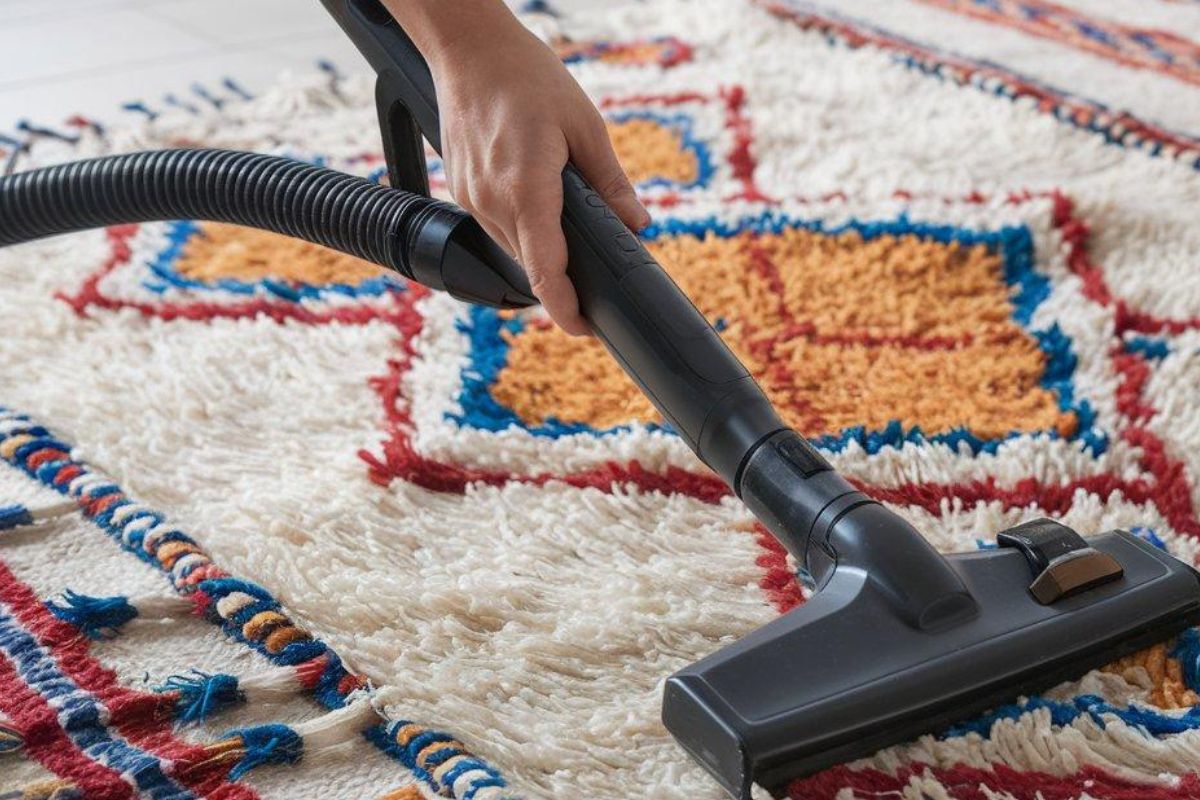
    One caution specific to a hand-knotted piece: a rotating beater bar can chew fringes and loosen knots, which is a separate problem from the one you are trying to solve. Vacuuming a wool pile rug without damaging it covers the settings and the direction of travel.

    Cold: the one home treatment with published parameters, and the sources disagree

    Freezing is real, non-chemical and standard practice in museum collections. It also comes with four different sets of numbers depending on who you ask, so here they are side by side rather than blended into one confident figure.

    Source What it publishes
    UC IPM, Pest Notes: Clothes Moths Enclose the item in a plastic bag and place it in a freezer "for several days at temperatures lower than 18°F"
    University of Kentucky Entomology, ENTFACT-609 Infested items "need to be held at minimum temperature of 0 degrees Fahrenheit for at least one week"
    National Pesticide Information Center (Oregon State University) "Non-washable items can be placed in a Ziploc bag and frozen for 2 weeks to kill the insects"
    MuseumPests.net, Integrated Pest Management Working Group A freezer reaching minus 20°F (minus 29°C) for "a minimum of 72 hours", or "14 days in a domestic freezer at minus 20°C (minus 4°F)"

    The pattern is consistent even where the numbers are not: the colder the freezer, the shorter the hold, and a domestic appliance needs a long one. If you are working from the freezer in your kitchen rather than a deep freeze, the two-week figures are the safer end to plan around.

    Two details from the conservation guidance are missing from almost every page that ranks for this, and both change the outcome.

    Seal it before it goes in, and thaw it still sealed. The museum guidance is that objects "should be sealed in plastic either using re-sealable plastic bags or polyethylene plastic sheet sealed with tape," and after removal "should be allowed to acclimate to room temperature, still completely wrapped, until they are at room temperature, at least 24 hours." Unwrapping a frozen textile in a warm room puts condensation into the fibers, which is a different kind of damage from the one you started with.

    Speed of cooling matters. The same guidance stresses rapid cooling, and the extension literature notes that insects cooled slowly develop resistance to freezing. A freezer that gets there fast is doing more than one that drifts down overnight.

    What cold does not solve is size. A room-sized hand-knotted rug does not fit in a kitchen freezer, and the trade answer is a commercial chest freezer or a professional treatment. Cold is genuinely useful for a small rug, a runner, or the wool items around the rug that started or spread the problem.

    Heat and laundering, and the line where they stop

    Heat kills the same life stages and appears in the same sources, but every published parameter is written for something that fits inside an appliance. UC IPM gives heating an infested item "in an oven for at least 30 minutes at temperatures higher than 120°F," and laundering "for 20 to 30 minutes in water that is at least 120°F." The National Pesticide Information Center's version is to launder in hot water for 20 to 30 minutes, and to dry clean what cannot be laundered.

    Read those as instructions for clothing, blankets and small stored woolens. Do not put a rug in an oven. That is a fire risk and it is not what the guidance describes. A hand-knotted wool rug is also not a machine-wash item in the first place, for reasons that have nothing to do with moths: washing a wool rug at home, or not covers what water does to knots, foundation and dye in a hand-woven piece.

    Steam cleaning is recommended constantly on the pages that rank for this query, usually by companies selling steam machines or moth treatments. We could not find a university extension or conservation source that publishes a steam temperature or dwell time for clothes moth larvae in a rug, so this guide does not state one. Heat plus moisture on wool also carries its own risk of felting and dye movement, which is worth weighing before pointing a machine at a four-figure object.

    The chemical route, and why this page will not write you a protocol

    This is where most search results reach for a spray, and it is the part worth slowing down on.

    Sprays underperform on this pest, and entomologists say so. ENTFACT-609: "Insecticide sprays tend to be of limited use for clothes moths, since the pests are often within materials where sprays cannot penetrate." That is the whole problem in one line. The larvae are down at the base of the pile, on the underside of the rug and under the furniture. A total release fogger, the kind sold as a bug bomb, is a spray that settles from above onto exposed surfaces, so the same objection applies to it with more force, not less.

    Mothballs are a pesticide with a legally binding label, and the label is narrower than people assume. The National Pesticide Information Center states that mothballs "are only to be used in airtight containers," that "the gasses they create may pose a risk to people and pets," and that these pesticides "produce a gas that is toxic to people or animals if they breathe it in." Every registered pesticide sold in the United States carries the statement "It is a violation of Federal law to use this product in a manner inconsistent with its labeling," and FIFRA section 12(a)(2)(G) makes it unlawful "to use any registered pesticide in a manner inconsistent with its labeling." Scattering naphthalene or paradichlorobenzene mothballs under a rug, along a closet floor or around a room is not a labeled use of an airtight-container product. It is not a clever workaround either. It is the use pattern the label exists to prevent.

    The hazard is not theoretical. NPIC's naphthalene fact sheet records headaches, nausea, dizziness and vomiting after exposure to the vapors, hemolytic anemia in some cases, and an EPA classification of naphthalene as a possible human carcinogen. It also notes that "small children and pets are at risk of eating mothballs, because they look like candy or other treats," and lists lethargy, vomiting, diarrhea, loss of appetite and tremors in dogs that have eaten them. A rug sits at floor level, in the room where the toddler and the cat live, often near where people eat. That is the wrong place for a fumigant designed for a sealed trunk.

    So the position here is simple. Atlas Rug Guide does not publish an insecticide protocol for a rug, and has no treatment product to sell you instead. If you decide a chemical treatment is the right call, read the label of the specific product, follow it exactly, and bring in a licensed pest control professional, who is trained on those labels and carries the responsibility for applying them. That is not a hedge. The label is the law, and no website is entitled to override it on your behalf.

    Two smaller things worth knowing before you buy anything. Monitoring traps are sold widely and are a detection tool that tells you adults are around, which is a different question from killing larvae already in a rug. And whatever you do end up applying, check it against the fiber first, because cleaning products that quietly destroy wool will turn one problem into two.

    When to hand it over, and what to ask

    Two different professionals solve two different halves of this.

    A specialist rug cleaner treats the rug. Look for one that handles hand-knotted wool specifically. Ask whether their moth treatment is cold, heat or chemical, and if it is chemical, ask for the product name and read its label yourself. Ask what they do about the fringes and the foundation, and whether they will report back on damage that needs repair rather than only cleaning around it.

    A licensed pest control professional treats the house. That is the right call when other wool items are affected, when the problem returns after a thorough clean, or when the infestation is in the room rather than in one object.

    This guide does not publish treatment prices. They vary by region, by rug size and by whether repair is involved, and a number invented here would be worse than no number at all.

    Keeping carpet moths from coming back

    Prevention is unglamorous and it is most of the answer, because everything above is a response to conditions that took months to build.

    • Move the rug. Rotate it, lift the corners, shift the furniture standing on it a few times a year. Larvae need stillness.
    • Vacuum the parts nobody vacuums, on the same schedule. Under the sofa, along the edges, the underside.
    • Deal with stored wool, since a forgotten box of woolens in the same room is a reservoir that will restock the rug.
    • Store a rug clean and sealed, never dirty and never loose in a dark loft corner. Soiling and body oils in the pile make it more attractive, not less.
    • Look at it. A check twice a year catches an infestation while it is a few square inches instead of a repair bill.

    The full routine, including the vacuuming and rotation schedule this depends on, sits in how to care for a Moroccan wool rug.

    FAQ

    What actually kills carpet moths in a rug?
    Thorough vacuuming of both faces of the rug and the floor beneath it removes eggs, larvae and the debris that feeds them. Beyond that, cold treatment works on items that fit in a freezer, and a specialist rug cleaner handles a rug that does not. Sprays are described by University of Kentucky entomologists as of limited use, because larvae sit inside materials sprays cannot reach.

    Does freezing kill carpet moths?
    Yes, and it is standard practice in museum collections, but the published parameters vary. UC IPM says several days below 18°F, the University of Kentucky says at least one week at 0°F, the National Pesticide Information Center says two weeks in a sealed bag, and the museum pest guidance says 72 hours at minus 20°F or 14 days at minus 4°F. Seal the item in plastic first, and let it return to room temperature still sealed.

    Are mothballs safe to use on a carpet or rug?
    No, and in most cases it is not a labeled use. NPIC states mothballs are only to be used in airtight containers and that the gas they release is toxic to breathe. Federal law makes it a violation to use a registered pesticide in a manner inconsistent with its labeling, and mothballs left where children or pets can reach them are a poisoning risk on top of that.

    Do bug bombs or foggers work on carpet moths?
    They are poorly matched to the pest. The larvae feed at the base of the pile and under the rug, and a fogger deposits on exposed surfaces from above. Extension guidance already describes ordinary sprays as of limited use for the same reason.

    Should I call a pest controller or a rug cleaner?
    A rug cleaner if the problem is confined to the rug. A licensed pest control professional if other wool items in the house are affected, or if it keeps returning after a thorough clean. They are solving different halves of it.

    Will steam cleaning get rid of carpet moths?
    It is widely recommended by companies selling steam equipment and treatments, but we found no extension or conservation source publishing a temperature and dwell time for it on a rug, so this guide does not claim one. Heat and moisture together also risk felting and dye movement in wool.

  • Carpet Moths: Is the Damage to Your Rug Still Active?

    Carpet Moths: Is the Damage to Your Rug Still Active?

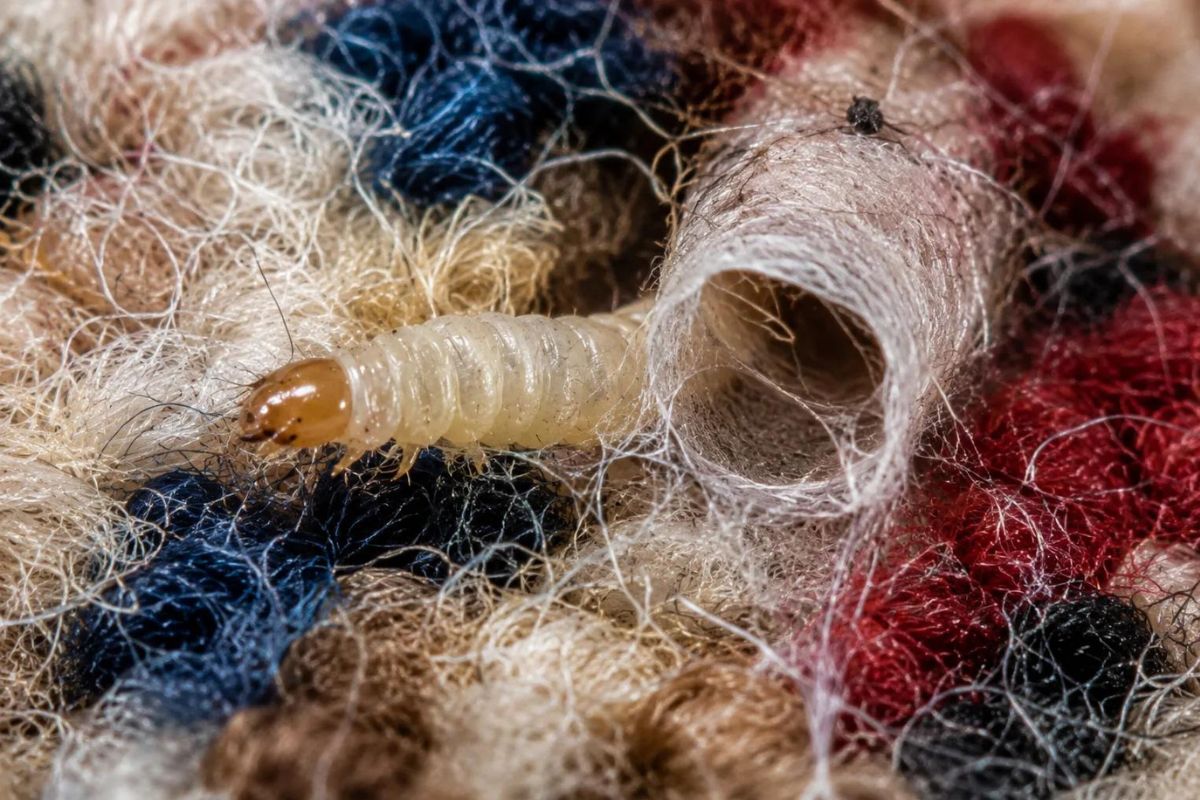
    Something probably was living in it. The question that matters is whether it still is, and the signs that answer it are specific. Active looks like fine silk webbing across the pile, small pale tubular cases roughly 1 to 2 mm long tucked into the base, and sandy grit along the edges. Historic looks like clean-edged bare patches with none of that debris present. The damage is done by larvae, not by the adult moths you occasionally see, and they live where it is dark and undisturbed, so the middle of your floor tells you almost nothing.

    Why wool, and why Moroccan rugs

    Carpet moth larvae eat keratin, the protein in wool, hair and feathers. Synthetic carpet is not food. A hand-knotted wool rug is.

    Two things make these rugs a common target. They are undyed or naturally dyed wool with lanolin still present, which is exactly what the larvae are looking for, and they are frequently placed where a rug sits for years without being moved, under a bed, beneath a heavy sofa, in a spare room. Larvae need darkness and stillness, and a rug that never moves supplies both.

    None of this is a comment on the quality of the rug. Good wool is more attractive to them, not less.

    Where to look, because the middle of the room tells you nothing

    If you inspect the open floor and find nothing, you have learned nothing. Do this properly and it takes ten minutes.

    • Lift the corners and the edges. Look at the base of the pile along the whole perimeter, and at the underside of the rug.
    • Move the furniture. Under a sofa, under a bed, behind a chest of drawers. This is where infestations are found.
    • Check the darkest, least walked part of the room, including behind doors and in the corners of a room that is rarely used.
    • Look at the base of the pile, not the surface. Part the pile with your fingers. Larvae feed at the bottom, cutting fibres near the foundation, so the surface can look intact while the pile is being cut out from underneath.
    • Take a torch. It is genuinely easier to see webbing and casings with a directed light.

    Doing this two or three times a year is the whole of moth prevention, and it happens naturally if you vacuum under the furniture rather than only the open floor.

    The signs of an active infestation

    These mean it is happening now.

    Silk webbing. Fine, slightly sticky strands spun by larvae as feeding tunnels, usually low in the pile and along edges. This is the clearest single sign.

    Larval cases. Small pale tubes, described in the pest and rug literature as roughly 1 to 2 mm long, tucked into the base of the pile. Case-bearing species carry these around with them.

    Sandy grit near the edges. Larval waste, and a strong indicator of active feeding. It is gritty rather than soft, which is what distinguishes it from ordinary shedding.

    Live larvae. Small, pale, grub-like, at the pile base. Unambiguous.

    And three weaker signs, which suggest but do not confirm:

    Small dark specks on or under the rug, which are droppings.

    Shed skins, translucent and shell-like, near damaged areas.

    Adult moths in dark corners or flying weakly around a room. Adults do not eat wool and their presence is circumstantial rather than proof, though it is a reason to inspect properly.

    The signs of damage that has already stopped

    Old damage is common on second-hand and vintage rugs and is not an emergency.

    The pattern is a bare or thinned patch, often near an edge or where furniture stood, with no webbing, no casings, no grit and no live larvae when you part the pile and look at the base. The exposed foundation threads look clean rather than dusty or webbed.

    If you find that and nothing else, this is a repair conversation rather than a pest one. It is worth vacuuming the area thoroughly and checking again in a few weeks to confirm nothing new appears, but there is no urgency and nothing to treat.

    The distinction matters commercially too. Old moth damage on a rug you are being sold is a condition issue that should have been disclosed, which is why it is on the list in twelve questions worth asking any rug seller.

    What to do this week if it is active

    This page diagnoses; it does not treat. Treatment involves either insecticides with their own handling instructions or a freezing protocol with specific temperatures and durations, and this guide will not publish figures for either without a named source in front of it. What follows is the sensible immediate response.

    • Stop it spreading. Do not carry the rug through the house shedding larvae. If you move it, roll it and wrap it.
    • Vacuum thoroughly, both sides of the rug and the floor underneath, along the edges and into the perimeter of the room. Empty the vacuum outside immediately and dispose of the contents in a sealed bag.
    • Check everything else made of wool in the same room and nearby: other rugs, and stored wool items. If the problem extends beyond the rug, this is a household pest question and belongs with a pest-control professional rather than with a rug site.
    • Call a rug cleaning specialist or a pest-control service. A specialist rug cleaner can treat the rug itself, and will tell you honestly whether the damage needs repair as well.
    • Follow the manufacturer's instructions on any product you use, and do not improvise. Wool is also vulnerable to the wrong cleaning chemistry, as cleaning products that quietly destroy wool sets out, so a moth problem is easy to compound with a cleaning problem.
    • Then keep moving the rug. Regular vacuuming under furniture is what prevents the next one.

    If what you found looks more like even, soft fibre loss across the whole rug rather than localised gritty damage, it is probably not moths at all: why your new wool rug sheds covers the difference. For the full routine, how to care for a Moroccan wool rug. And for what makes a fleece worth protecting, judging wool quality without a lab.

    FAQ

    How do I know if carpet moths are still active in my rug?
    Look for fine silk webbing, pale tubular cases roughly 1 to 2 mm long at the base of the pile, sandy grit along the edges, or live larvae. Bare patches with none of that debris are usually old damage.

    Where should I look for carpet moths?
    Dark, undisturbed places: under furniture, along the edges, the underside of the rug, and behind doors. Larvae avoid light and traffic, so the open floor tells you little.

    Do adult moths damage the rug?
    No. The damage is done by the larvae feeding on wool. Adults are a reason to inspect properly rather than proof of active damage in a particular rug.

    Can carpet moths damage a synthetic rug?
    They eat keratin, so wool, hair and feathers are the target. Purely synthetic pile is not food, though blends and any wool content are.

    What should I do first if I find an active infestation?
    Vacuum both sides of the rug and the floor beneath it thoroughly, empty the vacuum outside into a sealed bag, check other wool items nearby, and call a rug cleaning specialist or pest-control service rather than improvising a treatment.

  • Why Your New Wool Rug Sheds, and When It Stops

    Why Your New Wool Rug Sheds, and When It Stops

    A new wool rug leaving fluff everywhere is normal, it is not a defect, and it decreases over time. The loose fibre is short offcuts left over from spinning and weaving working their way out of the pile, and removing them is what vacuuming is for. As for when it stops: care guidance consistently says it reduces with use and not one source checked for this guide commits to a timeframe, so this page will not invent one either. What matters more is telling shedding apart from the two things that look like it and are not.

    Where the fibre is actually coming from

    A wool yarn is spun from fibres of varying lengths. However well it is spun, some of those fibres are short, and short fibres are not fully locked into the twist. When the pile is cut and the rug is walked on, they work loose.

    That is the whole mechanism. There is a finite supply of them, which is why the rate falls: you are emptying a reservoir, not watching the rug come apart. The rug is losing offcuts, not structure. A hand-knotted rug in particular cannot shed itself away, because the pile is tied to the foundation knot by knot and each knot is anchored independently.

    Retail and care sources are consistent on this: a little fluff from a new wool rug is entirely expected, and the amount depends on how much traffic and use the rug gets.

    What makes one rug shed more than another

    Hand-spun versus machine-spun yarn. Hand-spun yarn is deliberately uneven and generally holds more short fibre, so a hand-spun rug often sheds more at the start. That is not a quality problem; it is the same irregularity that gives the rug its character. Judging wool quality without a lab covers the difference by hand.

    Pile height and density. A long, loose, shaggy pile of the kind common on Moroccan rugs holds more loose fibre and releases it more visibly than a tight low weave.

    Construction. Hand-knotted, hand-tufted and machine-made rugs shed differently, and tufted rugs can continue shedding well past the settling period as the adhesive backing ages. If you do not know which you have, what the back of the rug shows settles it in about ten seconds.

    How much it is used. A rug in a hallway empties its reservoir faster than one under a coffee table. More shedding early usually means less shedding later.

    What to do about it

    Vacuum, regularly and gently. That is the answer, and it is also the thing people avoid doing because they assume vacuuming is causing the shedding. It is not causing it, it is collecting it, and leaving the loose fibre in the pile just means it comes out onto the floor instead.

    Use a plain suction head with the rotating brush off. A spinning brush roll agitates the pile hard enough to pull out fibre that was not going to come out on its own, which is the one way vacuuming genuinely does make things worse. Vacuuming a wool pile rug without damaging it covers doing it properly.

    Do not trim or pull. If a longer strand is standing proud of the surface, snip it level with scissors rather than pulling it, since pulling can draw a whole length of yarn out of a knot.

    And be patient without being passive. Check occasionally that what you are seeing is still shedding, using the section below.

    Shedding versus pilling and fuzzing

    Different problem, different cause, and worth separating because one of them is fixable and one is your vacuum.

    Shedding is loose fibre lying on the floor and coming up in the vacuum. The pile itself looks normal.

    Pilling is small balls of tangled fibre forming on the surface, usually in traffic areas, from friction. Snip them off level with the pile. Do not pull.

    Fuzzing is a hazy, roughened surface where fibres have been broken rather than lifted. The usual cause is a vacuum's rotating brush roll, and the second most common is rubbing at a spill instead of blotting it. Fuzzing does not resolve on its own, so if it is spreading, look at your vacuum before you look at the rug.

    When it is not shedding at all

    This is the reason this page exists, because "shedding is normal" is reassurance that can be applied to the wrong problem for months.

    Carpet moth larvae feed on wool, and the debris they leave can be mistaken for ordinary shedding. The signs are specific and they are different:

    • Sandy or gritty debris, particularly along the edges and under furniture, rather than soft fluff.
    • Short cut fibre ends at the base of the pile, as if the pile has been trimmed from below, rather than whole loose fibres.
    • Thinning or bare patches in one area, especially a dark undisturbed one, rather than even fibre loss across the rug.
    • Fine silk webbing, or small pale tubular cases roughly 1 to 2 mm long tucked into the pile base.

    Two rules of thumb. Shedding is even and happens where you walk. Moth damage is localised and happens where you do not. And shedding gets less over time; moth damage gets worse.

    If any of that sounds like your rug, lift a corner and look underneath and along the edges today. Carpet moths: how to tell if you have an active infestation covers what you are looking for and how to tell current damage from old.

    For everything else, how to care for a Moroccan wool rug is the full routine.

    FAQ

    Is it normal for a new wool rug to shed?
    Yes. Short fibres left over from spinning and weaving work their way out of the pile, and the rate falls as that supply empties. It is not a defect and the rug is not coming apart.

    How long does a wool rug shed for?
    Care sources agree it decreases with use and none of them commits to a timeframe, so this guide will not state one. What matters more is that the amount is falling rather than rising.

    Does vacuuming make shedding worse?
    No, with the rotating brush switched off. Vacuuming collects fibre that is coming out anyway. A spinning brush roll does make it worse, by pulling out fibre that would have stayed put.

    Should I cut the loose fibres?
    Snip a long standing strand level with the pile. Never pull it, because pulling can draw a whole length of yarn out of its knot.

    How do I know it is shedding and not moths?
    Shedding is soft, even, and worst where you walk. Moth damage is gritty debris, short cut ends at the pile base and localised thinning, and it appears in dark undisturbed places. Shedding decreases over time; moth damage increases.

  • Vacuuming a Wool Rug Without Damaging the Pile

    Vacuuming a Wool Rug Without Damaging the Pile

    Yes, vacuum it, and often. Switch the rotating brush roll or beater bar off, or use a bare-floor setting, and keep the machine off the fringe entirely. A spinning brush is the most common way owners damage a hand-knotted wool rug at home: it pulls and fuzzes the pile and can rip the fringe out at the ends, which is the one thing on this page you cannot undo. Work with the direction of the pile, without pressing down, and give the areas under furniture more attention than the open floor.

    What a beater bar actually does to a hand-knotted pile

    A brush roll is designed for tufted wall-to-wall carpet, where the pile is short, uniform, glued into a backing and effectively disposable. It works by agitating fibres to shake dirt loose, which is a reasonable trade on that surface.

    A hand-knotted wool pile is a different object. The pile is tied to the foundation knot by knot, it is often longer and looser on a Moroccan rug than on anything the machine was designed for, and there is no adhesive holding anything down. A stiff rotating brush catches individual tufts, works them loose over time, and raises a fuzzed surface where the fibres have been broken rather than lifted.

    The care guidance from rug specialists and manufacturers converges on the same instruction: turn it off, or use a setting that lifts it away from the pile. This is one of the few points in the whole niche where sellers, cleaners and manufacturers all agree.

    If your vacuum's brush roll cannot be switched off

    This is most people's actual situation, and the advice to "turn off the beater bar" is not much help if there is no switch. Options, roughly in order of preference:

    • Use the hose and a plain suction head. Every upright has one. A bare-floor or upholstery attachment has no rotating parts and is completely safe on wool. It is slower and it is the correct tool.
    • Raise the height setting to its maximum. If your machine has a pile-height adjustment, the highest setting lifts the brush away from the surface so it barely contacts the pile.
    • Use a canister or cylinder vacuum with a plain floor head if you have one in the house.
    • Vacuum the rug from underneath occasionally. Turning a rug over and vacuuming the back on a hard floor drives grit down out of the pile onto the floor, where you then sweep it up. This is genuinely effective and it is not something most people think to do.

    This site does not review, rank or recommend vacuum cleaners, and there is no need to buy anything: the attachment you need almost certainly came in the box.

    Direction, pressure and how often

    Direction. Run the head with the pile rather than against it. Brush a hand across the surface and you will feel which way it lies: one direction is smooth, the other resists. Going against the lay opens the pile and works grit deeper in.

    Pressure. None. Let the suction do the work. Pushing a head down into a long pile compresses it and achieves nothing except wear.

    How often. Regularly rather than intensively. General care guidance points to something like weekly for a rug in normal use, more in a traffic path and less in a quiet room, and this guide will not put a firmer number on it than the sources support. Frequent light vacuuming beats occasional aggressive vacuuming, because the damage grit does is abrasive and cumulative: sand and dust work down to the base of the pile and cut the fibres from below every time someone walks on it.

    That is the real argument for vacuuming a wool rug often. You are not removing surface dust for appearance, you are removing an abrasive.

    The fringe, which is where the irreversible damage happens

    Fringe is not decoration. On a hand-knotted rug it is the warp threads of the foundation, emerging from the body of the rug. Tear it off and you are pulling at the structure.

    A rotating brush catches fringe, wraps it, and rips it. It happens in a second and it cannot be undone at home; replacing or reweaving fringe is specialist work.

    So: keep the vacuum head off the fringe entirely. If the fringe needs cleaning, use the hose held slightly above it, or comb it gently with your fingers. Never run a powered head across it, and never let a robot vacuum near the ends of a fringed rug.

    Why the parts under the furniture matter most

    The instinct is to vacuum the open floor where the dirt shows. The parts that actually need it are the ones nobody walks on.

    Carpet moth larvae feed on wool and avoid light and disturbance, so they settle under sofas, along edges, behind doors, and on the underside of a rug that has not moved in two years. Damage there can be well advanced before anyone notices, because nothing about the visible part of the rug looks wrong.

    Moving furniture and vacuuming underneath a few times a year is the cheapest pest prevention available, and it doubles as the inspection. While the corner is up, look at the base of the pile for fine webbing, small pale tubular cases and sandy grit. Carpet moths: how to tell if you have an active infestation covers what those signs mean.

    One related question this answers: if vacuuming brings up a lot of loose fibre from a new rug, that is usually normal shedding rather than damage. Why your new wool rug sheds explains the difference, and what it means when it is not shedding.

    For the whole routine see how to care for a Moroccan wool rug, and before putting any product on the rug, cleaning products that quietly destroy wool. If you are unsure whether your rug is hand-knotted in the first place, what the back of the rug shows settles it.

    FAQ

    Can I vacuum a wool rug with a normal vacuum cleaner?
    Yes, with the rotating brush roll switched off or the height raised to maximum, and using a plain suction head where possible. Keep it off the fringe.

    Will a beater bar ruin my rug?
    It will not ruin it immediately, but repeated use fuzzes the pile by breaking fibres, and it can tear the fringe out in one pass. The fringe damage is the part that cannot be fixed at home.

    How often should I vacuum a wool rug?
    Roughly weekly in normal use, more in a traffic path. Frequent light vacuuming matters because grit at the base of the pile is abrasive and cuts fibres every time the rug is walked on.

    Should I vacuum the back of a wool rug?
    Occasionally, yes. Turning it over on a hard floor and vacuuming the back drives grit out of the pile onto the floor, where you can sweep it up. It is a genuinely useful habit.

    Can I use a robot vacuum on a hand-knotted rug?
    Keep it away from fringed ends, where the rotating parts can catch and pull. On the body of a low-pile rug it is less of a concern, but a plain suction head remains the safer tool.