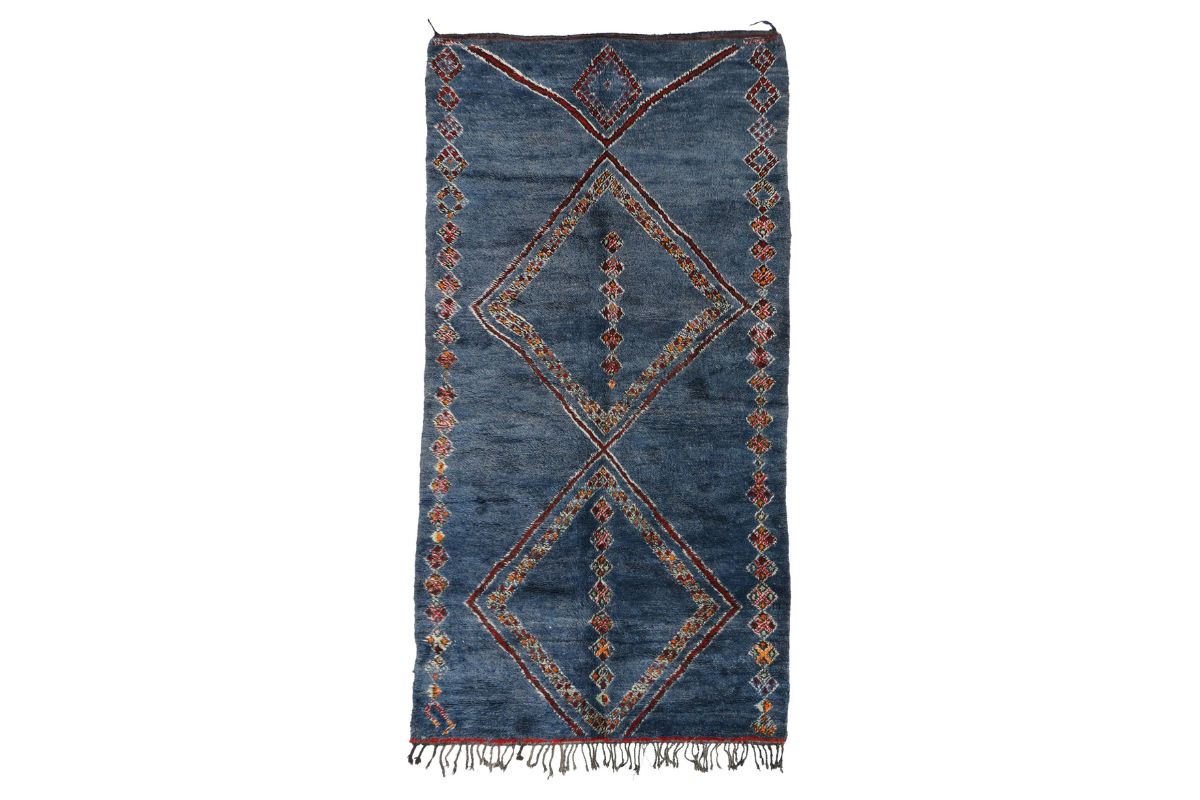
A Beni Mguild rug is a thick-pile, hand-knotted wool rug from Morocco's Middle Atlas region, built on the same heavy-wool tradition as Beni Ourain and Beni Mrirt but set apart by its color: deep indigo, plum, aubergine, and dark pomegranate-red tones instead of undyed cream. If Beni Ourain is the neutral classic of this family, Beni Mguild is its darker, more saturated relative, and it gets confused with the other two far less on look, and far more on name recognition, since it is the least commercially prominent of the three.
What makes a rug a Beni Mguild
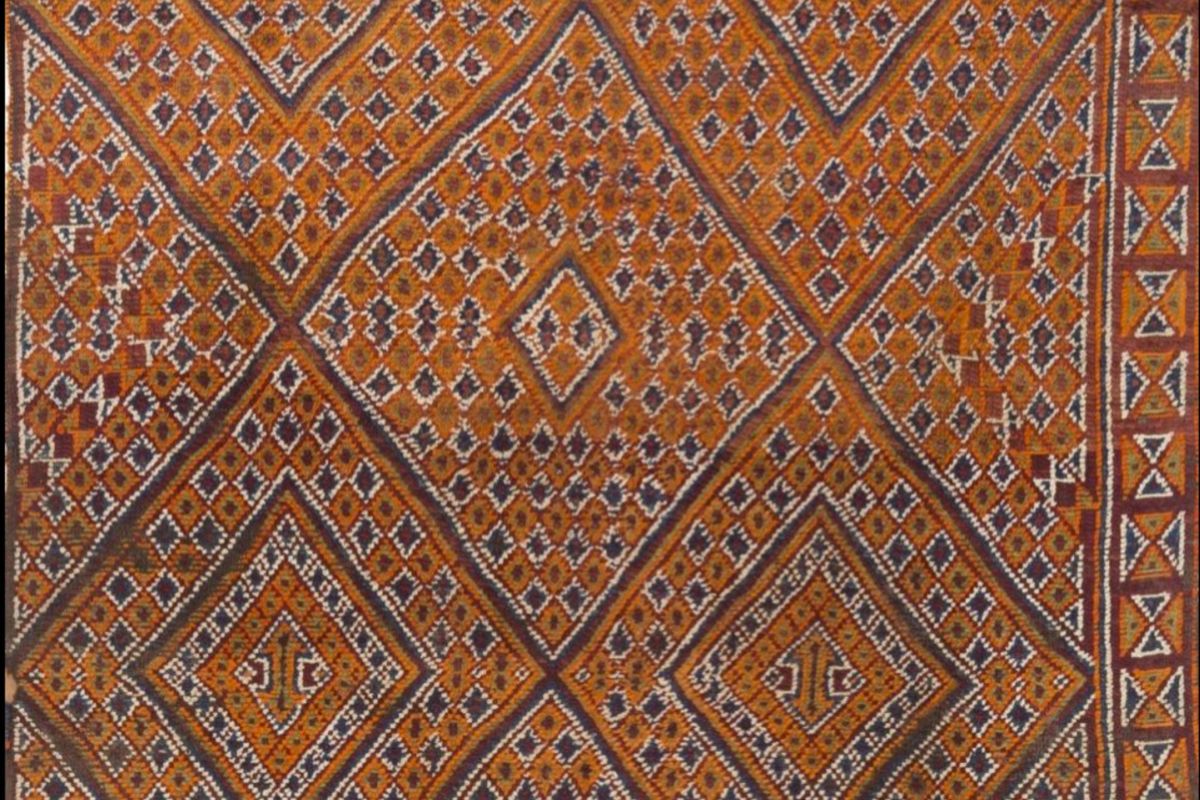
The name points to a weaving tradition based in the Middle Atlas, the same broad mountain region that produces Beni Ourain and Beni Mrirt rugs. Sellers commonly attach the name to a specific tribal group, but this guide did not find an independently sourced account of that attribution and will not repeat it as settled fact. What is safely observable is the rug itself: a heavy, thick wool pile, worked in geometric motifs including diamonds, lozenges, zigzags, and herringbone bands, set on a dark, dyed ground rather than the natural undyed cream of Beni Ourain.
Like its Middle Atlas neighbors, the style is described as originating from a practical need: a thick wool rug that doubled as floor covering and bedding against cold mountain winters. That functional origin is consistent with the whole Middle Atlas wool-rug family and is a reasonable, low-risk description rather than a claim about a specific date or century, which this guide will not invent.
The look: motifs, pile, and palette
The palette is what actually distinguishes Beni Mguild at a glance. Where Beni Ourain and Beni Mrirt stay in cream, taupe, and gray, Beni Mguild leans into darker, richer dye tones: indigo blue is the color most associated with the style, alongside plum, aubergine, and deep brick or pomegranate reds. Older pieces in the market are often dominated by indigo specifically, with newer production showing a somewhat wider range of dark tones.
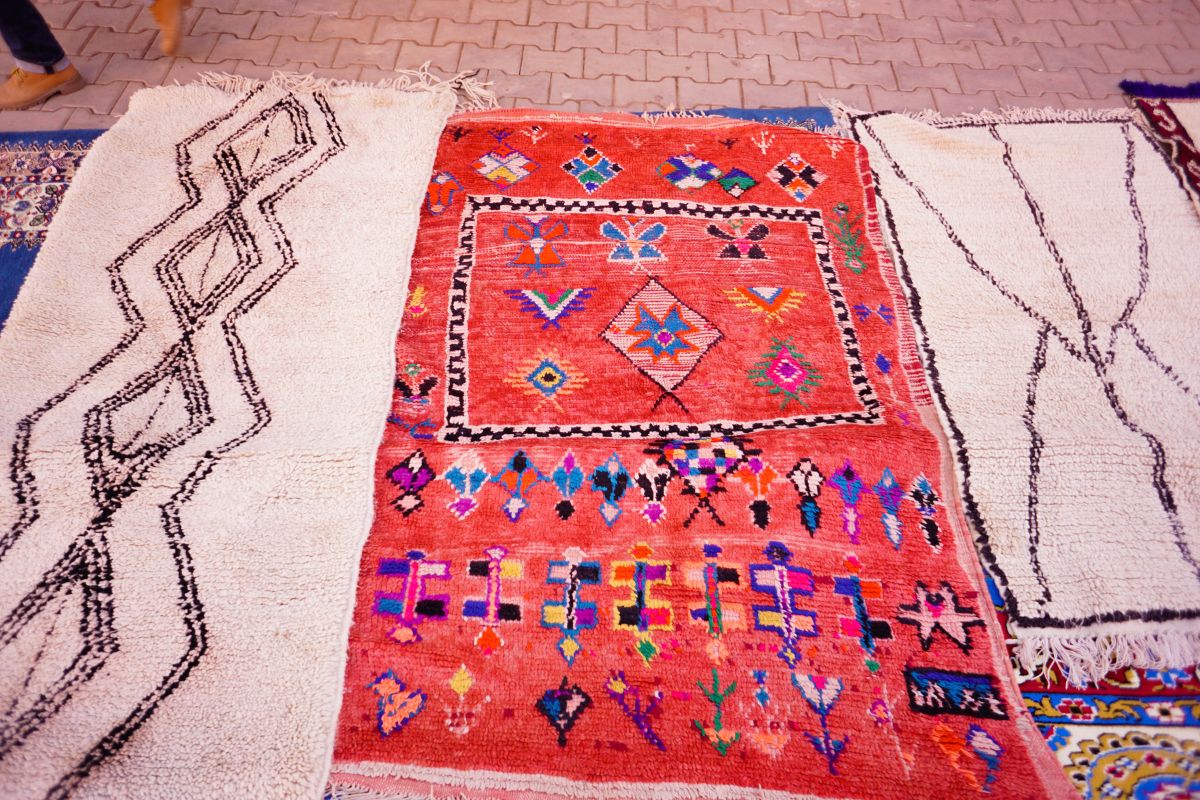
The motifs sit in the same geometric vocabulary as the rest of Middle Atlas weaving: diamonds and lozenges, zigzag lines, and herringbone bands, worked into a heavy pile that gives the surface real texture and shadow. You will see these rugs described as having an especially deep or high pile in some listings, sometimes with a specific inch measurement attached. This guide could not independently verify any specific pile-height figure, so none is stated here; treat any exact number you see in a listing as the seller's claim, not a confirmed spec.
How it relates to Beni Ourain and Beni Mrirt
All three sit in the same family: thick, hand-knotted wool pile from the Middle Atlas, originally made for warmth rather than decoration. The practical difference for a buyer is mostly about color and finish rather than construction:
| Style | Palette | Pile | Best known for |
|---|---|---|---|
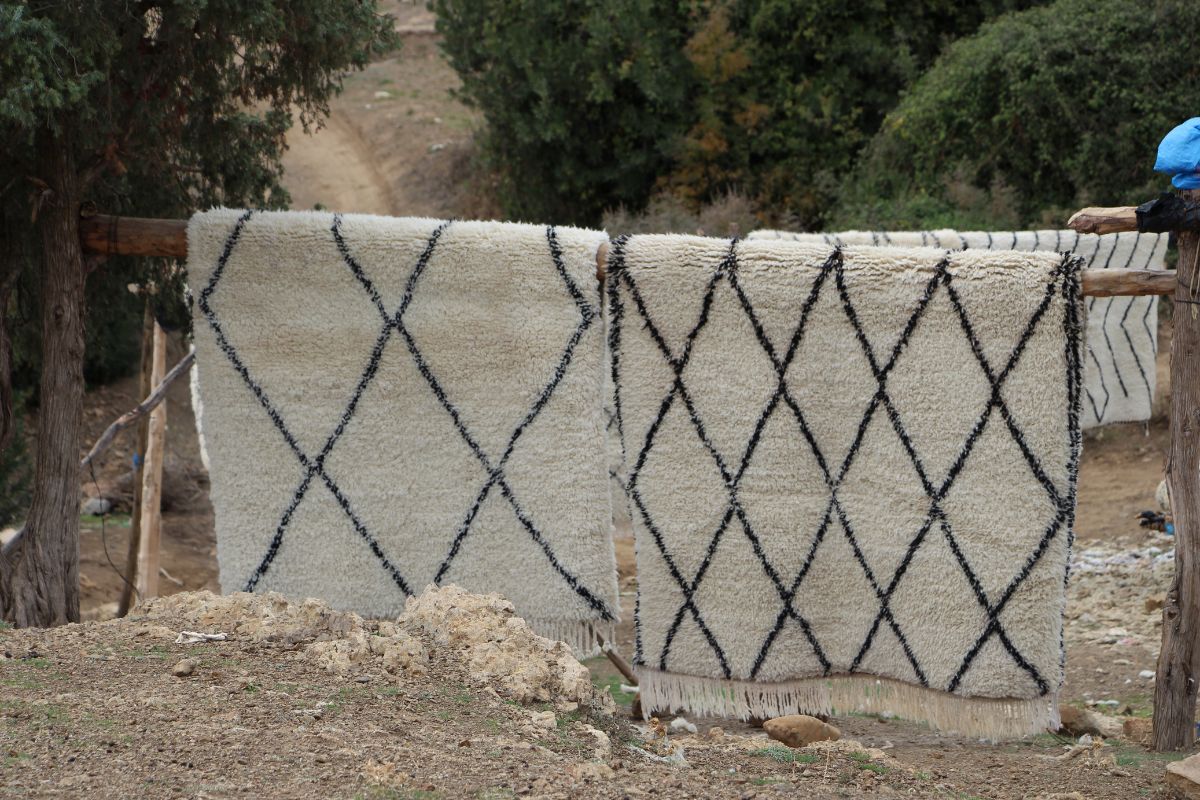
| Beni Ourain | Undyed cream with dark line work | High, loose, shaggy | The neutral, minimalist classic |
| Beni Mrirt | Similar neutrals, denser weave | Lower, tight, velvet-like | Marketed as the denser "upgrade" |
| Beni Mguild | Deep indigo, plum, aubergine, dark red | Thick, heavy | The dark, saturated option in the same family |
If you want the full profile of either of the other two, see the guides to Beni Ourain and Beni Mrirt, including what actually separates them beyond the unsourced numbers you'll see quoted elsewhere.
What to look for when judging one
- Color depth, not brightness. Genuine dark-palette Middle Atlas rugs tend to show some variation and softening in the dye rather than one flat, uniform indigo across the whole field. Total flatness of color can be a sign of a modern reproduction or a synthetic dye batch rather than the older, more irregular look buyers are often seeking.
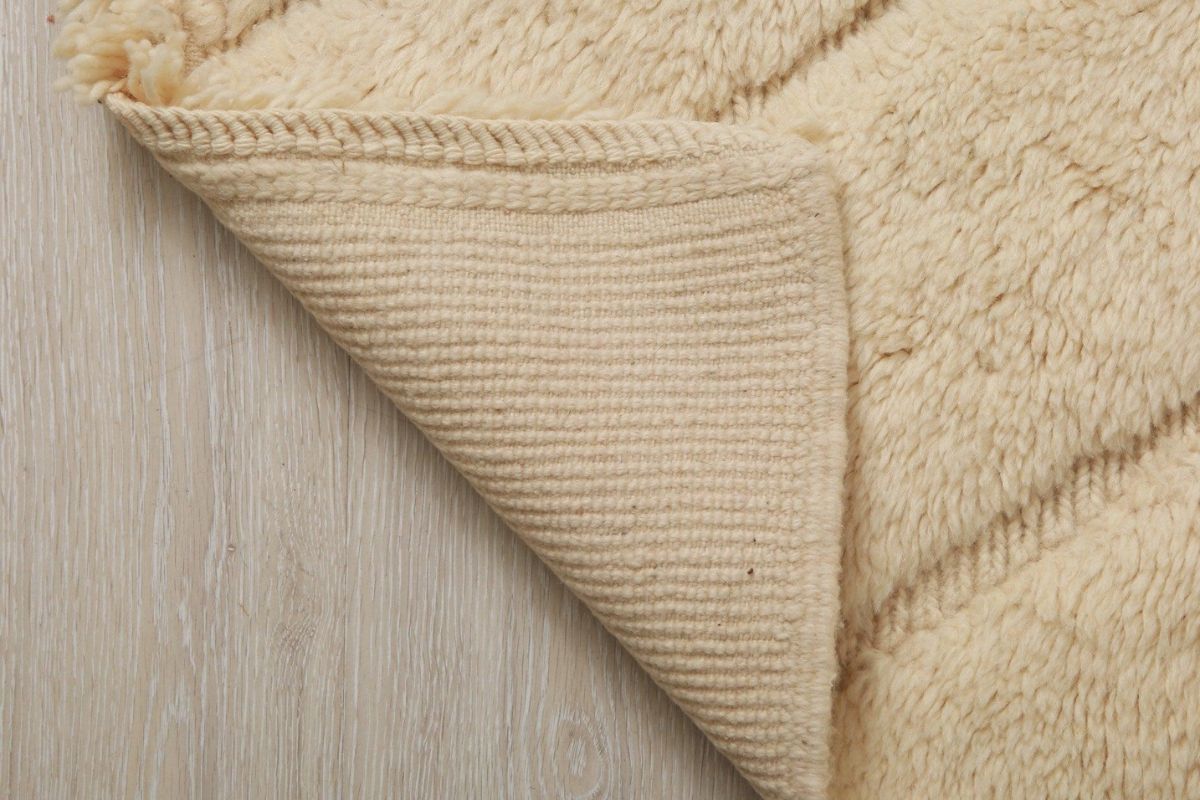
- The back of the rug. As with any hand-knotted piece, the back should show individual knots and small irregularities. A mechanically uniform back or a printed/glued backing is not a hand-knotted Middle Atlas rug, regardless of the name on the listing.
- Weight and pile. A genuinely thick pile carries real weight for its size. A thin, lightweight rug marketed under this name is worth a second look.
- Ask before you assume "vintage." Dark, deeply saturated tones read as older to many buyers, but color depth alone does not establish age. See our guide on Beni Ourain rugs for the same caution applied to that style, and ask a seller directly for whatever age claim they are making rather than inferring one from color.
One honest limit, repeated because it matters on every style page here: Atlas Rug Guide is a reference, not an appraisal service, and no article can authenticate a specific rug from a photo or listing. These are questions to ask, not a substitute for an expert's hands-on judgment on a significant purchase.
For how Beni Mguild sits alongside the rest of the named Moroccan traditions, see the complete guide to Moroccan rug styles.
FAQ
What is a Beni Mguild rug?
A thick-pile, hand-knotted wool rug from Morocco's Middle Atlas, part of the same broad tradition as Beni Ourain and Beni Mrirt, but distinguished by a dark, saturated palette, especially indigo, plum, and aubergine, rather than undyed cream.
What color are Beni Mguild rugs?
Deep, dark tones dominate: indigo blue is the color most associated with the style, alongside plum, aubergine, and dark pomegranate or brick reds. This is the main visual difference from the cream-toned Beni Ourain.
How is a Beni Mguild different from a Beni Ourain rug?
Both are thick Middle Atlas wool rugs from the same broad tradition, but Beni Ourain stays in undyed cream with sparse dark line work, while Beni Mguild uses a dark, dyed palette. Beni Mrirt sits closer to Beni Ourain in color but is denser and tighter woven.
Does a dark color mean a Beni Mguild rug is older or more authentic?
Not on its own. Color depth alone does not establish age, and this guide could not verify the specific age or pile-height figures sometimes quoted in listings. Ask a seller directly for the basis of any age claim rather than inferring one from how dark or faded a rug looks.
Is "Beni Mguild" a specific tribal name?
Sellers commonly present it that way, but this guide did not find an independently sourced account of that attribution. Treat it as a style name pointing to a Middle Atlas weaving tradition rather than a confirmed, single tribal attribution.