Tag: rug cleaning

  • Spills on a Wool Rug: The First Five Minutes

    Spills on a Wool Rug: The First Five Minutes

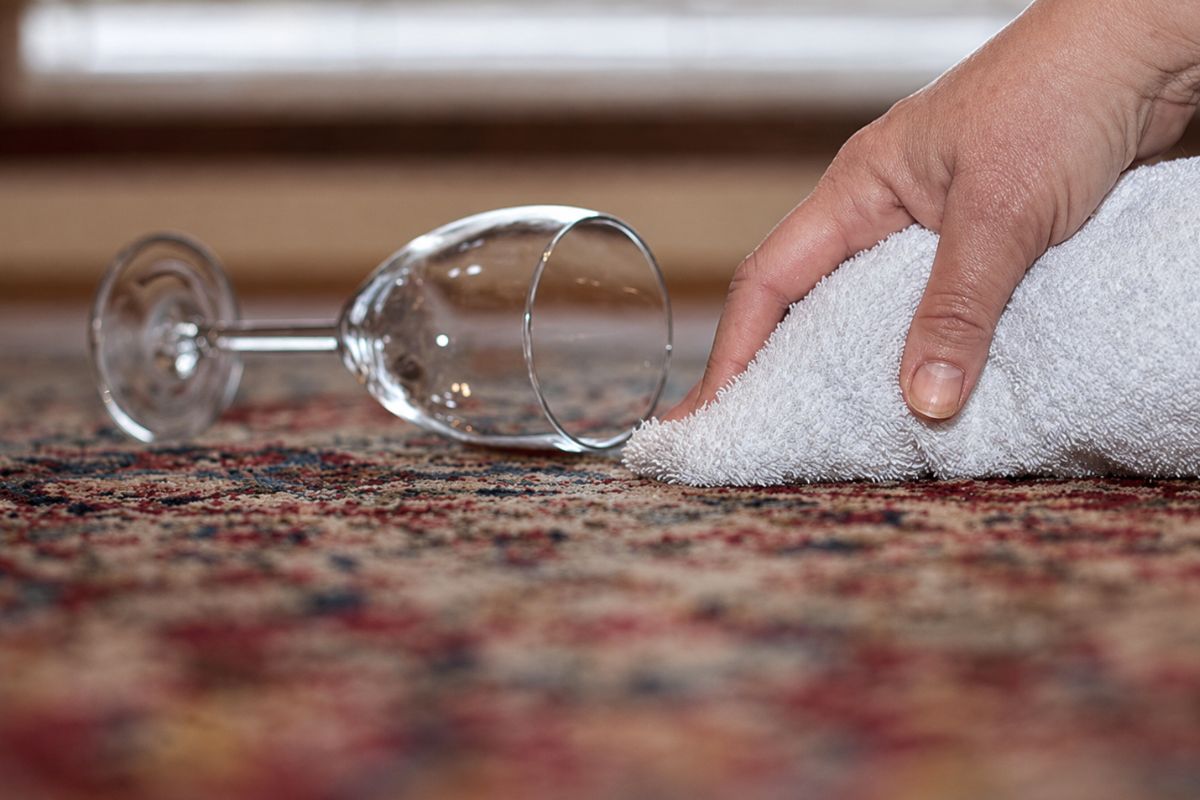
    Do these five things now, in this order. One: lift or scoop away anything solid with a spoon or a blunt edge, do not press it in. Two: blot with a clean white cloth or plain kitchen paper, pressing straight down, working from the outside of the spill inward. Three: keep swapping to a dry part of the cloth until it stops lifting colour. Four: if you use liquid at all, use a very little plain cool water and blot again, never soak. Five: press dry, weight it with a dry towel, and let air get to it. Do not rub, do not use heat, and do not reach for a spot cleaner.

    Why blotting and not rubbing, on wool specifically

    Rubbing does two things to a hand-knotted wool pile, both bad. It pushes the spill down through the pile toward the foundation, where it is far harder to remove and where it can wick back up as the rug dries. And it abrades the fibre surface, leaving a fuzzed patch that stays visible after the stain itself has gone.

    Blotting works because of lanolin. The natural grease in good wool repels liquid for a short window before absorption, which is why a wool rug survives spills that would ruin other fibres, and why speed matters more than technique. You are racing that window, not scrubbing a surface.

    Work from the outside in for the same reason you would with any textile: pressing at the centre of a spill spreads it outward into clean pile and makes the mark larger than it needed to be.

    What to use, and what must never touch it

    Safe: a clean white absorbent cloth or plain white kitchen paper, and a small amount of plain cool water. White matters, because a coloured cloth can transfer its own dye into damp wool.

    Only with care: a product that explicitly states it is safe for wool, used exactly as its own manufacturer directs, and tested first on a hidden corner or the rug's underside. Apply it to the cloth rather than pouring it onto the rug.

    Never, and each of these is permanent:

    • Oxygen bleach, the active ingredient in most "oxy" spot cleaners. It bleaches wool, and the pale patch does not come back.
    • Chlorine bleach.
    • Enzyme cleaners. They are formulated to break down protein and wool is protein.
    • High-alkaline all-purpose household cleaners. Alkalinity felts the fibre, strips lanolin and destabilises dyes.
    • Hot water, steam or a hairdryer on a hot setting. Heat sets many stains and accelerates every kind of wool damage.

    Never combine products. Professional rug cleaning sources describe wool as wanting pH-neutral treatment, with professional formulations in the range of roughly 5.5 to 8.0, and that is the whole reason the list above exists. Cleaning products that quietly destroy wool goes through the cupboard properly.

    Common spills and where each one differs

    Water, tea or coffee without milk. Blot hard and fast. Most of it lifts if you get there quickly.

    Red wine, juice and anything strongly coloured. Blot immediately and keep swapping cloth. Do not reach for the internet's favourite remedies here, because the strongly coloured spills are exactly the ones people try to bleach out, and bleaching wool is irreversible.

    Milk, cream and anything with protein or fat. Lift the solids, blot, then be patient. These are the ones that develop an odour if any residue is left in the pile, and they are a good candidate for professional help rather than escalating at home.

    Pet accidents. Blot what you can and treat this as a different problem. Urine that has reached the foundation is not a surface stain, it is a contamination and odour issue, and it commonly needs a professional. Do not use an enzyme cleaner on wool, despite it being the standard recommendation for pet accidents on synthetic carpet.

    Mud and solids. Counter-intuitively, let it dry completely, then vacuum it up with a plain suction head. Attacking wet mud pushes it in. Vacuuming a wool pile rug covers doing that safely.

    Wax and chewing gum. Do not apply heat. This is a job for someone who does it professionally.

    The stop rule: when to leave it and call someone

    Nearly every other page on this topic escalates you through progressively stronger interventions. This one tells you where to stop, because the second and third attempts are what turn a mark into permanent damage.

    Stop now, and get a rug cleaning specialist, if:

    • The rug is old, valuable, or you believe it carries natural dyes. These pieces are irreplaceable and this site's own position is that they are not DIY. Natural dyes also become less stable with age, so water can move colour in ways nothing will reverse.
    • Colour is lifting into your cloth from the rug itself, rather than from the spill. Stop immediately. Continuing spreads a dye run across clean pile. Natural or synthetic dye explains why this happens and why it is not evidence your rug is fake.
    • The spill has soaked through to the foundation.
    • It is a pet accident, oil, wax, or anything you have already tried something on.
    • You cannot get the area properly dry within a few hours.

    Stopping is not giving up. A professional can almost always work with a damp spot handled sensibly. Far fewer can undo a bleached patch or a set dye run.

    What to do about the mark that is still there tomorrow

    Once the area is dry, look again in daylight. A faint shadow often turns out to be flattened pile rather than a stain, and gently working it with your fingers or a soft brush, with the pile direction, lifts it.

    If there is still a real mark, resist the second round. This is the moment people cause the damage: the spill is no longer urgent, and the temptation is to try something stronger on a stain that is now set. Call a rug cleaning specialist rather than a general carpet cleaning service, and tell them what the spill was, what you have already used on it, and whether any colour lifted.

    For the whole routine see how to care for a Moroccan wool rug, and if you are weighing a full clean, washing a wool rug at home, or not is built around the question that actually decides it.

    FAQ

    What should I do first when something spills on a wool rug?
    Lift solids away, then blot straight down with a clean white cloth from the outside of the spill inward, swapping to dry cloth as it lifts. Do not rub and do not soak.

    Can I use vinegar or baking soda on a wool rug?
    This guide does not publish home remedies for wool. Use plain cool water sparingly, or a product that states it is safe for wool used exactly as its manufacturer directs and tested on a hidden area first.

    Why can't I use an oxy spot cleaner?
    Oxygen bleach lightens wool permanently. The pale patch it leaves cannot be reversed, and it is one of the most common causes of irreversible home damage to wool rugs.

    Colour came off on my cloth. Is my rug fake?
    No, and stop cleaning immediately. Bleeding means the dye was not fully fixed, which happens with natural and synthetic dyes alike, and continuing will spread it into clean pile.

    Is a pet accident different from an ordinary spill?
    Yes. Urine that reaches the foundation is a contamination and odour problem rather than a surface stain, and it usually needs a professional. Do not use enzyme cleaners on wool, even though they are standard advice for synthetic carpet.
  • Vacuuming a Wool Rug Without Damaging the Pile

    Vacuuming a Wool Rug Without Damaging the Pile

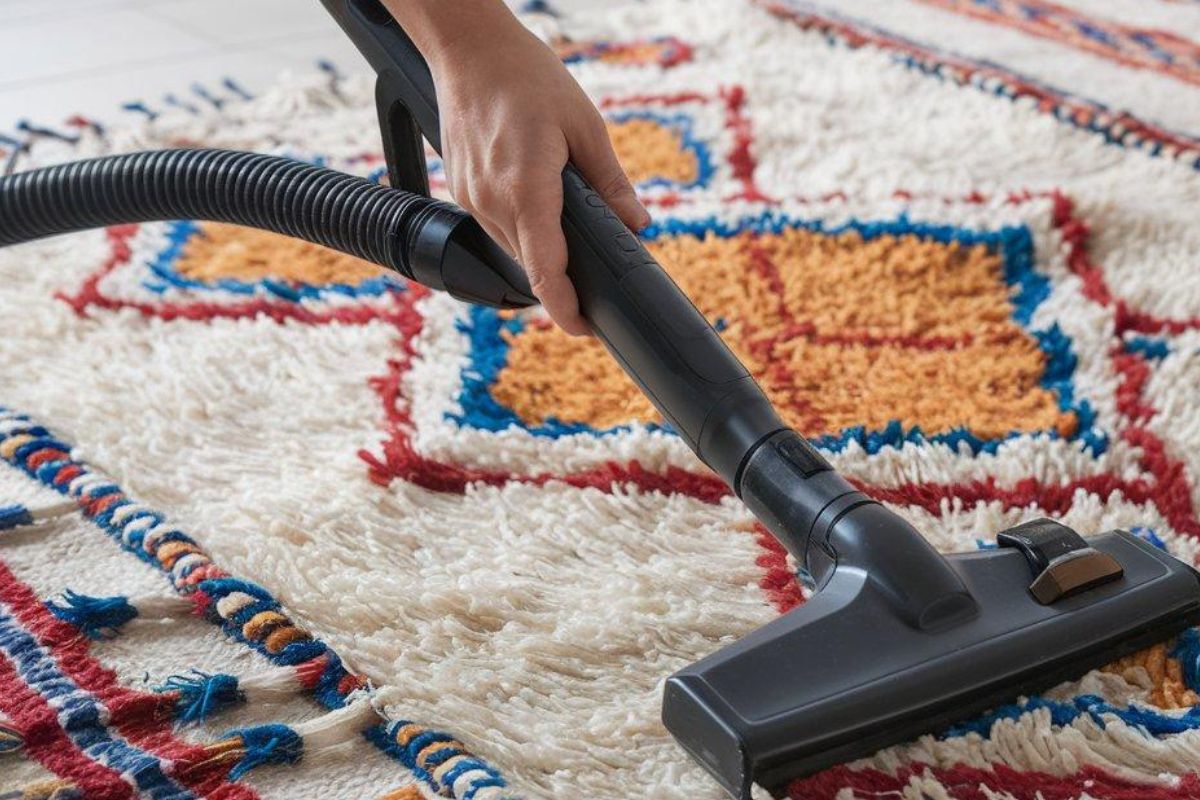
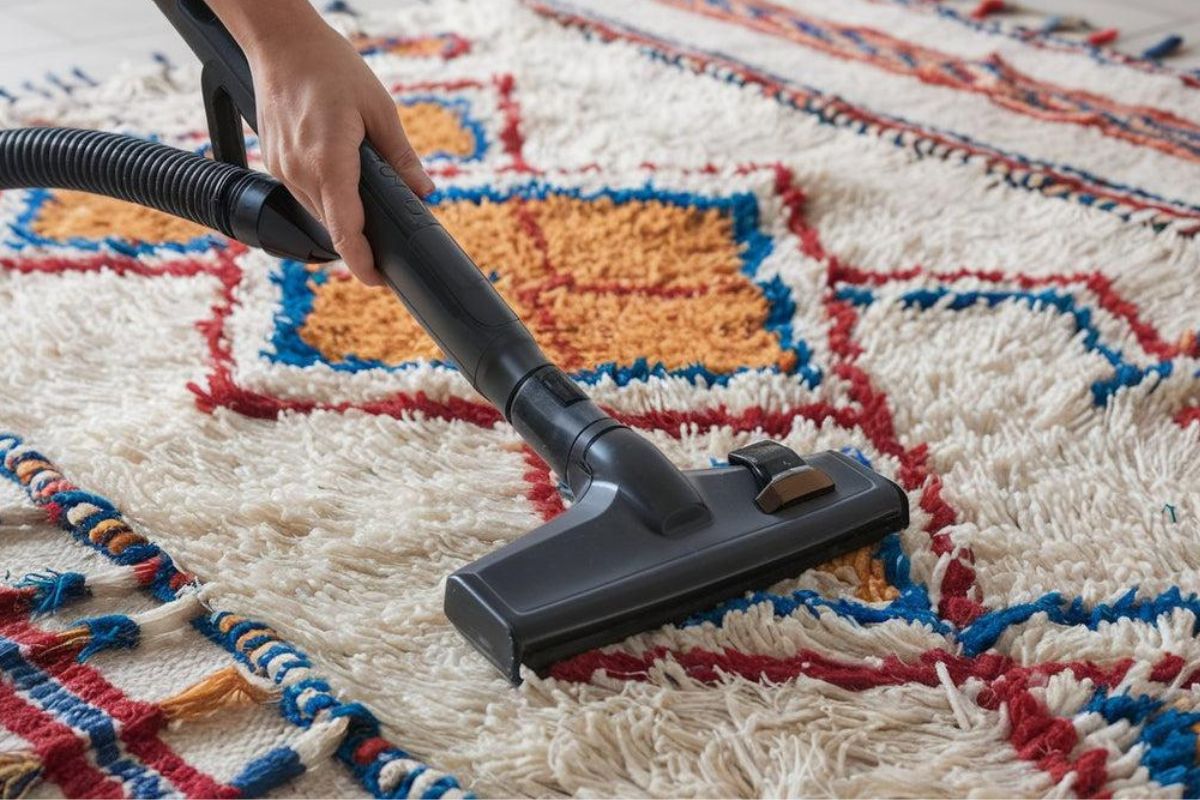
    Yes, vacuum it, and often. Switch the rotating brush roll or beater bar off, or use a bare-floor setting, and keep the machine off the fringe entirely. A spinning brush is the most common way owners damage a hand-knotted wool rug at home: it pulls and fuzzes the pile and can rip the fringe out at the ends, which is the one thing on this page you cannot undo. Work with the direction of the pile, without pressing down, and give the areas under furniture more attention than the open floor.

    What a beater bar actually does to a hand-knotted pile

    A brush roll is designed for tufted wall-to-wall carpet, where the pile is short, uniform, glued into a backing and effectively disposable. It works by agitating fibres to shake dirt loose, which is a reasonable trade on that surface.

    A hand-knotted wool pile is a different object. The pile is tied to the foundation knot by knot, it is often longer and looser on a Moroccan rug than on anything the machine was designed for, and there is no adhesive holding anything down. A stiff rotating brush catches individual tufts, works them loose over time, and raises a fuzzed surface where the fibres have been broken rather than lifted.

    The care guidance from rug specialists and manufacturers converges on the same instruction: turn it off, or use a setting that lifts it away from the pile. This is one of the few points in the whole niche where sellers, cleaners and manufacturers all agree.

    If your vacuum's brush roll cannot be switched off

    This is most people's actual situation, and the advice to "turn off the beater bar" is not much help if there is no switch. Options, roughly in order of preference:

    • Use the hose and a plain suction head. Every upright has one. A bare-floor or upholstery attachment has no rotating parts and is completely safe on wool. It is slower and it is the correct tool.
    • Raise the height setting to its maximum. If your machine has a pile-height adjustment, the highest setting lifts the brush away from the surface so it barely contacts the pile.
    • Use a canister or cylinder vacuum with a plain floor head if you have one in the house.
    • Vacuum the rug from underneath occasionally. Turning a rug over and vacuuming the back on a hard floor drives grit down out of the pile onto the floor, where you then sweep it up. This is genuinely effective and it is not something most people think to do.

    This site does not review, rank or recommend vacuum cleaners, and there is no need to buy anything: the attachment you need almost certainly came in the box.

    Direction, pressure and how often

    Direction. Run the head with the pile rather than against it. Brush a hand across the surface and you will feel which way it lies: one direction is smooth, the other resists. Going against the lay opens the pile and works grit deeper in.

    Pressure. None. Let the suction do the work. Pushing a head down into a long pile compresses it and achieves nothing except wear.

    How often. Regularly rather than intensively. General care guidance points to something like weekly for a rug in normal use, more in a traffic path and less in a quiet room, and this guide will not put a firmer number on it than the sources support. Frequent light vacuuming beats occasional aggressive vacuuming, because the damage grit does is abrasive and cumulative: sand and dust work down to the base of the pile and cut the fibres from below every time someone walks on it.

    That is the real argument for vacuuming a wool rug often. You are not removing surface dust for appearance, you are removing an abrasive.

    The fringe, which is where the irreversible damage happens

    Fringe is not decoration. On a hand-knotted rug it is the warp threads of the foundation, emerging from the body of the rug. Tear it off and you are pulling at the structure.

    A rotating brush catches fringe, wraps it, and rips it. It happens in a second and it cannot be undone at home; replacing or reweaving fringe is specialist work.

    So: keep the vacuum head off the fringe entirely. If the fringe needs cleaning, use the hose held slightly above it, or comb it gently with your fingers. Never run a powered head across it, and never let a robot vacuum near the ends of a fringed rug.

    Why the parts under the furniture matter most

    The instinct is to vacuum the open floor where the dirt shows. The parts that actually need it are the ones nobody walks on.

    Carpet moth larvae feed on wool and avoid light and disturbance, so they settle under sofas, along edges, behind doors, and on the underside of a rug that has not moved in two years. Damage there can be well advanced before anyone notices, because nothing about the visible part of the rug looks wrong.

    Moving furniture and vacuuming underneath a few times a year is the cheapest pest prevention available, and it doubles as the inspection. While the corner is up, look at the base of the pile for fine webbing, small pale tubular cases and sandy grit. Carpet moths: how to tell if you have an active infestation covers what those signs mean.

    One related question this answers: if vacuuming brings up a lot of loose fibre from a new rug, that is usually normal shedding rather than damage. Why your new wool rug sheds explains the difference, and what it means when it is not shedding.

    For the whole routine see how to care for a Moroccan wool rug, and before putting any product on the rug, cleaning products that quietly destroy wool. If you are unsure whether your rug is hand-knotted in the first place, what the back of the rug shows settles it.

    FAQ

    Can I vacuum a wool rug with a normal vacuum cleaner?
    Yes, with the rotating brush roll switched off or the height raised to maximum, and using a plain suction head where possible. Keep it off the fringe.

    Will a beater bar ruin my rug?
    It will not ruin it immediately, but repeated use fuzzes the pile by breaking fibres, and it can tear the fringe out in one pass. The fringe damage is the part that cannot be fixed at home.

    How often should I vacuum a wool rug?
    Roughly weekly in normal use, more in a traffic path. Frequent light vacuuming matters because grit at the base of the pile is abrasive and cuts fibres every time the rug is walked on.

    Should I vacuum the back of a wool rug?
    Occasionally, yes. Turning it over on a hard floor and vacuuming the back drives grit out of the pile onto the floor, where you can sweep it up. It is a genuinely useful habit.

    Can I use a robot vacuum on a hand-knotted rug?
    Keep it away from fringed ends, where the rotating parts can catch and pull. On the body of a low-pile rug it is less of a concern, but a plain suction head remains the safer tool.

  • How to Care for a Moroccan Wool Rug

    How to Care for a Moroccan Wool Rug

    Looking after a hand-knotted wool rug is five habits: vacuum it properly, deal with spills in the first few minutes, rotate it so light and traffic land evenly, check for moths a few times a year, and keep the wrong products away from it. That last one carries most of the weight, because most of the serious damage done to wool rugs at home is done by owners trying to clean them. Wool is a protein fibre. The things that work on synthetic carpet felt it, strip it, or bleach it permanently.

    Why wool needs different treatment from everything else on your floor

    Wool is protein, closer to hair than to plastic. That single fact explains almost every rule on this page.

    Professional rug cleaning sources are consistent about the constraints: wool wants pH-neutral treatment, with professional formulations described in the range of about 5.5 to 8.0. Push it alkaline and the fibre felts and shrinks, the lanolin that protects it is stripped, and the dyes become unstable. Add heat and all of that accelerates. Oxygen bleach, the active ingredient in most "oxy" spot cleaners, lightens wool permanently. Enzyme cleaners are designed to break down protein, which is exactly what the rug is made of.

    The other half of the picture is lanolin, the natural grease still present in good wool. It repels dirt and liquid, which is why a spill sits on the surface for a short while before soaking in, and why a wool rug in ordinary use stays cleaner than people expect. Strip the lanolin and you lose that.

    A Moroccan hand-knotted rug adds one more consideration: it is a one-off object. There is no replacement, which raises the cost of every experiment.

    Routine one: vacuuming, done correctly

    Vacuuming is the most valuable thing you do, and the most common way rugs get damaged.

    The rule that matters: turn the rotating brush roll or beater bar off, or use a bare-floor or upholstery setting. A spinning brush pulls and fuzzes a hand-knotted pile and can tear the fringe out at the ends, which is the one genuinely irreversible thing on this list. Vacuum with the direction of the pile, without forcing the machine down into it, and keep it off the fringe entirely.

    Do the parts under and behind furniture rather than only the open floor. Undisturbed areas are where carpet moth larvae live, so vacuuming there is pest control as much as cleaning. Vacuuming a wool pile rug without damaging it covers what to do if your machine's brush cannot be switched off, which is most machines.

    Routine two: dealing with a spill

    Speed matters more than technique. Lanolin buys you a short window before liquid absorbs, and using it is most of the job.

    Blot, do not rub, working from the outside of the spill inward so you do not spread it. Use plain water sparingly if you use anything, and never saturate the pile. If you use a product, it must state that it is safe for wool, be used exactly as its manufacturer directs, and be tested on a hidden corner first.

    Then stop earlier than you want to. Escalating through stronger products is how a small mark becomes a permanent pale patch. Spills on wool: what to do in the first five minutes is the page to have open when it happens.

    Routine three: rotation, placement and light

    Sunlight fades wool, unevenly, and the part by the window goes first. Rotate the rug end to end a couple of times a year so light and foot traffic land differently, and it ages evenly instead of developing a bright half and a worn path.

    Placement is worth thinking about once rather than regretting later. Direct sustained sun, a damp room, and the strip of floor where a door sweeps are all avoidable problems. Keep wool out of persistently damp spaces.

    Routine four: watching for moths

    Carpet moths are the one problem here that gets worse while you do nothing. The damage is done by larvae feeding on the wool, not by the adult moths you occasionally see, and they favour dark, undisturbed places: under furniture, along edges, the underside of a rug that never moves.

    Look two or three times a year. Lift a corner, look at the base of the pile along the edges and under anything heavy, and check for fine silk webbing, small pale tubular cases, and sandy grit. Carpet moths: how to tell if you have an active infestation covers exactly what those signs look like and how to tell current damage from old damage.

    What never goes on wool

    Categories rather than brands, because the category is what matters.

    • Oxygen bleach, including "oxy" spot cleaners. It lightens wool and the pale patch does not come back.
    • Chlorine bleach. Worse.
    • Enzyme cleaners. They break down protein, and the rug is protein.
    • High-alkaline all-purpose household cleaners, which is most of what is under a kitchen sink. Alkalinity felts wool, strips lanolin and destabilises dyes.
    • Hot water and heat, including steam, which compounds all of the above.
    • Soaking of any kind. Wool holds water, and a rug that stays damp develops mildew and odour that are harder to fix than the original problem.

    Never mix cleaning products. And whatever you do use, follow its own manufacturer's instructions and test it somewhere hidden first. Cleaning products that quietly destroy wool sorts the cupboard properly, and explains why this damage is invisible on the day and obvious a week later.

    When it is genuinely a professional's job

    Not as often as a cleaning company's website suggests, and not as rarely as a confident weekend suggests.

    Do it yourself: routine vacuuming, prompt blotting of ordinary spills, rotation, airing a rug outdoors on a dry day.

    Call someone: a full wash of anything old, valuable or naturally dyed; any spill that has set; pet accidents that have soaked into the foundation; a colour run; a confirmed moth infestation; and anything where the honest answer to "can I get this fully dry, fast and flat" is no. Drying is the part that goes wrong at home. Washing a wool rug at home, or not is built around exactly that question.

    When you do call, use a rug cleaning specialist rather than a general carpet cleaning service, and tell them the rug is hand-knotted wool and whether the dyes have ever run.

    If you are still choosing a rug rather than caring for one, how to buy a Moroccan rug without getting taken and the complete guide to Moroccan rug styles are the places to start. And if your new rug is leaving fluff everywhere, that is usually normal: why your new wool rug sheds.

    FAQ

    How often should I vacuum a wool rug?
    Roughly weekly, and more often in a traffic path, with the rotating brush switched off and the machine kept off the fringe. Include the areas under furniture, because that is where moth larvae live.

    Can I use a steam cleaner on a wool rug?
    No. Heat and saturation both damage wool, causing felting, shrinkage and dye movement, and a dense pile that stays damp develops odour and mildew.

    What is the worst thing to use on a wool rug?
    Oxygen bleach, sold as "oxy" spot cleaner. It bleaches wool permanently. High-alkaline household cleaners and enzyme cleaners are close behind.

    How do I know if my rug has moths?
    Look in dark, undisturbed places for fine silk webbing, pale tubular cases roughly 1 to 2 mm long at the base of the pile, and sandy grit near the edges. Adult moths flying around are a weaker signal than these.

    Do I need professional cleaning, and how often?
    Less often than cleaning companies suggest, and this guide will not quote an interval. Call a rug specialist for a full wash of anything old or naturally dyed, a set stain, a pet accident that reached the foundation, a colour run, or a confirmed moth infestation.