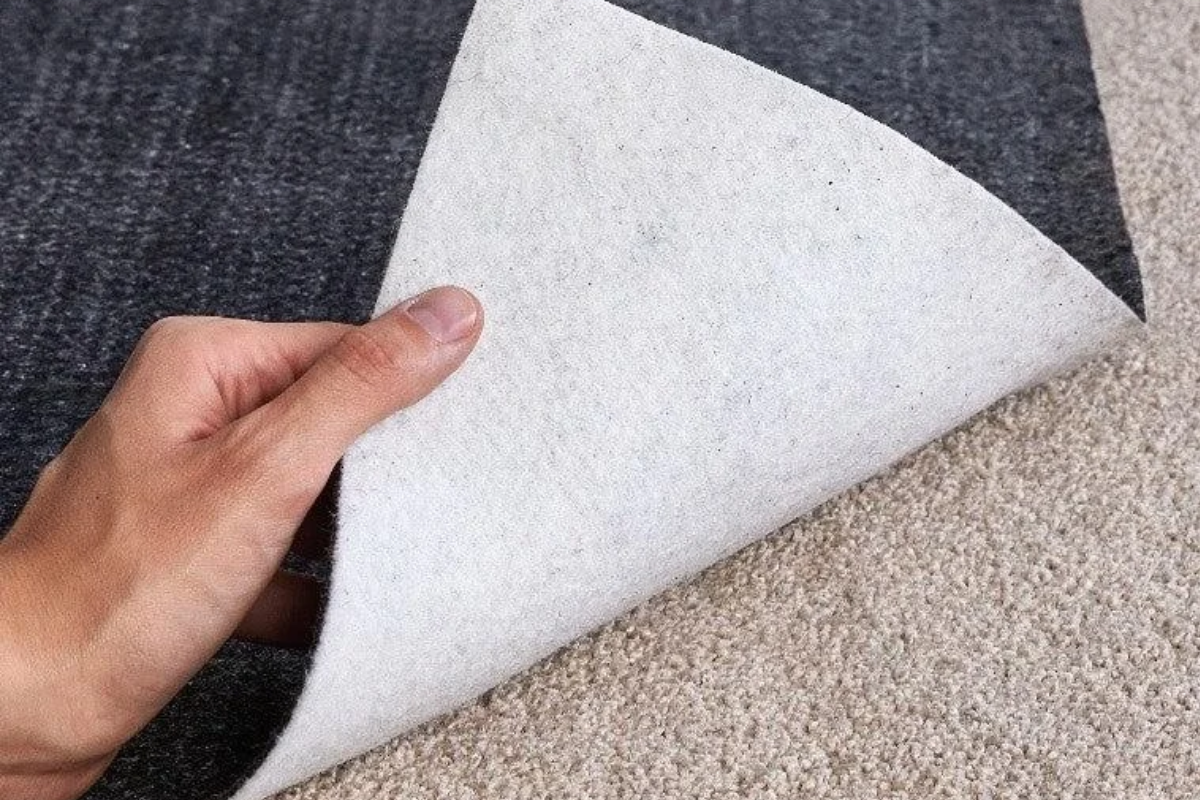
Short answer: You can put a rug over carpet, and a Moroccan rug can look very good on a plain wall-to-wall. It behaves best on low or looped carpet, where a deep-pile rug gets a firm base and a flatweave lies flat, and when a pad made for carpet stops the rug from creeping. Plush carpet is harder for every kind of rug. The real risk is not how it looks. It is a rug that slowly walks, ripples or rolls at the edge until it becomes something to trip over, so check it weekly for the first month.
When we checked this search on September 24, 2026, the ranking pages were mostly rug sellers, pad makers and flooring retailers. They agree that it can be done and that slipping is the main problem. What they rarely cover is how a hand-woven wool rug in particular behaves on carpet, or what happens underneath it over the following year. That is what this guide is about.
Why a rug moves on carpet at all
A rug on a hard floor slides. A rug on carpet does something slower and less obvious: it walks. Each footstep pushes it a fraction in one direction, and after a few weeks the rug has drifted, bunched against a piece of furniture or developed a ripple.
The explanation pad makers give is that wall-to-wall carpet pile leans. RugPadUSA, a company that sells pads for this use, says on a page we read on September 24, 2026, that rugs "follow the carpet's pile movement with foot impact," and that most carpets are "installed with the carpet pile facing the entryway." It adds that "the longer and plushier your carpet's fibers, the more your rug will tend to move." That is a seller's explanation, but it matches the pattern most owners describe: the rug creeps toward the door.
That direction matters for safety. A 2013 study in the Journal of Injury and Violence Research, Slipping and tripping: fall injuries in adults associated with rugs and carpets by Rosen, Mack and Noonan, which we read on September 24, 2026, estimated that "annually, an estimated 37,991 adults age 65 years or older were treated in U.S. EDs for falls" associated with carpets and rugs. It also found that "frequent fall injuries occurred at the transition between carpet/rug and non-carpet/rug, on wet carpets or rugs, and while hurrying to the bathroom." A rug creeping toward a doorway is a rug moving its edge toward exactly that kind of transition.
Rug over carpet: match the rug to the carpet's pile
The carpet under the rug decides most of how well the arrangement behaves. Low or looped carpet gives a rug something firm to sit on. Plush carpet gives it something soft to move on.
| Your Moroccan rug | On low or looped carpet | On plush or deep carpet |
|---|---|---|
| Deep, soft pile, as on many Beni Ourain-style pieces | Usually the best match. The firm carpet gives the thick rug a stable base. Watch the raised edge. | Soft on soft. The rug flexes underfoot, its edges roll and it tends to creep most. Think twice. |
| Shorter or medium pile | Works well with a carpet pad under it. | Workable, but expect movement. A heavier, denser rug holds better than a light one. Check it often. |
| Flatweave (kilim or hanbel types) | Lies flat and looks crisp, but light pieces can shift. A pad helps. | Prone to rippling, because a thin, light rug follows every dip in the pile below. A carpet pad gives it a flatter surface. |
On a plush carpet, no Moroccan construction is trouble-free: a thin flatweave ripples and a deep pile rolls. If the carpet is plush and the rug has to go there, a heavier, denser rug on a carpet pad, with furniture holding at least one side, is the arrangement most likely to stay put.
Pattern follows its own logic. A patterned Moroccan rug sits best on a plain carpet. A plain or mostly undyed rug can work on a patterned carpet, but two patterns on top of each other rarely help either one.
Keeping it still: pads, furniture and what to avoid
A pad designed for a hard floor is the wrong tool here. It grips smooth surfaces, not carpet fibers, and it can move with the rug. What pad makers sell for this situation is a pad intended for use on carpet, typically combining felt that holds the carpet pile with a grippier layer against the rug. Read the maker's own description of what surface a pad is for before buying one. Our guide to choosing a rug pad for a wool rug explains what to look for in the material itself.
Other things that help:
- Furniture weight. A sofa or bed with legs on the rug holds it far better than any pad on an open patch of carpet. Where you can, let furniture anchor at least one side.
- Size the pad slightly smaller than the rug, so no pad edge shows or forms a step.
- Straighten and re-lay it before the ripple sets. A ripple left in a wool rug for weeks can leave a crease.
What to avoid: permanent adhesives or heavy tape on the back of a hand-knotted rug. There is no factory backing on a hand-woven Moroccan rug; its underside is the back of the knots and the foundation threads, so anything stuck there is stuck to the rug's structure. RugPadUSA also notes that "the wrong carpet tape may pull at the fibers of your carpet and rug on removal." Rug grippers are a mixed option; the same page says they "don't work well on plushier carpets with long carpet piles." Our guide on how to stop a rug from slipping compares the options in more detail.
Check it weekly at first: the ripple test
Creep is slow, which is why it catches people out. For the first month:
- Mark two corners with a small piece of painter's tape on the carpet, just outside the rug.
- Check once a week whether the rug has moved away from the marks.
- Walk the edges and look for any ripple, roll or lifted corner.
If the rug has moved noticeably or a ripple has formed, straighten it and change something: add or change the pad, move furniture onto it, or turn it so the long side runs a different way. The stop condition: if a ripple or rolled edge keeps coming back in a walking path, take the rug up from that spot until you have a fix that holds. A rug that ripples in a walkway is a trip hazard, however good it looks.
Be stricter still where the rug's edge meets a doorway, the top or bottom of stairs, or a bathroom route used at night. Those are the transitions and circumstances the fall research points to. If someone in your home is at higher risk of falling, it may be better to keep that route clear of rugs altogether.
What happens under the rug
The part nobody sees is where a rug over carpet ages differently from a rug on a bare floor.
Spills go through. A spill on a wool rug over carpet can soak through into the carpet and its underlay, and a damp layer trapped under a rug dries much more slowly than one exposed to air. After any real spill, lift the rug, deal with both, and let them dry separately before putting the rug back.
Color can move. A damp wool rug lying on a pale carpet can leave a tint behind, and natural dyes are not exempt. Our piece on why wool rug colors bleed explains why "natural" does not mean colorfast.
The carpet under it stays hidden. The covered carpet is not walked on or vacuumed in the same way as the rest of the room, and if it is wool, it is a dark, undisturbed patch of exactly the fiber moth larvae eat. Lift the rug every few months, vacuum the carpet underneath and the back of the rug, and look for the signs in our guide to whether carpet moth damage is still active.
The outline. In a sunny room, the exposed carpet can fade while the covered area does not. If the rug moves or leaves, you may find its footprint. Rotating the rug does not prevent this entirely, but it softens any sharp edge.
When a rug over carpet is the wrong choice
Sometimes the honest answer is not to do it. Leave it, or choose a different rug for the spot, when:
- Both are deep and soft. A deep-pile Moroccan rug on a plush carpet is the combination most likely to creep and roll.
- The spot is a transition. A doorway, the top or bottom of a flight of stairs, or the edge where carpet meets tile.
- The route is used in the dark or in a hurry, such as a path to the bathroom at night.
- Nobody will check it. A rug over carpet needs a glance every week or two to catch creep early. If that will not happen, keep it where furniture holds it firmly.
What we cannot tell you
We have not seen your carpet or your rug, and carpets vary enormously in pile, density and how they were laid. We cannot tell you in advance whether a particular rug will creep on a particular carpet; the weekly check is how you find out. Pad makers' explanations are useful but come from companies that sell pads, so read them as such. If anyone in the home is at higher risk of falling, their doctor can arrange a home safety assessment, which can include a visit from an occupational therapist who sees the actual floors.
FAQ
Can you put a rug over carpet?
Yes. It works best on low or looped carpet, with a pad made for use on carpet to stop the rug from creeping. Check it weekly for the first month and fix any ripple straight away.
Why does my rug keep moving on the carpet?
The usual explanation, given by pad makers, is that wall-to-wall carpet pile leans in one direction and each footstep nudges the rug along it, often toward the doorway. Plush carpet makes it worse. A carpet-specific pad and furniture on the rug are the main fixes.
Should I use a rug pad on carpet?
Usually, yes, but not a pad meant for hard floors. Look for one whose maker says it is intended for carpet, size it slightly smaller than the rug, and avoid adhesives on the back of a hand-woven rug.
Is a deep-pile Moroccan rug a good idea on plush carpet?
It is the most troublesome combination. Soft on soft lets the rug flex, roll at the edges and creep. A deep-pile rug does much better on low or looped carpet. On a plush carpet, a heavier, denser rug on a carpet pad, held by furniture, tends to stay put best.
Leave a Reply