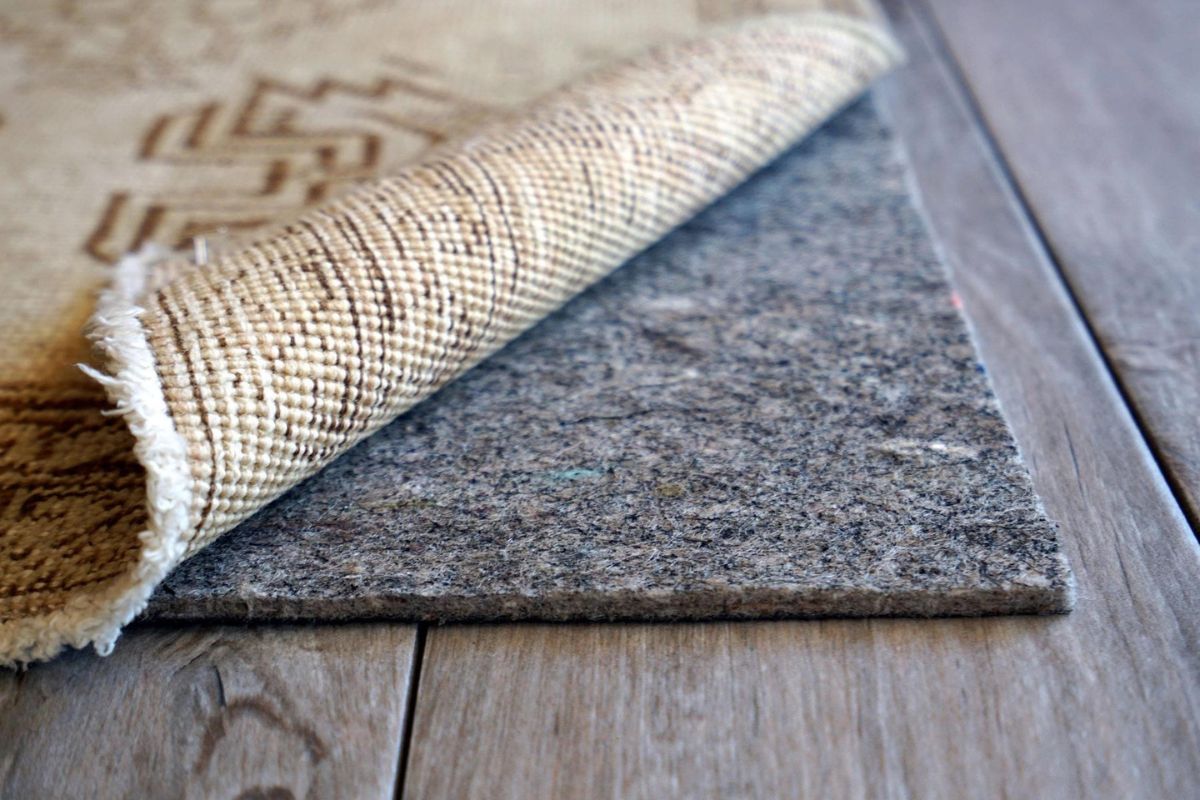
A rug pad's job is to stop a wool rug from shifting, cushion foot traffic, and let air circulate underneath, but the wrong backing can strip a hardwood floor's finish or trap moisture against both the rug and the wood. Felt paired with natural rubber, free of the plasticizers found in cheap synthetic rubber and vinyl, is the material combination flooring and rug-pad sources describe as safe for a finished wood floor. This guide does not name a single winning product. Atlas Rug Guide sells nothing and has no reason to point you at one brand over another, so instead it explains what any pad has to get right, so you can check a specific one against that before you buy it.
What a rug pad actually does, mechanically
A pad sits between the rug's backing and the floor and does four separate jobs, and it's worth knowing which one you actually need before choosing a material.
- Anchoring. Friction between the pad and both surfaces keeps the rug from creeping or bunching, which is a different mechanism from the slip-specific fixes covered in how to stop a rug from slipping.
- Cushioning. A layer of give underfoot reduces the direct impact of foot traffic on the pile and knots.
- Grit protection. Without a pad, dirt and small grit ground between a rug's backing and a hard floor act like sandpaper on both surfaces over time.
- Airflow. A pad with an open or breathable structure lets air move under the rug rather than trapping moisture against the floor.
What the wrong pad does to a hardwood floor's finish
This is the part sellers gloss over, because it's an argument against the cheapest option they carry. As reported by rug-pad manufacturers and flooring-industry sources, the plasticizers used to keep some rubber and vinyl pads flexible can migrate out of the pad and into a wood floor's finish over time, leaving a permanent yellow or amber discoloration that some sources call "nicotining." The same sources describe an off-gassing mechanism, chemicals releasing from a plastic pad, especially under heat or sunlight, that reacts with a polyurethane finish and leaves it dull or hazy rather than sharply colored. A third mechanism is simpler: a solid, non-breathable rubber or vinyl backing traps moisture between the rug and the floor, which over time can warp the wood or, in humid climates, support mold growth underneath a rug that never gets to dry out.
None of these three mechanisms is about the rug itself. They are about what a specific pad's material does to your specific floor's finish over months or years, which is exactly why this page will not tell you a single product is safe for every floor. Read on for how to actually check.
Materials, described not ranked
| Material | What it's good at | What to watch for |
|---|---|---|
| Felt (wool or synthetic felt) | Cushioning and quiet underfoot; generally low chemical risk to a floor finish | Little to no grip on its own; usually paired with another material for anti-slip |
| Natural rubber | Good grip, described by pad manufacturers as generally floor-safe when free of added plasticizers | Solid sheets can trap moisture if not vented or perforated; quality varies a great deal between suppliers |
| Synthetic rubber or PVC/vinyl | Cheapest option, widely available | The material most repeatedly linked to plasticizer migration and off-gassing damage on finished wood, per the sources above |
| Felt-and-rubber hybrid | Combines cushioning with grip; commonly described as the safer combination for hardwood when the rubber layer is plasticizer-free | Still depends on the specific rubber used, not the category name alone |
| Adhesive tape or dots | Strong, targeted hold at edges and corners | Can leave residue on some finishes; not a substitute for a full pad under a large rug |
For a hand-knotted wool rug specifically
A hand-knotted rug is heavier than a printed or machine-tufted rug of the same size, which changes the calculation slightly. The weight itself provides some natural resistance to sliding that a thin machine-made rug lacks, a point covered in what makes rug wool worth paying for. But a hand-knotted rug also has no manufactured non-slip backing of its own, unlike some modern printed rugs that come with a rubberized underside built in, so anchoring still matters, particularly on a hard floor where the rug will see regular foot traffic.
Because a hand-knotted piece is a one-off, irreplaceable object, this is also not the place to gamble on the cheapest pad available. A pad that damages a $50 machine-made rug's backing is an annoyance. A pad that discolors the floor under a rug you can never replace, or that traps moisture against a naturally dyed wool pile, is a worse outcome twice over.
Testing before you commit
There is no thickness or firmness figure this site can responsibly hand you, since the right choice depends on your specific floor, finish and how the rug will be used, and a number stated with false confidence here would be worse than no number at all. What you can actually do:
- Check the finish, not just the pad. Some wood-floor finish manufacturers publish their own guidance on which pad materials are compatible with their product, and following that is more reliable than trusting a pad's own packaging claim.
- Look for an explicit hardwood-safe or PVC-free label, and treat a pad with no material disclosure at all as a reason to keep looking rather than assume the best.
- Test a small piece in an inconspicuous spot under a piece of furniture for a week or two before trusting a new pad under the whole rug, the same discipline this site recommends for any cleaning product on wool.
- Check on it periodically once it's down. Lift a corner every few months for the first year, especially in a humid climate, and look for any change in the floor's sheen or color where the pad sits.
When it's a flooring question, not a rug question
If your hardwood is under a manufacturer's finish warranty, that warranty may specify which pad materials void it, and that is a question for the flooring manufacturer or the installer, not a rug site. The same goes for engineered wood, which can respond differently to trapped moisture than solid hardwood. When in doubt about your specific floor, ask the people who finished it before you ask a rug-care guide. For everything else in the routine around the pad, how to care for a Moroccan wool rug covers vacuuming, spills and rotation, all of which matter more to how long the rug itself lasts.
FAQ
Do wool rugs need a pad at all?
Most benefit from one, for cushioning, grit protection and reduced shifting, but a heavy hand-knotted rug on a low-traffic floor is a lower-stakes case than a thin rug in a busy hallway. It's a genuine trade-off, not a universal yes.
What rug pad material is safest for hardwood floors?
Felt paired with natural rubber that is free of added plasticizers is what flooring and rug-pad sources most consistently describe as safe. This site does not name a specific product; check the material disclosure and, where possible, your floor finish manufacturer's own guidance.
Can a rug pad ruin a hardwood floor?
Yes, through three documented mechanisms: plasticizers migrating into the finish and leaving discoloration, off-gassing hazing the finish, and trapped moisture under a non-breathable backing warping the wood or supporting mold.
How do I know if my current pad is damaging my floor?
Lift a corner periodically and check the finish underneath for yellowing, haziness or a change in sheen compared to the rest of the floor. Catching it early is easier to address than finding it after months.
Is a thicker pad always better?
Not necessarily, and this site does not have a verified figure to recommend. Thickness affects cushioning and can affect how a rug's edges sit relative to adjoining flooring, but it does not by itself determine whether a pad is safe for your finish. Material matters more than thickness for the floor-damage question.
Leave a Reply