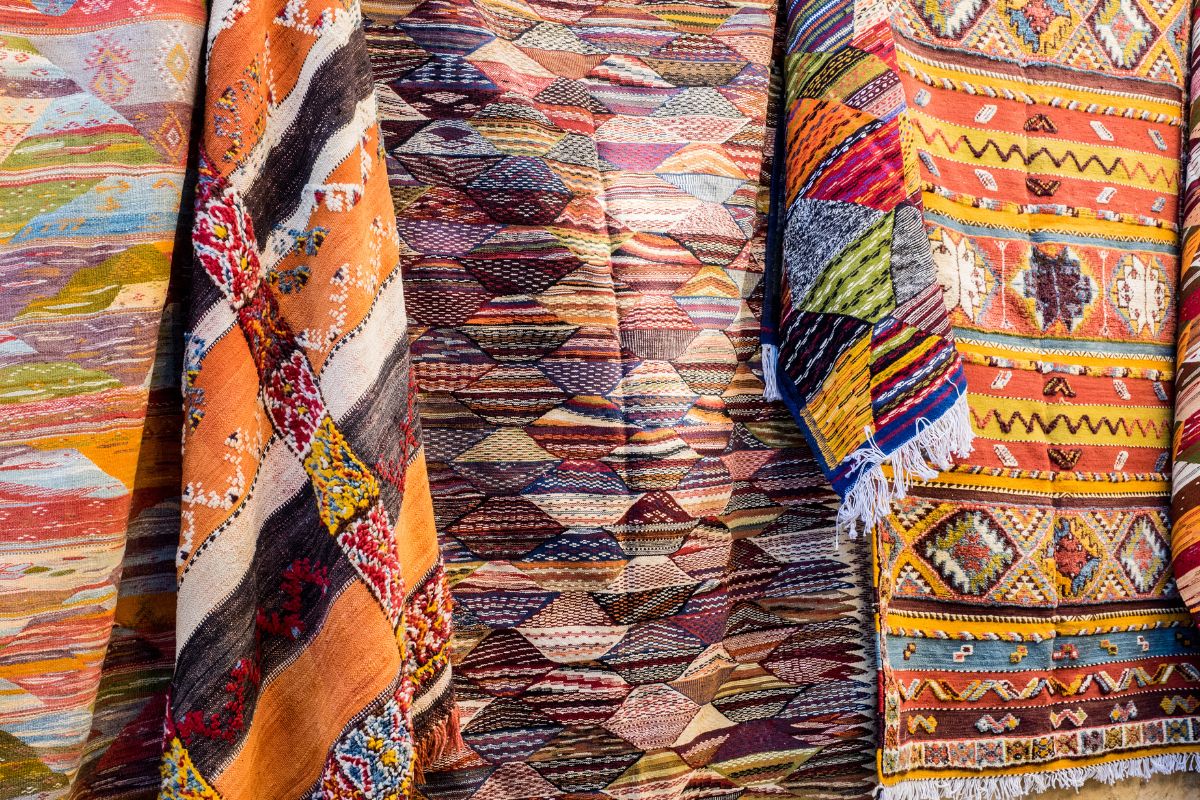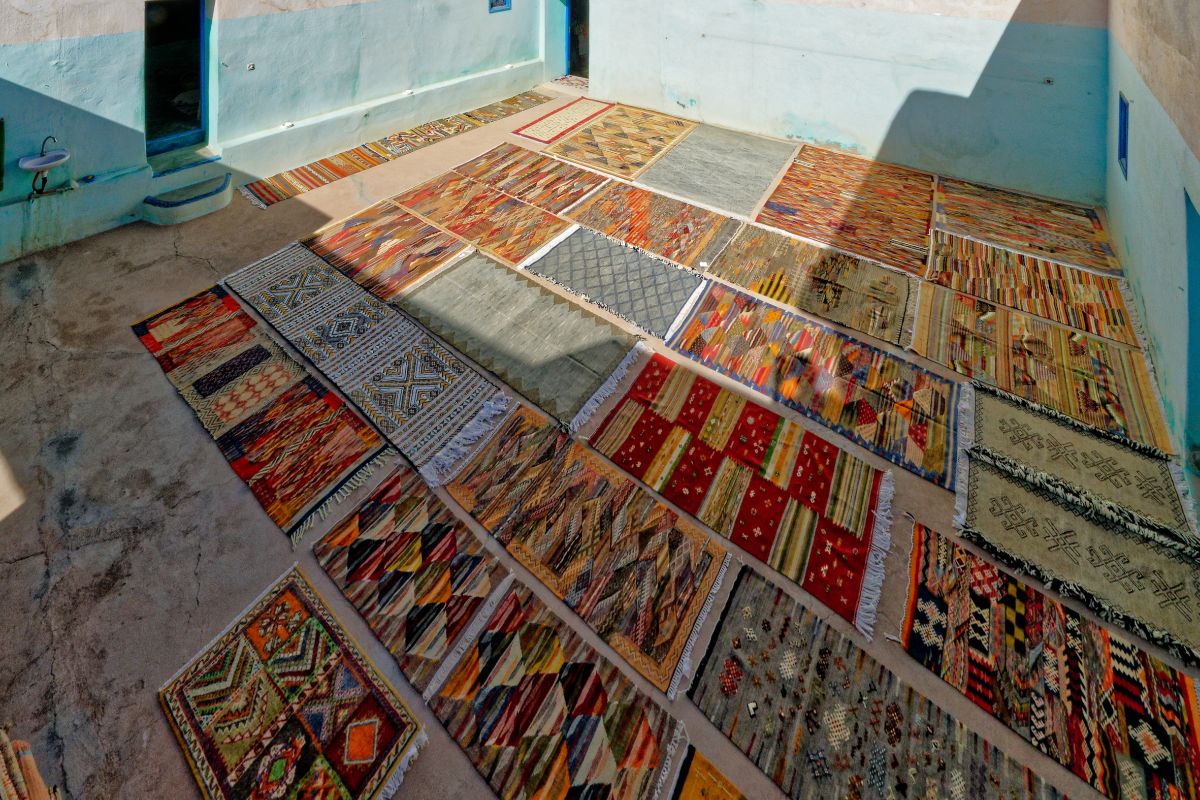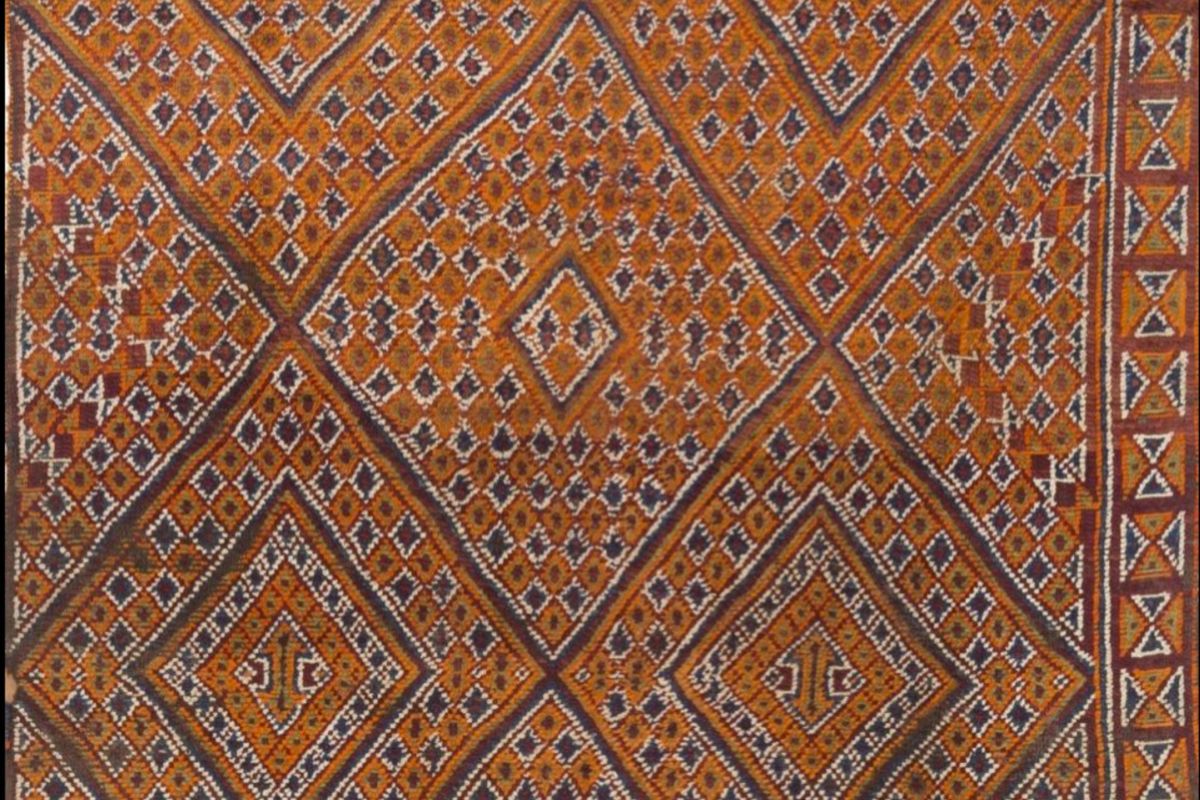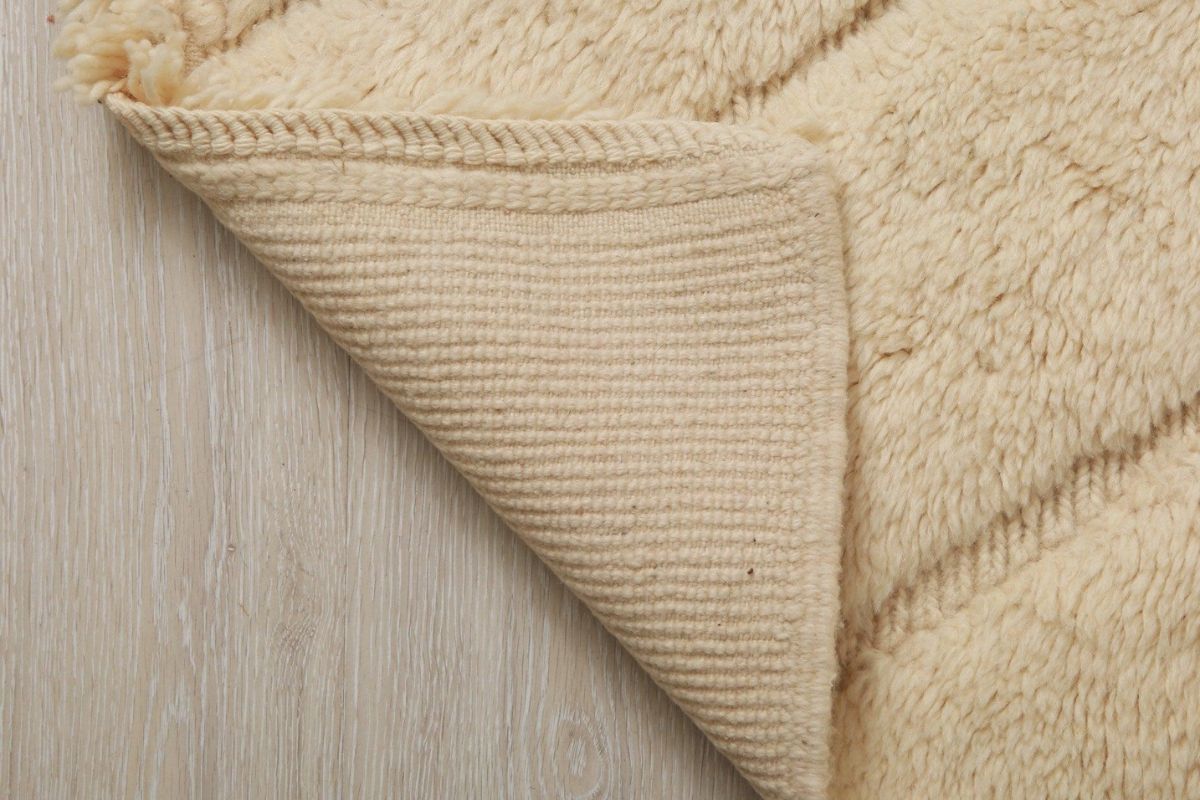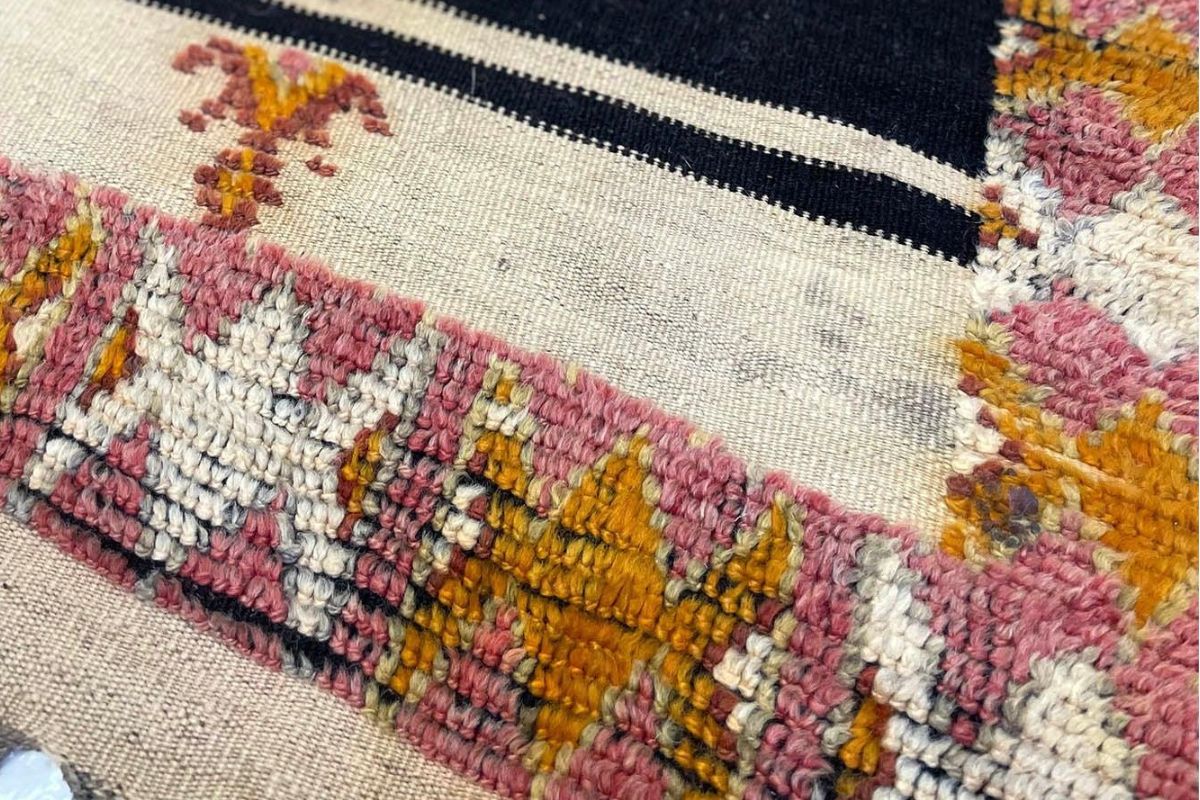
A Glaoui rug is not one weaving technique but three, combined in a single piece: sections of hand-knotted pile, sections of flat weave, and passages of black-and-white embroidery called chedwi, often alongside narrow, tufted flatweave bands similar to those found on Zanafi rugs. If a rug you're looking at seems to switch construction partway across its surface, thicker and plush in one band, flat and graphic in the next, that is very likely a Glaoui, and it is a deliberate, technically demanding choice rather than an inconsistency.
Where the name comes from
The name is associated with the Glaoua, a real and well-documented Berber tribal confederation of the High Atlas, historically seated at the Kasbah of Telouet. Their leadership rose to significant regional power in the 20th century: Thami El Glaoui served as Pasha of Marrakesh from 1912 to 1956, and the family's history is covered in detail in Gavin Maxwell's book "Lords of the Atlas" and by outlets including Arab America. That makes the Glaoua one of the better-documented named groups referenced anywhere in this cluster.
Worth being precise about, though: the historical record documents the Glaoua as a tribal confederation and a powerful political dynasty. It does not, on its own, confirm that every rug sold under the "Glaoui" name today was woven by identified members of that lineage, and this guide has no independent source connecting a specific piece to a specific weaver's tribal identity. Treat the name as pointing to a High Atlas regional and historical association, real and citable, rather than as a guarantee about who wove any individual rug in front of you.
The three techniques, explained
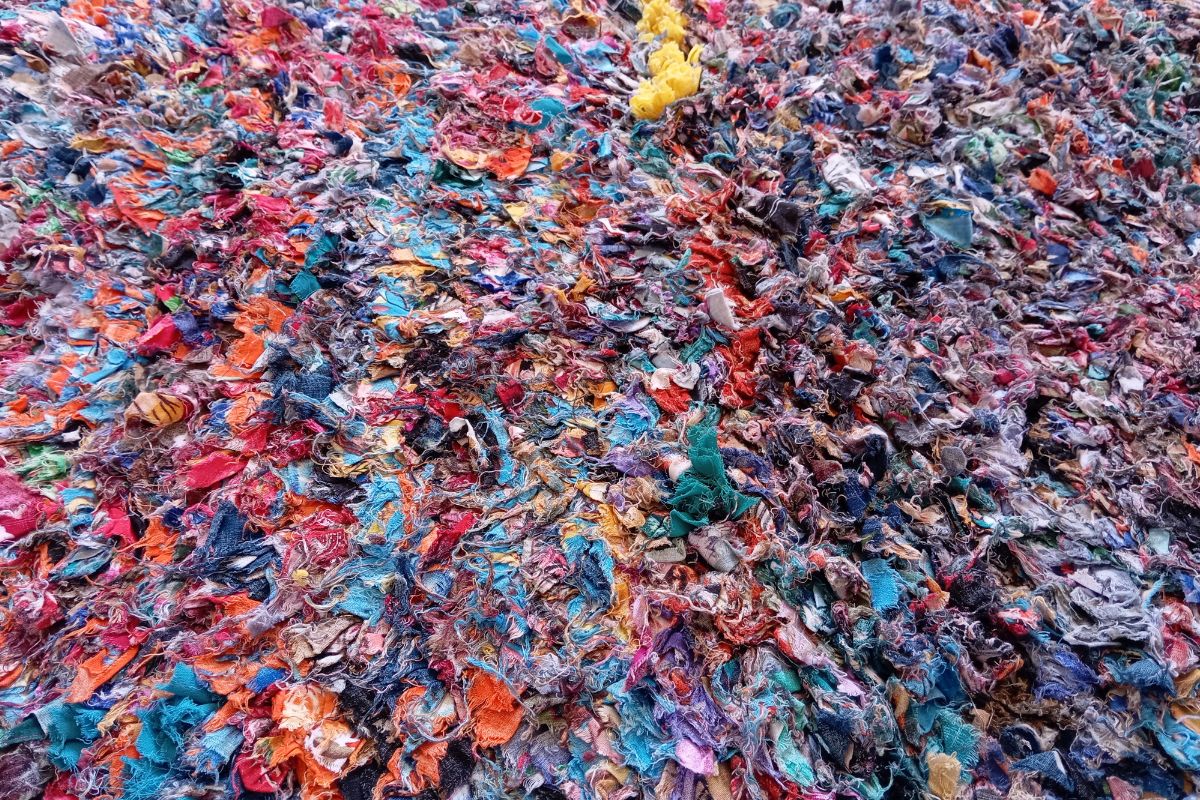
- Hand-knotted pile sections. Built the same way as a Beni Ourain or Beni Mrirt: individual knots tied into a foundation, producing a raised, textured surface.
- Flat-woven sections. Built like a kilim or hanbel, with no knots and no raised pile, giving a thinner, flatter passage within the same rug.
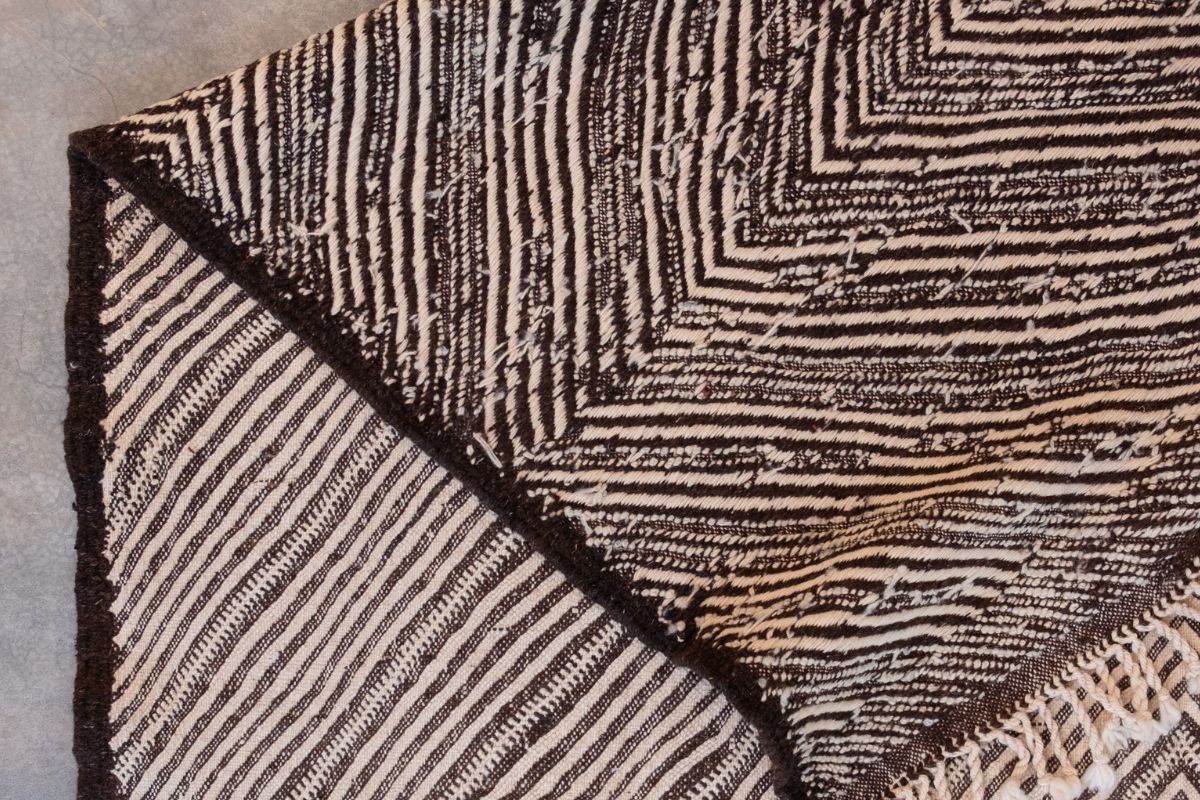
- Chedwi embroidery. A specific embroidery technique pairing black and white wool to create diagonal lines, curves, and figures, worked as a distinct decorative passage rather than as part of the base weave.
- Zanafi-style tufted bands. Narrow flatwoven strips that run through the rug and tuft out from either side, the same construction found in dedicated Zanafi rugs.
Combining all of this in one piece is genuinely more technically demanding than any single technique alone, since the weaver has to manage transitions between construction methods without weakening the structure at each seam.
Why this matters for a buyer
A rug built from multiple techniques gives you more places to check quality, and more places something can go wrong in a lower-quality copy:
- Check each section separately. Run your hand across the knotted, flat, and embroidered passages individually. A genuine piece should feel intentional and consistent within each section, not just uniformly "busy."
- Look at the transitions. Where one technique meets another is the most structurally demanding part of the weave. Loose threads, obvious gaps, or a poorly finished seam at a transition point are a sign of lower-quality construction.
- Don't expect a single, simple description. Because a Glaoui rug is inherently mixed, "what pile height" or "what construction" doesn't have one answer for the whole piece the way it would for a Beni Ourain. Ask a seller to describe each section if that level of detail matters to your decision.
- Compare pattern legibility. The chedwi embroidery's diagonals and curves should read clearly rather than looking muddy or rushed, since this passage is entirely decorative rather than structural.
Where it fits
Because a Glaoui rug visually mixes a plush knotted texture with a flat, graphic embroidered passage, it tends to work as a statement piece rather than a quiet neutral base, more comparable in spirit to Boujad or Azilal than to the restrained Beni Ourain. Its combination of textures also means it reads differently depending on the light and the angle you view it from, a genuine visual complexity that a single-technique rug doesn't offer. That can make it a strong focal point in a room that otherwise stays simple, since the rug itself supplies enough visual interest that it doesn't need much competition from patterned furniture or wall treatments around it.
What a genuine piece should not look like
Because a Glaoui rug is more technically demanding to produce than a single-technique piece, it is also more expensive to fake convincingly, and cheaper imitations tend to cut corners in specific, checkable ways. A machine-made or simplified copy will often print or embroider a pattern that only mimics the chedwi look on the surface, without the actual black-and-white embroidery passage standing proud of the base weave, or will use a printed pattern across the whole rug rather than genuinely switching construction technique section to section. Running a hand across the surface should reveal real, physical differences in texture between the knotted, flat, and embroidered passages; a rug that feels uniform all over despite looking visually mixed is worth a closer look before you assume it is a genuine multi-technique piece.
For how it sits alongside the rest of the named Moroccan styles, see the complete guide to Moroccan rug styles, and for the flatweave-only construction it partly shares, see Moroccan kilim and hanbel rugs.
FAQ
What is a Glaoui rug?
A Moroccan rug that combines three weaving techniques in one piece: hand-knotted pile, flatweave, and black-and-white chedwi embroidery, often with narrow tufted flatweave bands as well.
Where does the name "Glaoui" come from?
It is associated with the Glaoua, a documented Berber tribal confederation of the High Atlas whose leadership, including Thami El Glaoui, held significant political power in 20th-century Marrakesh. This is a real, citable historical association, though it does not by itself confirm the specific origin of any individual rug sold under the name today.
What is chedwi?
An embroidery technique used on Glaoui rugs, pairing black and white wool to create diagonal lines, curves, and decorative figures as a distinct passage within the rug.
Is a Glaoui rug the same as a Zanafi rug?
No, though they share one element: the narrow tufted flatweave bands. A Zanafi rug is a flatweave throughout; a Glaoui rug mixes flatweave with knotted pile and embroidered sections in a single piece.
Are Glaoui rugs harder to make than single-technique rugs?
Generally yes. Combining knotted, flat, and embroidered construction in one piece, and managing the transitions between them, is more technically demanding than weaving a single consistent technique across the whole rug.