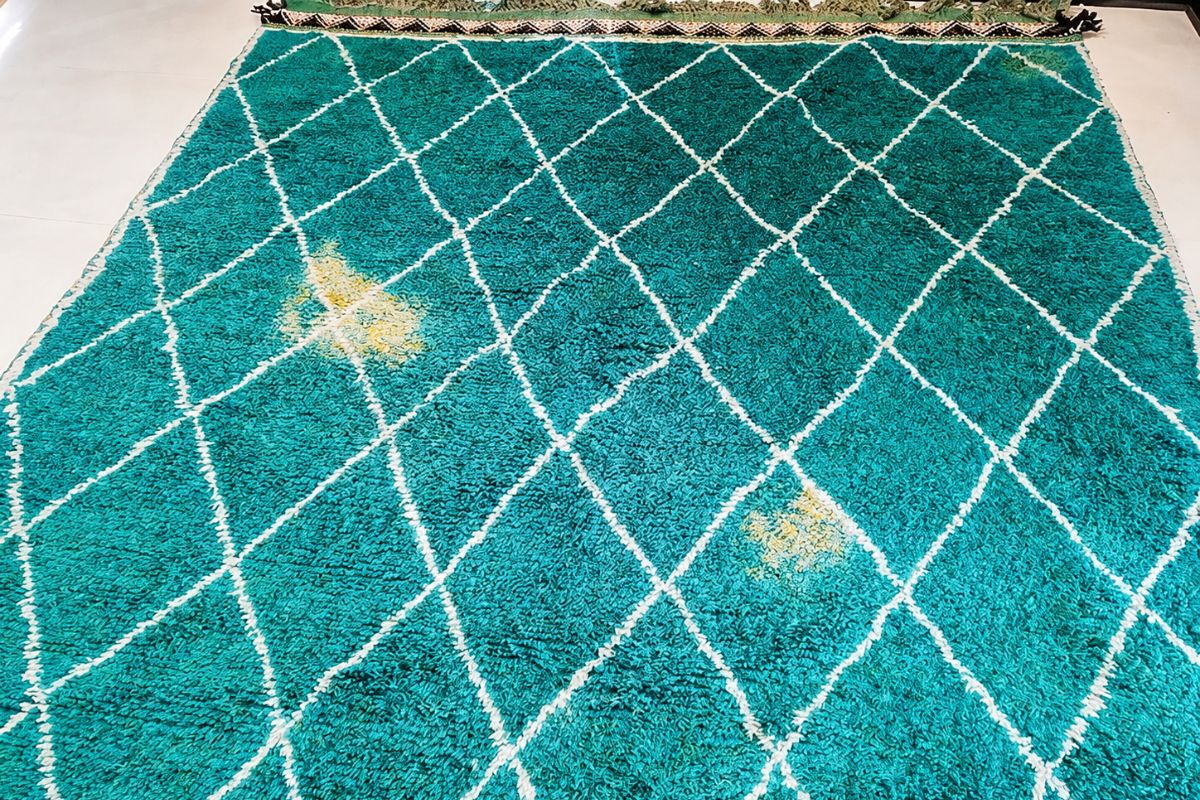
Wool is a protein fibre, so the rule is short: pH-neutral and explicitly wool-safe only. Four categories cause permanent damage and all four are probably under your sink right now: oxygen bleach (the active in "oxy" spot cleaners), chlorine bleach, enzyme cleaners, and high-alkaline all-purpose household cleaners. Heat makes each one worse. The reason people keep using them is in the title: none of this looks like damage on the day. Felting, browning and dye movement appear after the rug has dried, by which point the cause is no longer obvious.
Why wool is different: it is protein, not plastic
Almost everything else on a modern floor is a plastic: polypropylene, nylon, polyester. Those fibres are chemically inert to most household cleaning, which is why general-purpose products can be formulated aggressively and still be fine on synthetic carpet.
Wool is a protein fibre with a scaled surface, closer to hair than to plastic. It reacts. Professional rug-cleaning sources describe wool as requiring pH-neutral treatment, with professional formulations sitting in a range of roughly 5.5 to 8.0. Outside that band, three things happen: the scales interlock and the fibre felts and shrinks, the lanolin that protects it is stripped so it dries out and becomes brittle, and the dyes become unstable and start to move.
A hand-knotted Moroccan rug adds the obvious complication. It is a one-off object, and there is no replacement for the one you damage.
The never list, and what each one does
Oxygen bleach. The active ingredient in most "oxy" spot cleaners and many laundry boosters. It bleaches wool, and the lightened patch is permanent. This is the single most common cause of irreversible home damage to wool rugs, because the product is marketed for exactly the situation the reader is in: a stain they want gone.
Chlorine bleach. Everything oxygen bleach does, faster, plus it degrades the fibre itself.
Enzyme cleaners. Formulated to break down protein, which is what wool is. They are the standard recommendation for pet accidents on synthetic carpet and they are the wrong product for a wool rug. If a pet accident has reached the foundation, that is a professional's job, not a stronger bottle.
High-alkaline all-purpose cleaners. Most general household sprays, degreasers and floor cleaners are alkaline, because alkalinity cuts grease. On wool it felts the fibre, strips lanolin and destabilises dye. This is the quietest one on the list: it rarely does anything visible in the moment.
Hot water, steam and heat. Not a product, but it belongs here. Heat sets stains, accelerates felting and compounds everything above. That includes steam cleaners, which combine heat with saturation.
And never mix products. Combining cleaning chemicals is dangerous to you regardless of what it does to the rug.
The conditional list, and what to check on the label
Some things are usable with care, and the care is what makes them usable.
- Products that state they are safe for wool. The label is the qualification. Look for an explicit wool statement rather than "safe for all carpets," and follow the manufacturer's own directions exactly rather than adjusting the strength.
- Wool-specific detergents sold for washing wool textiles. Formulated for the fibre, and still to be used as directed.
- Plain cool water, used sparingly and blotted rather than poured. The safest liquid available and enough for most fresh spills.
Two disciplines apply to anything in this list. Test on a hidden area first, the underside or a corner under furniture, and let it dry fully before judging. And apply to a cloth rather than to the rug, so you control how much goes in.
What is genuinely fine
Reassurance, because the list above can read as if wool is fragile. It is not. It has been used underfoot for centuries and it is remarkably durable.
Vacuuming with the rotating brush off is fine and is the most useful thing you do. Airing the rug outdoors on a dry day is fine and helps with musty smells. Blotting a fresh spill with a white cloth and a little cool water is fine. Rotating the rug is fine. Brushing flattened pile gently with the lay is fine.
What is not fine is a strong product applied in a hurry to a mark that seemed urgent. That is the whole failure mode this page exists to prevent.
Why the damage is invisible at the time
This is the part other pages skip, and it explains why intelligent people keep doing it.
You use an all-purpose cleaner on a mark. The mark improves. The rug is damp and looks fine. You conclude it worked.
Two days later the area is slightly stiffer than the surrounding pile, or fractionally paler, or there is a faint ring where moisture carried something up through the fibre and left it at the surface as it dried. Nobody connects that to Tuesday. So the next time there is a mark, the same product comes out, and the rug accumulates damage nobody has attributed to a cause.
Alkaline damage, lanolin stripping and dye destabilisation all work on this delay. Oxygen bleach is the exception, and even it often reveals itself only once dry. That delayed feedback is why the rule has to be a rule rather than a judgement made in the moment with a bottle in your hand.
For the emergency version of this, spills on wool: what to do in the first five minutes. For the bigger decision, washing a wool rug at home, or not. For the routine that means you rarely need any product at all, how to care for a Moroccan wool rug and vacuuming a wool pile rug. And if colour has already moved, natural or synthetic dye explains what that does and does not mean.
FAQ
What cleaning products are safe for wool rugs?
Plain cool water used sparingly, and products that explicitly state they are safe for wool, used exactly as their manufacturer directs and tested on a hidden area first. Professional sources describe wool as needing pH-neutral treatment, roughly 5.5 to 8.0.
Can I use OxiClean or an oxy spot cleaner on a wool rug?
No. Oxygen bleach lightens wool permanently, and the pale patch cannot be reversed. It is the most common cause of irreversible home damage to wool rugs.
Are enzyme cleaners safe for wool?
No. Enzymes are formulated to break down protein and wool is a protein fibre. That includes the pet-accident products commonly recommended for synthetic carpet.
Why are household all-purpose cleaners a problem?
Most are alkaline. On wool, alkalinity felts the fibre, strips the protective lanolin and destabilises dyes, and none of it is visible on the day you use it.
Can I use a steam cleaner on a wool rug?
No. Steam combines heat and saturation, both of which damage wool, and a dense pile that stays damp develops odour, mildew and browning.
Leave a Reply