Blog

  • Wool Rug With Dogs and Cats: What Actually Goes Wrong

    Wool Rug With Dogs and Cats: What Actually Goes Wrong

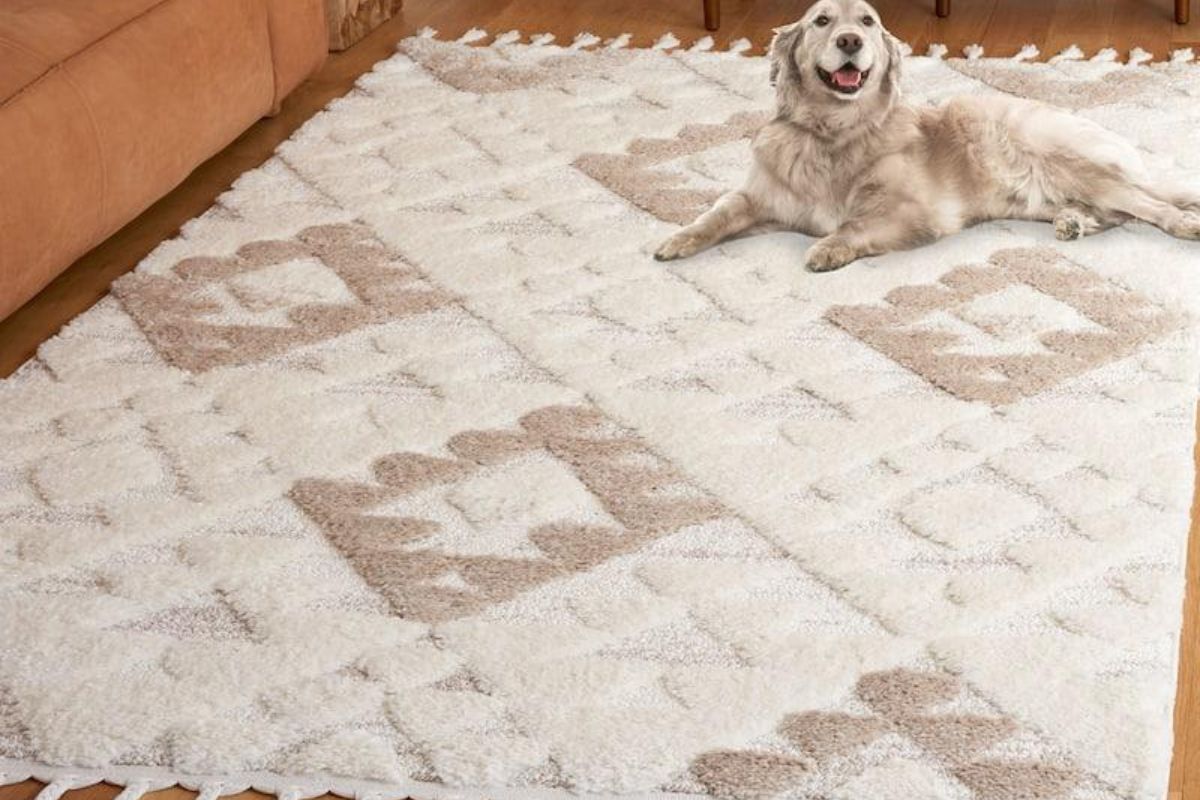
    The short version is better news than most people expect. Wool is one of the better floor surfaces to own alongside an animal, and it fails in one specific, predictable way that almost nobody is warned about until it has already happened.

    This page is about the rug you already have. It recommends no product and no purchase.

    What wool is genuinely good at here

    Three things, and they are real rather than marketing.

    It hides hair and dirt. A mid-tone, variegated hand-knotted pile is close to the ideal surface for concealing what an animal deposits on it. That is a maintenance advantage every day of the year.

    It survives being walked on. A hand-knotted wool pile is built to take footfall for decades. Claws are a different question, covered below, but weight and traffic are what the construction is for.

    It does not shred into loops. Most Moroccan rugs are cut pile. A cat that hooks a claw into a cut pile pulls at individual tufts. The same cat on a looped carpet can pull a loop and run a line through it. This is a genuine structural advantage and it is the reason a hand-knotted rug often ages better around a cat than a fitted carpet does.

    The one way it fails, and it is the important part

    Here is the thing nobody says. A wool rug can be holding a large amount of liquid and still feel dry to your hand.

    The Woolmark Company puts it plainly: "Wool can absorb up to 35% of its weight before feeling wet and clinging to the skin." The International Wool Textile Organisation states the same figure independently, describing wool as able to absorb up to 35% of its own weight in moisture.

    Both of those are written about wool worn on a body, and the property is the same in a rug. It is why wool is comfortable to wear and why it fails quietly on the floor.

    A pet accident on wool does not look like a pet accident. On a hard floor it is a puddle. On a synthetic rug it beads. On wool it is absorbed, the surface reads as damp at worst, and a great deal of liquid can have reached the foundation and the floor beneath while the pile still feels like nothing much has happened.

    The consequence: the size of a wool accident is almost always underestimated, and the response is almost always too small. That is the mechanism behind most of the permanent pet damage that reaches professional cleaners.

    Fresh, and what to do about it

    The most useful thing on this page is that a genuine standards body publishes a step sequence for exactly this, and it is short.

    The WoolSafe Organisation's Spot Removal Guide lists Urine (fresh stain) as four steps in order:

    1. "Blot up as much of the spill as possible using a clean white cloth, tissue or paper towel."
    2. "Apply WoolSafe Approved Pet Stain Remover to a damp white cloth and blot."
    3. "Repeat the blotting with clean water again to remove any residues."
    4. "Dry the treated area with white cloth, tissue or paper towel and align the pile."

    Four things in that sequence are worth reading twice.

    Blotting comes first and it is most of the work. Given the 35% figure above, assume there is more liquid in the pile than you think and keep going after you believe you are done. Press down and change the cloth. Do not rub.

    The product goes on the cloth, not on the rug. WoolSafe's general instruction is the same for every stain on its chart. Applying liquid directly to the pile puts more water into a fiber that is already holding more than it appears to be.

    White cloth, every time. A colored cloth can transfer its own dye into wet wool.

    Align the pile at the end. A treated patch that dries with the pile pushed the wrong way stays visible as a mark even when the stain is gone.

    WoolSafe is an approval program, not a shop. It exists to test whether a product is safe on wool, and this site earns nothing from any product carrying its mark. Naming it is a way of saying check for an approval mark rather than trusting the label, which is the whole of the point.

    Dried, and the honest answer

    WoolSafe treats an old urine stain differently from a fresh one. It groups it with bleach and rust marks, and the treatment it gives is a single line: "This type of stain may require treatment by a professional cleaner."

    That is the correct answer and it is worth accepting quickly. A dried urine stain in wool is not one problem, it is three: the visible mark, the odor compounds that have set into the fiber, and whatever reached the foundation and the floor. Home attempts on the first of those routinely make the second and third worse by adding water without removing it.

    Why the standard pet cleaner is the wrong bottle

    This is the trap, and it is a well-designed one.

    The default recommendation for pet accidents on carpet is an enzyme cleaner, and it is good advice on synthetic carpet. Enzyme products work by breaking down protein.

    Wool is protein. That is the entire problem in four words. The full list of what quietly destroys wool covers the other categories, and enzymes are the one most likely to be recommended to you in good faith by somebody who has not thought about the fiber.

    The WoolSafe guidance above never reaches for an enzyme. It reaches for a product tested on wool. That difference is the difference between a stain and a bald patch.

    Claws, and what they actually do

    Two different problems that get treated as one.

    Scratching is a cat behavior with a purpose, and a rug that gets scratched is a rug the cat has chosen as a scratching site. Nothing you put on the rug changes the underlying preference. This is a behavior question rather than a rug question, and the useful move is to make a better site available in the same room.

    Ordinary walking damage is different and mostly benign on cut pile. Claws pass through it. The visible result over years is not holes, it is a slightly opened, slightly fluffier surface in the routes an animal habitually takes, which on a hand-knotted rug reads as wear rather than damage.

    The edges are the vulnerable part. Fringes and selvedges are the structure holding the rug together, and they are exactly what a playing animal grabs. A fringe pulled out of a hand-knotted rug is a repair, not a trim.

    Hair, and the vacuum question

    Animal hair works its way down into a wool pile and mats there, which is a different problem from hair sitting on the surface.

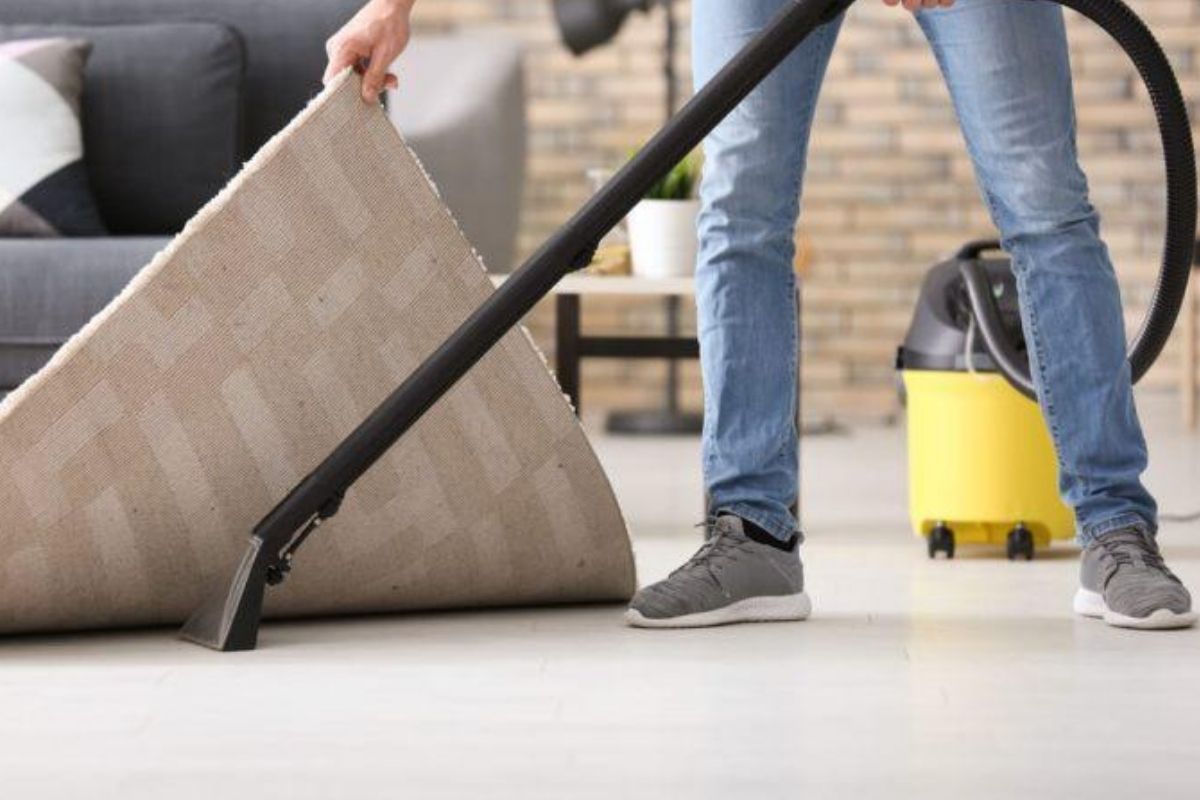
    The technique matters more than the machine, and it is not the one most people use: the full method for vacuuming a wool pile is slow overlapping passes with the beater bar off. On a rug carrying animal hair, the practical addition is more passes, and passes in more than one direction, because hair lies flat along the pile and only lifts when you come at it from the other side.

    Do not compensate for embedded hair with a more aggressive machine. A beater bar on a hand-knotted pile does its own damage, and the hair is still there afterward.

    Where the rug should and should not be

    Placement does more than any product.

    Not where an animal eats or drinks. A water bowl is a small, permanent, twice-daily spill onto a fiber that hides moisture. This is the single most avoidable cause of wool rug damage in a home with animals.

    Not in the doorway an animal comes in wet through. Wet paws carrying grit are Type 1 and Type 2 soiling arriving together, which is WoolSafe's way of describing the two kinds of dirt that need two different removal methods.

    Not where an unwell animal sleeps. A temporary move costs nothing and a set stain cannot be undone.

    And not the newly arrived animal's first room. House training and a hand-knotted rug can share a home. They should not share a floor in the first weeks.

    What this page will not tell you

    We have not tested any product, on wool or on anything else, and this site has handled no rug. Where a product category is named above it is because a named standards body named it, and the naming stops there.

    We will not tell you a rug is pet-proof. None is.

    An animal urinating indoors, repeatedly or suddenly, is a veterinary question before it is a cleaning question. That order matters and it is not our subject.

    The part worth remembering

    Wool is a good surface to live with an animal on, and it conceals liquid better than it should for your own good.

    Assume every accident is bigger than it looks, blot far longer than feels necessary, keep enzymes away from it, and treat a dried stain as a professional's job rather than a project. The rest of the routine that keeps a hand-knotted rug alive is in the main care guide, and the first five minutes of any spill, animal or otherwise, are covered in what to do the moment something goes on it.
  • Wool Rug Color Bleeding: Why Natural Dyes Bleed Too

    Wool Rug Color Bleeding: Why Natural Dyes Bleed Too

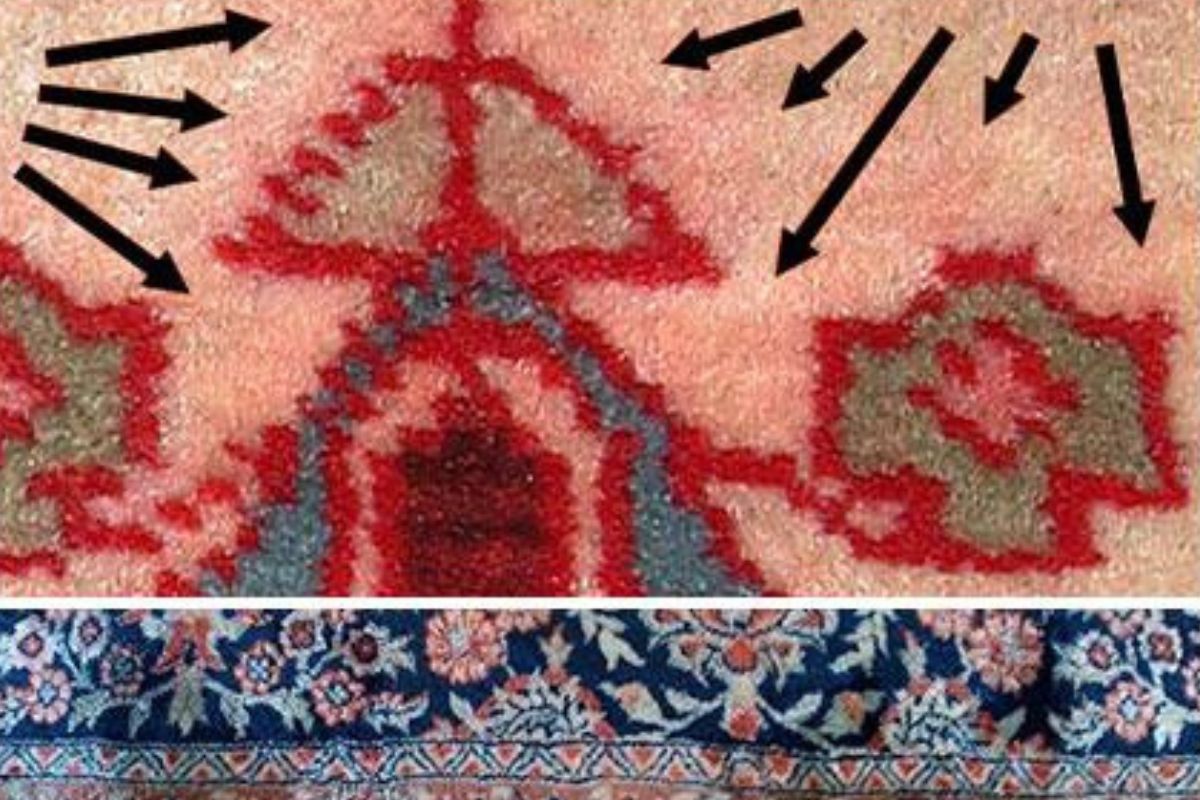
    Wool rug color bleeding happens when dye that was never firmly bonded to the fiber dissolves in water and moves somewhere else, usually a red or indigo traveling into a cream field. It is a dye-fixing failure, not evidence that you were sold a fake. Natural dyes bleed too. What decides how much of your rug you get back is not the dye's origin, it is timing: dye that is still wet can often be flushed out, and dye that has dried into the pile is specialist work. Heat, alkaline cleaners and pet urine are the three things that most often start it.

    What wool rug color bleeding actually is, and three things it is not

    Bleeding is wet migration. Water dissolves loose dye, the dye travels with the water, and it lands in a neighboring color where it dries in place. It needs moisture to happen, which is why it so often appears during or just after a cleaning attempt.

    Three problems look similar and are not the same thing:

    • Crocking is dry color rub-off. If color comes away on a white sock or a bare foot with no water involved, that is surface dye or an applied color treatment, not a wet-fastness problem.
    • Fading is light damage. The color leaves and goes nowhere. If one half of the rug has gone pale and no other color has darkened, read what sunlight does to a rug and what cannot be undone instead.
    • Wicking is an old spill traveling back up the pile as a rug dries. The mark reappears in the same spot rather than spreading into a new color.

    Naming the right one matters because the response differs. Only bleeding is a race.

    Triage: what state is the bleed in

    Organize this by state rather than by cause, because state is what determines how much time you have.

    What you are looking at What it usually means What is realistically recoverable
    Wet right now, color visibly moving Loose dye is in solution and still spreading The most recoverable state there is. Blot, stop adding liquid, and get help the same day
    Dried after a spill or a home wash The migrated dye has bonded where it landed Often improved by a professional, rarely erased. Christopher's Area Rug Cleaning describes most cases as significantly improved with some residual discoloration possible
    Only where a pet has urinated Alkalinity from the urine has attacked the dye locally The rug may be perfectly colorfast everywhere else. Treat it as a contamination problem first
    Color rubs off dry, nothing is wet Crocking, not bleeding A cleaning and finishing question, not an emergency
    It happens every time the rug gets damp The dye was never properly fixed Manage it as a permanent constraint on how the rug is cleaned

    The counterintuitive line in that table is the first one. Most people photograph the problem, search, read, and then act. On a wet run, the reading time is the damage.

    The chemistry that decides everything you do next

    Wool is dyed with acid dyes, and the bond depends on the fiber being acidic. Writing in the cleaning-industry trade publication Cleanfax, IICRC-approved instructor James "Jim" Smith sets out the numbers: finished wool carpet is acidic in pH, often in the range of pH 4 to 5.5, and wool changes its polarity at pH 5.5 because that is its isoionic point. Above pH 5.9, he writes, color loss is more likely to occur. He also notes that some chemical manufacturers once formulated wool detergents at pH 6.5 and inadvertently caused dye bleeding.

    That is the whole mechanism in one paragraph, and it explains the advice you see everywhere without a reason attached. Alkaline products push wool past the point where it holds its own dye. It is also why WoolSafe exists: the body accredits cleaning products its laboratory testing shows do not harm wool carpets and rugs on color fastness, rapid resoiling, fiber damage or odor. On a wool rug, a WoolSafe mark is a checkable claim rather than a marketing word, which is more than most bottles offer. Our guide to the cleaning products that quietly destroy wool goes through the categories in a normal cupboard.

    Why natural dyes bleed too

    The claim that natural dyes do not run, so a color run proves a synthetic dye and therefore a fake, is repeated across rug seller pages. It is not true.

    A natural dye is fixed to wool with a mordant, and a properly mordanted natural red stays put. A badly mordanted one bleeds. So does a poorly fixed synthetic. Age works against the natural dye rather than for it, because natural dyes grow less stable with oxidation and exposure, which is why the rug most likely to be harmed by a careless wash is often the older and more valuable one. The dye plants reported in Moroccan cooperative weaving, henna, pomegranate peel, saffron and indigo in the Taznakht reporting by Africanews and The Arab Weekly, carry no immunity here.

    If your real question is what the run says about the rug's authenticity, the short answer is nothing, and the long answer is in why bleeding proves nothing about natural versus synthetic dye.

    The three things that make a colorfast rug start bleeding

    A rug that has been stable for years can bleed the first time one of these arrives.

    Heat. The rug-care site Rug Chick makes the point that even a colorfast dye treated with a dye-stabilizing solution can bleed if that is combined with high temperature during cleaning, or with high-alkaline cleaning solutions. Hot water is not a stronger clean on wool, it is a different and riskier one.

    Alkaline residue. The same source describes residue left behind by in-home carpet cleaning machines creating an alkaline environment in the pile that works on acid dyes over time. The damage is not always visible on the day.

    Pet urine. Urine starts acidic and turns alkaline as it sits, and Rug Chick describes repeat pet stains causing permanent dye damage for exactly that reason. This is the most common way an otherwise sound rug develops a local color run, and the odor problem underneath it has to be dealt with before anyone works on the color.

    The home fixes that make a color run permanent

    This is where a recoverable problem usually becomes a permanent one.

    Chlorine bleach. Clorox's own guidance on bleaching wool is that liquid chlorine bleach is absolutely not recommended, even a dilute solution. That is the manufacturer saying it, not a rug site.

    Mixing anything. Before you reach under the sink at all: public health guidance, including the Washington State Department of Health, is that bleach combined with an acid produces chlorine gas and bleach combined with ammonia produces chloramine gas. Both are toxic to breathe. Nothing about a rug is worth that.

    Oxygen bleaches and general-purpose cleaners. Most are alkaline, which is the condition the chemistry above says to avoid.

    Vinegar dilutions from the internet. Acid is the condition under which wool bonds acid dye. Poured over color that has already migrated into a cream field, an acid rinse acts on that migrated dye too. Professionals do use controlled acidic chemistry here, with testing and equipment behind it. This guide publishes no dilution ratio, no water temperature and no dwell time, because no named authority publishes one for home use and an invented number is worse than none. The most-cited page on this query gives all three with no source at all.

    More water. Over-wetting dissolves more dye. Folding or stacking a damp rug transfers color between surfaces. If a wash is what started this, whether you should wash a wool rug at home is the honest version of that question.

    The colorfastness test, and what it does not tell you

    Before any liquid goes on a wool rug, test each major color separately. Dampen a clean white cloth with cool water, press it firmly onto one color, hold it there briefly, lift it, and look for color transfer. Any color on the cloth means that color will move if the rug gets wet. Repeat for every color in the rug, and test near an edge or under furniture rather than in the middle.

    A professional does a version of the same thing. Colorfastness testing sits inside the pre-cleaning inspection described by ANSI/IICRC S100, the industry standard for professional cleaning of textile floor coverings, which is why a competent rug cleaner tests before quoting rather than after.

    What the test does not tell you is how the rug will behave under a cleaning product, at temperature, or after years of alkaline residue. A pass means "not obviously fugitive in cool water today", nothing more.

    When to stop, and who to call

    Stop and call a professional rug cleaner if any of the following is true: the dye is wet and still moving, the rug is hand-knotted and old or valuable, the bleed followed a pet accident, or a home attempt has already been made. Ask specifically for a rug cleaner who works off-site in a wash plant, and ask whether they hold IICRC rug-cleaning certification or work with WoolSafe-accredited products. Both are things you can check.

    Christopher's Area Rug Cleaning describes flushing the affected area with a dye-stabilizing solution while the rug is still damp, within a few hours, and describes a wider range of outcomes once it has dried. Speed is the variable you control. Everything else is theirs.

    Atlas Rug Guide does not clean rugs and cannot tell you what a specific piece will survive. What we can say is where the decision stops being a homeowner's.

    Preventing the next one

    Test each color before the rug ever gets wet, and write down what you find. Blot spills straight down with a white cloth instead of rubbing, working from the outside in, which is covered properly in what to do in the first five minutes after a spill. Keep alkaline products and hot water off the rug. Dry it flat and fully, never folded. Deal with pet accidents the day they happen rather than the week after. The rest of the routine that keeps a hand-knotted piece stable is in the Moroccan wool rug care guide.

    A rug that bleeds is not a ruined rug and it is not a fake one. It is a rug with a cleaning constraint, and the constraint is manageable once you know it is there.

    FAQ

    Does a color run mean my Moroccan rug is fake?
    No. It means the dye was not firmly fixed to the fiber. Natural and synthetic dyes both bleed when they are badly fixed, and properly mordanted natural dyes do not. The run tells you how to clean the rug, not where it came from.

    Can I fix wool rug color bleeding myself?
    If the rug is wet and the dye is still moving, blotting with a dry white cloth and stopping all liquid is the useful thing you can do. Beyond that, home attempts with bleach, oxygen cleaners or unmeasured acid rinses are the main reason recoverable runs become permanent. This guide does not give a home formula because no named authority publishes one.

    Why did my rug bleed only where the dog had an accident?
    Pet urine turns alkaline as it sits, and alkalinity loosens the bond between wool and acid dye. Rug Chick describes repeat pet stains causing permanent dye damage for that reason. The rest of the rug can be perfectly colorfast.

    Is hot water safe on a wool rug?
    Treat it as not safe. Heat combined with alkaline cleaning solutions is named by rug-care specialists as a trigger for bleeding even in dyes that tested colorfast. Cool water and a product accredited for wool is the low-risk path.

    Can a dried color run be removed completely?
    Sometimes it is significantly improved, and sometimes some discoloration remains. Christopher's Area Rug Cleaning describes both outcomes. Anyone promising complete removal on a dried run before seeing the rug is promising something they cannot know yet.

  • How to Stop a Rug From Slipping (and Why It Matters)

    How to Stop a Rug From Slipping (and Why It Matters)

    A rug that shifts underfoot or curls at the edge is a documented fall hazard, not just a decor annoyance. Peer-reviewed research published in the Journal of Injury and Violence Research (Rosen, Mack and Noonan, 2013) estimated roughly 38,000 emergency-department visits a year in the United States among adults aged 65 and older for falls associated with rugs and carpets. A non-slip pad matched to your floor type is the first fix for a rug that shifts as a whole. Rug tape or corner grippers handle edges a pad alone doesn't stop. Silicone caulk anchors a rug close to permanently and can be hard to remove later. Which one is right depends on how often you plan to move the rug and what floor is underneath it, and this guide names no single product as the answer.

    Why this is a safety question, not a decor one

    It is worth stating the evidence plainly, because most pages that rank for this treat it as a mild inconvenience. The 2013 study, published in the Journal of Injury and Violence Research and affiliated with CDC injury-prevention research, put the annual figure at approximately 37,991 adults 65 and older treated in U.S. emergency departments for falls associated with rugs (45.8% of the cases) and carpets (54.2%). Women accounted for 80.2% of those injuries, and the most common home locations were the bathroom, at 35.7%, followed by the bedroom. The same research identified loose, unsecured rugs and curled carpet edges as recognized environmental hazards, and separately, the Consumer Product Safety Commission has reported that floors and flooring materials are involved in more than two million fall injuries a year across all age groups, not just older adults.

    None of this means every rug in every home is dangerous. It means a rug that visibly shifts, bunches, or has a curled corner is a specific, fixable hazard rather than a cosmetic quirk, and it is worth treating it that way rather than living with it because it hasn't caused a fall yet.

    What actually anchors a rug: options compared

    Method How it works Best for Watch for
    Non-slip rug pad Friction between pad and both surfaces resists sliding Most rugs, most floors, and reversible Cheap rubber or vinyl pads can damage a hardwood finish; see rug pads for a wool rug for the material question in full
    Rug tape or corner grippers Adhesive strips at edges and corners, not under the whole rug Curled corners and edges on a rug that otherwise sits still Can leave residue on some finishes when removed; test a hidden spot first
    Silicone caulk applied to the backing Bonds the rug's underside directly to the floor in dots or lines A rug that will stay in one place indefinitely Semi-permanent; removing it later can be difficult and can mark the floor
    Furniture anchoring Furniture weight on the rug's edges resists movement Rugs already positioned under a sofa, bed or table Doesn't help open sections of rug with nothing sitting on them
    Velcro-style strips Reusable hook-and-loop pieces on rug and floor A rug moved or lifted occasionally for cleaning Weaker hold than caulk; needs reapplication over time

    Reversible vs semi-permanent: matching the method to the rug

    The honest question to ask before choosing is how likely you are to move this specific rug again. A pad or tape is fully reversible and does nothing to the rug itself, which makes it the lower-risk starting point for a hand-knotted piece you might rotate, resize the room around, or eventually sell. Caulk is closer to a permanent decision: it holds extremely well, but it bonds to the rug's backing and to the floor, and undoing that later is genuinely difficult. For a rug you are confident will stay exactly where it is for years, that trade-off may be worth it. For a hand-knotted rug you intend to rotate for even wear, as covered in how to care for a Moroccan wool rug, a permanent adhesive is working against the maintenance routine, not with it.

    A rug that lies flat and stays anchored is also easier to vacuum correctly, since a machine can be run in one direction without catching a curled edge or a shifting corner. Vacuuming a wool pile rug without damaging it covers the technique itself, and it works best on a rug that isn't also fighting to slide out from under the machine.

    The edges matter as much as the middle

    A rug that lies flat and doesn't visibly slide can still curl at a corner or an edge, and the fall-injury research above names curled edges specifically as a recognized hazard, separate from a whole rug sliding across the floor. A pad under the center of a rug does very little for a corner that has started to lift. Corner grippers or a short length of rug tape at each curled point address this directly, and it's worth checking the edges even on a rug you've already anchored with a pad, since the two problems don't always travel together.

    What to avoid doing to a hand-knotted piece specifically

    Anchoring methods that permanently alter the rug's backing, primarily caulk applied in a heavy or continuous line, put a modification on an object that has no factory backing to begin with. A hand-knotted rug's underside is the reverse of the knots themselves, and a heavy adhesive layer there is harder to reverse than on a machine-made rug with a manufactured backing already covering that surface. If you're not certain the rug's position is permanent, start with a pad or corner tape, and treat caulk as the last option rather than the first, particularly on an older or naturally dyed piece where you cannot easily tell how it will respond to an adhesive until it's already applied.

    FAQ

    Why do rugs slip on hardwood floors specifically?
    Smooth, finished wood offers little friction against a rug's backing, especially a hand-knotted rug with no rubberized or textured underside of its own, which is why hardwood shows this problem more visibly than carpet does.

    Is a slipping rug actually dangerous, or is that overstated?
    It's a documented risk, not an exaggeration. Peer-reviewed research (Rosen, Mack and Noonan, 2013, Journal of Injury and Violence Research) estimated roughly 38,000 annual emergency-department visits among adults 65 and older for falls involving rugs and carpets, with loose rugs and curled edges named as specific hazards.

    What is the best way to stop a rug sliding without damaging the floor?
    A non-slip pad made of felt and plasticizer-free natural rubber is the option most consistently described as floor-safe. Rug pads for a wool rug covers the material question and what to check before buying one.

    Can I use double-sided tape under a whole rug instead of a pad?
    It's possible for small rugs, but tape under a large area is harder to apply evenly and can leave more residue across a bigger surface than a pad would. Corner and edge tape is generally the better use of it, alongside a pad for the rest of the rug.

    Do non-slip pads work on tile as well as hardwood?
    The friction mechanism works on most hard, smooth floors, though the material best suited to tile isn't always identical to the material best suited to a finished wood floor. Check a pad's own labeling for which floor types it's rated for.

  • Best Rug Pad for a Wool Rug: What to Look For

    Best Rug Pad for a Wool Rug: What to Look For

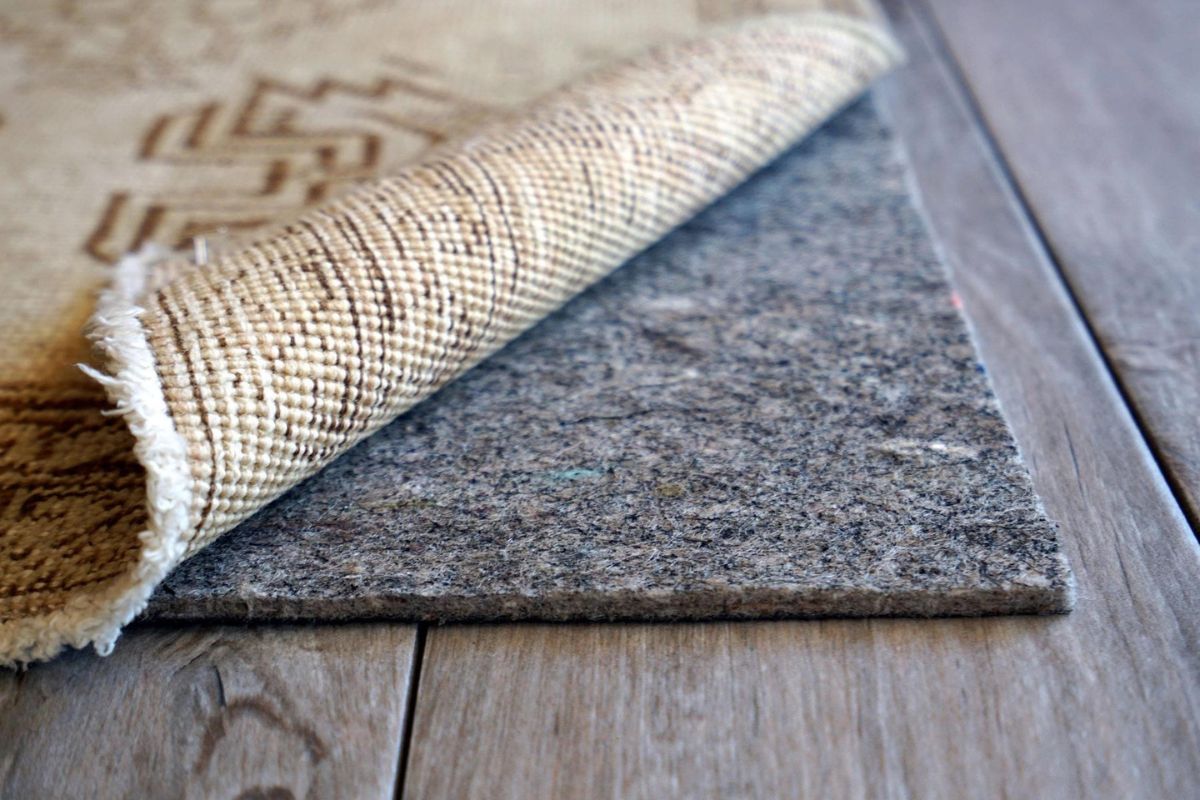
    A rug pad's job is to stop a wool rug from shifting, cushion foot traffic, and let air circulate underneath, but the wrong backing can strip a hardwood floor's finish or trap moisture against both the rug and the wood. Felt paired with natural rubber, free of the plasticizers found in cheap synthetic rubber and vinyl, is the material combination flooring and rug-pad sources describe as safe for a finished wood floor. This guide does not name a single winning product. Atlas Rug Guide sells nothing and has no reason to point you at one brand over another, so instead it explains what any pad has to get right, so you can check a specific one against that before you buy it.

    What a rug pad actually does, mechanically

    A pad sits between the rug's backing and the floor and does four separate jobs, and it's worth knowing which one you actually need before choosing a material.

    • Anchoring. Friction between the pad and both surfaces keeps the rug from creeping or bunching, which is a different mechanism from the slip-specific fixes covered in how to stop a rug from slipping.
    • Cushioning. A layer of give underfoot reduces the direct impact of foot traffic on the pile and knots.
    • Grit protection. Without a pad, dirt and small grit ground between a rug's backing and a hard floor act like sandpaper on both surfaces over time.
    • Airflow. A pad with an open or breathable structure lets air move under the rug rather than trapping moisture against the floor.

    What the wrong pad does to a hardwood floor's finish

    This is the part sellers gloss over, because it's an argument against the cheapest option they carry. As reported by rug-pad manufacturers and flooring-industry sources, the plasticizers used to keep some rubber and vinyl pads flexible can migrate out of the pad and into a wood floor's finish over time, leaving a permanent yellow or amber discoloration that some sources call "nicotining." The same sources describe an off-gassing mechanism, chemicals releasing from a plastic pad, especially under heat or sunlight, that reacts with a polyurethane finish and leaves it dull or hazy rather than sharply colored. A third mechanism is simpler: a solid, non-breathable rubber or vinyl backing traps moisture between the rug and the floor, which over time can warp the wood or, in humid climates, support mold growth underneath a rug that never gets to dry out.

    None of these three mechanisms is about the rug itself. They are about what a specific pad's material does to your specific floor's finish over months or years, which is exactly why this page will not tell you a single product is safe for every floor. Read on for how to actually check.

    Materials, described not ranked

    Material What it's good at What to watch for
    Felt (wool or synthetic felt) Cushioning and quiet underfoot; generally low chemical risk to a floor finish Little to no grip on its own; usually paired with another material for anti-slip
    Natural rubber Good grip, described by pad manufacturers as generally floor-safe when free of added plasticizers Solid sheets can trap moisture if not vented or perforated; quality varies a great deal between suppliers
    Synthetic rubber or PVC/vinyl Cheapest option, widely available The material most repeatedly linked to plasticizer migration and off-gassing damage on finished wood, per the sources above
    Felt-and-rubber hybrid Combines cushioning with grip; commonly described as the safer combination for hardwood when the rubber layer is plasticizer-free Still depends on the specific rubber used, not the category name alone
    Adhesive tape or dots Strong, targeted hold at edges and corners Can leave residue on some finishes; not a substitute for a full pad under a large rug

    For a hand-knotted wool rug specifically

    A hand-knotted rug is heavier than a printed or machine-tufted rug of the same size, which changes the calculation slightly. The weight itself provides some natural resistance to sliding that a thin machine-made rug lacks, a point covered in what makes rug wool worth paying for. But a hand-knotted rug also has no manufactured non-slip backing of its own, unlike some modern printed rugs that come with a rubberized underside built in, so anchoring still matters, particularly on a hard floor where the rug will see regular foot traffic.

    Because a hand-knotted piece is a one-off, irreplaceable object, this is also not the place to gamble on the cheapest pad available. A pad that damages a $50 machine-made rug's backing is an annoyance. A pad that discolors the floor under a rug you can never replace, or that traps moisture against a naturally dyed wool pile, is a worse outcome twice over.

    Testing before you commit

    There is no thickness or firmness figure this site can responsibly hand you, since the right choice depends on your specific floor, finish and how the rug will be used, and a number stated with false confidence here would be worse than no number at all. What you can actually do:

    • Check the finish, not just the pad. Some wood-floor finish manufacturers publish their own guidance on which pad materials are compatible with their product, and following that is more reliable than trusting a pad's own packaging claim.
    • Look for an explicit hardwood-safe or PVC-free label, and treat a pad with no material disclosure at all as a reason to keep looking rather than assume the best.
    • Test a small piece in an inconspicuous spot under a piece of furniture for a week or two before trusting a new pad under the whole rug, the same discipline this site recommends for any cleaning product on wool.
    • Check on it periodically once it's down. Lift a corner every few months for the first year, especially in a humid climate, and look for any change in the floor's sheen or color where the pad sits.

    When it's a flooring question, not a rug question

    If your hardwood is under a manufacturer's finish warranty, that warranty may specify which pad materials void it, and that is a question for the flooring manufacturer or the installer, not a rug site. The same goes for engineered wood, which can respond differently to trapped moisture than solid hardwood. When in doubt about your specific floor, ask the people who finished it before you ask a rug-care guide. For everything else in the routine around the pad, how to care for a Moroccan wool rug covers vacuuming, spills and rotation, all of which matter more to how long the rug itself lasts.

    FAQ

    Do wool rugs need a pad at all?
    Most benefit from one, for cushioning, grit protection and reduced shifting, but a heavy hand-knotted rug on a low-traffic floor is a lower-stakes case than a thin rug in a busy hallway. It's a genuine trade-off, not a universal yes.

    What rug pad material is safest for hardwood floors?
    Felt paired with natural rubber that is free of added plasticizers is what flooring and rug-pad sources most consistently describe as safe. This site does not name a specific product; check the material disclosure and, where possible, your floor finish manufacturer's own guidance.

    Can a rug pad ruin a hardwood floor?
    Yes, through three documented mechanisms: plasticizers migrating into the finish and leaving discoloration, off-gassing hazing the finish, and trapped moisture under a non-breathable backing warping the wood or supporting mold.

    How do I know if my current pad is damaging my floor?
    Lift a corner periodically and check the finish underneath for yellowing, haziness or a change in sheen compared to the rest of the floor. Catching it early is easier to address than finding it after months.

    Is a thicker pad always better?
    Not necessarily, and this site does not have a verified figure to recommend. Thickness affects cushioning and can affect how a rug's edges sit relative to adjoining flooring, but it does not by itself determine whether a pad is safe for your finish. Material matters more than thickness for the floor-damage question.

  • How to Get Smell Out of a Wool Rug

    How to Get Smell Out of a Wool Rug

    Wool holds odor because it holds moisture. The fiber absorbs both more readily than synthetic pile, so whatever produced the smell, a pet accident, mildew from a damp spill, or moisture picked up in storage, is usually still sitting in the fiber rather than gone. Full drying and airflow do more than any spray. Sunlight and fresh air outdoors help because ultraviolet light breaks down the bacteria and mold producing the smell, not because it "airs the smell away" in some vaguer sense. One popular home fix, baking soda, is mildly alkaline and works against the same wool chemistry this site's own care guide warns against, so it is not the safe default it's usually presented as, and this page explains why before it tells you what to do instead.

    Why wool holds a smell longer than it should

    Wool is a protein fiber, and that same absorbency that makes it comfortable underfoot and resistant to a quick spill also makes it good at holding onto moisture once it's actually soaked in. Odor itself is mostly a byproduct of bacteria and mold metabolizing whatever moisture and organic material is present, whether that's spilled liquid, pet residue, or just humidity that got trapped against the fiber. A synthetic rug with the same spill dries faster and gives bacteria a shorter window to establish themselves. Wool, done incorrectly, gives them longer. This is the same mechanism behind the pH-neutral cleaning rule on this site's care pillar: wool's protein structure and its natural lanolin coating both respond badly to the wrong chemistry, and getting a smell out means working with that structure, not against it.

    Where the smell usually comes from

    Diagnosis matters here more than most rug problems, because the right response is different depending on the source.

    A surface spill that was cleaned but not fully dried usually smells musty and localized to one area. A pet accident that reached the rug's foundation, not just the pile surface, tends to smell stronger, return after cleaning, and often needs professional attention rather than a home fix. Storage moisture, covered in storing a wool rug for a season or a year, produces a general musty smell across the whole rug rather than one spot. And a brand-new rug with an odd chemical or "off" smell is usually a different question entirely, tied to dyes, sizing or manufacturing residues rather than moisture; new rug chemical smell covers that case specifically and this page does not repeat it.

    The safe path: full drying and airflow first

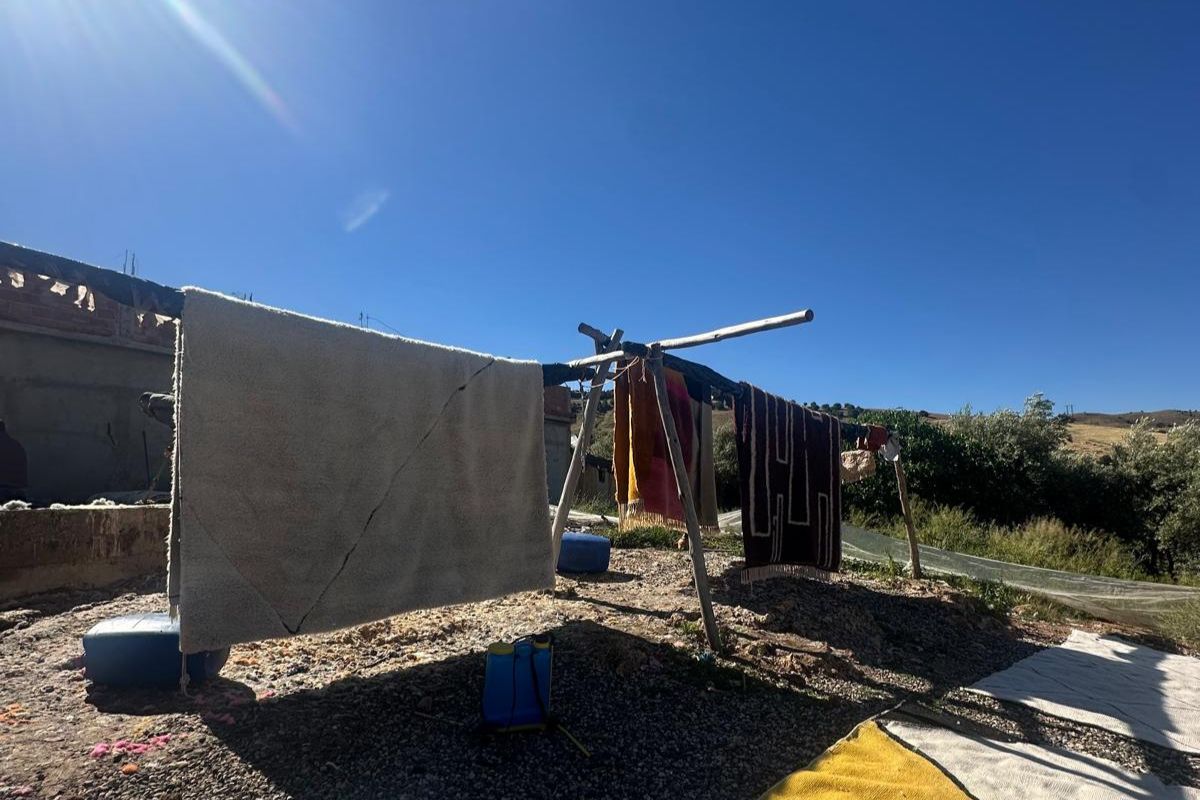
    Before reaching for any product, address the moisture itself. A rug that is fully dry all the way through the pile, not just dry on the surface, stops feeding whatever bacteria or mold is producing the smell. Where practical, take the rug outside on a dry day and hang it over a fence, railing or clothesline rather than leaving it flat on the ground. Ultraviolet light's effect on bacteria and mold is well established in general terms: UV disrupts the organisms producing the odor, which is a different and more direct mechanism than simply "fresh air."

    Flip the rug partway through to expose the back as well as the front, and be aware this overlaps with a different concern covered in sun fading in sunlight: a short, occasional airing outdoors for odor control is not the same exposure as a rug living permanently in direct sun, but it's still worth limiting to what the smell actually needs rather than leaving it out longer than necessary.

    Why baking soda is not the safe default it looks like

    This is the point worth slowing down on, because it's repeated everywhere and rarely questioned. Baking soda, sodium bicarbonate, is mildly alkaline, commonly cited around pH 8.3, which sits at or above the upper end of the roughly pH 5.5 to 8.0 range that professional rug-cleaning sources describe as safe for wool. This site's own care guide already states the reason that range matters: push wool alkaline and the fiber felts, the lanolin that protects it is stripped, and dyes become unstable, all covered in cleaning products that quietly destroy wool.

    A light sprinkle, briefly applied and immediately vacuumed out, is a smaller and shorter exposure than the same product left to "sit overnight," which is exactly how it's recommended on most odor-removal pages sampled for this guide, almost none of which are written with wool specifically in mind. We could not find a wool-trade or extension source that recommends baking soda specifically for a wool rug, as distinct from carpet in general, which is a meaningful gap given how often the advice is repeated. If you use it at all, keep the contact time short, vacuum it out completely, and test a hidden corner first, the same discipline this site applies to every cleaning product on wool. On a valuable or naturally dyed hand-knotted piece, skipping it entirely and going straight to airflow, or to a product explicitly labeled safe for wool, is the more conservative choice.

    Vinegar sits closer to wool's comfortable range, being mildly acidic rather than alkaline, but it carries its own strong smell during use and should never be combined with an enzyme or soap-based product. As with anything else on this list, test it on a hidden corner before applying it to a visible area, and never mix cleaning products together.

    Moisture and mildew: the smell that means something is actually wrong

    A smell that persists after the rug is genuinely, fully dry and has had a few days of open air is a different situation from ordinary odor. That pattern usually means mildew or mold has already established itself in the fiber or the foundation, not just moisture sitting on the surface, and no amount of baking soda, vinegar or fabric spray addresses an active mold problem. Masking a mildew smell rather than treating its actual cause is also the scenario most likely to end with a rug that needs to be discarded rather than saved, because the damage keeps progressing underneath whatever's covering the smell.

    When to call a professional rug cleaner instead

    A specialist rug cleaner, not a general carpet cleaning service, is the right call once a smell has moved past "musty after a spill." Specifically: any pet accident that reached the rug's foundation rather than just the pile surface, any smell that persists after several days of full drying and open air, and any smell you associate with visible discoloration or a soft, damp-feeling patch in the pile, which points toward mold rather than surface odor. How to care for a Moroccan wool rug covers the wider routine this fits into, and a specialist can assess whether the rug is salvageable before you spend more time on it yourself.

    FAQ

    Does baking soda ruin a wool rug?
    Not necessarily in a single light application, but it is mildly alkaline and sits at the edge of or above the pH range professional sources describe as safe for wool. Left to sit for hours, as many general odor-removal guides suggest, it carries more risk than a brief, tested application vacuumed out promptly.

    Will airing a rug outside actually get rid of the smell?
    Often, yes, for surface-level moisture and mild bacterial odor. Sunlight and airflow address the moisture and the organisms causing the smell directly, rather than covering it. It won't resolve an established mildew problem.

    How do I know if the smell is mildew and not just soil?
    A smell that persists after the rug is fully, genuinely dry and has had several days of open air, especially alongside any discoloration or a damp feel in the pile, points toward mildew rather than ordinary soil or a one-off spill.

    Can I use fabric refresher spray on a wool rug?
    Test any spray product on a hidden corner first and check that it's labeled safe for wool specifically. A spray that masks a smell without addressing trapped moisture won't solve an underlying mildew problem.

    When should odor mean I call a professional instead of trying it myself?
    When a pet accident reached the rug's foundation, when the smell persists after full drying and airing, or when you notice discoloration or a soft, damp patch alongside the smell. Those signs point to a problem past what airflow or a light surface treatment can fix.

  • Rug Fading in Sunlight: Rotation and What Can’t Be Undone

    Rug Fading in Sunlight: Rotation and What Can’t Be Undone

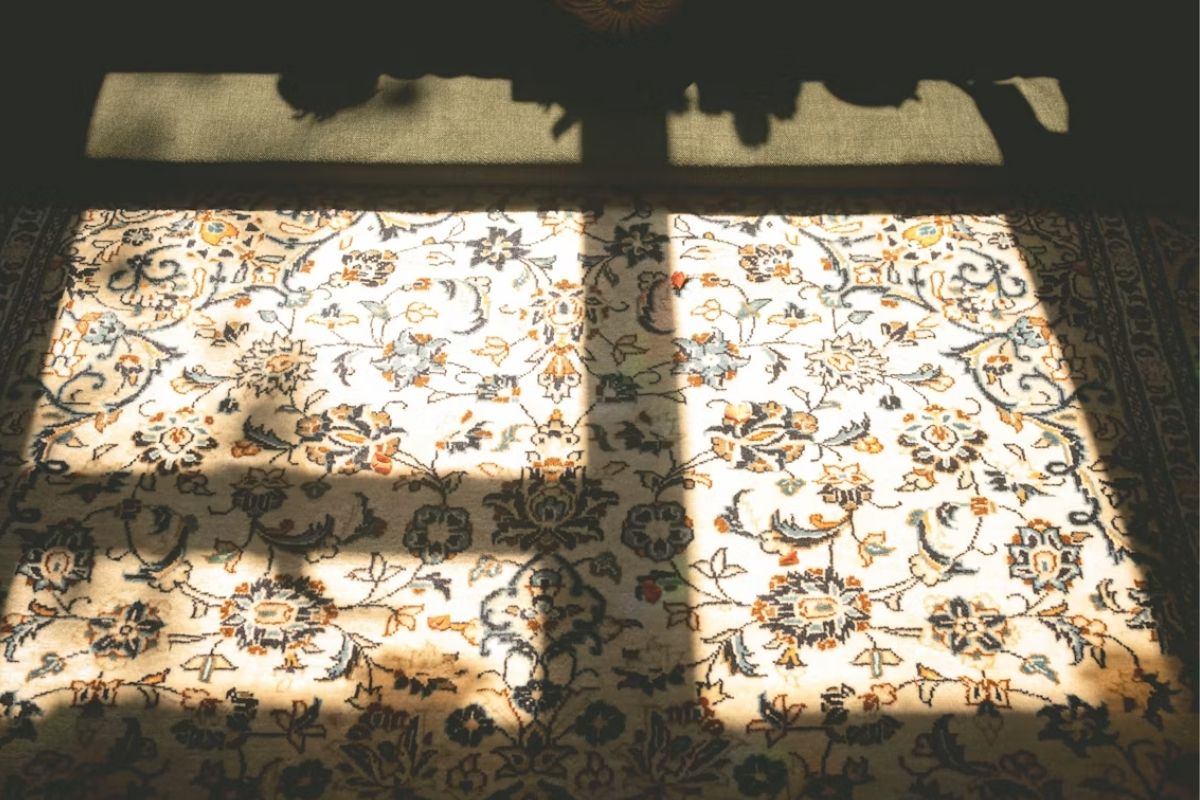
    Sunlight fades a wool rug by breaking down the chemical bonds in its dye, not by warming or drying it, and that breakdown is permanent. Rotating the rug end to end every few months spreads the exposure evenly, so it ages as one piece instead of developing a bright strip by the window and a darker one under the sofa. UV-filtering window film or ordinary curtains cut the exposure that causes it in the first place. Nothing sold over the counter reverses fading that has already happened, whatever the label claims, so prevention and rotation are the whole strategy here, not a stopgap before a fix.

    What sunlight actually does to a rug's dye

    Sunlight is made up of visible light, infrared heat, and ultraviolet radiation, and it is specifically the UV component that does the damage. As reported by flooring-industry and window-treatment sources that study this closely, UV radiation breaks the chemical bonds that hold color to a fiber, which is a different mechanism from heat drying out a rug or foot traffic wearing down pile. That distinction matters because it explains why a rug can fade badly in a cool, air-conditioned room, and why a fading problem cannot be solved by anything that only manages temperature or humidity.

    This applies to both natural and synthetic dyes, though the chemistry differs between them. A hand-knotted Moroccan rug is usually dyed with plant sources such as madder root, indigo or henna, or with synthetic dyes depending on the piece, and both families of dye are made of the same kind of chemical bonds that UV light breaks down over time. Neither type of dye is UV-proof. Both simply degrade at different rates depending on the specific dye chemistry, how the wool itself was prepared, a factor covered in what makes rug wool worth paying for, and how much direct exposure the rug actually receives. No wool quality or dye type stops UV breakdown once a rug is genuinely exposed; it only changes the rate.

    Why rotation works, and how often to do it

    Rotation does not stop fading. It spreads it. A rug that is turned end to end every three to six months, a figure that appears consistently across rug-manufacturer care guidance, receives roughly the same cumulative light exposure across its whole surface instead of concentrating years of direct sun on one strip near a window. The result is a rug that gets gradually and evenly lighter over years rather than one with a sharply visible line between a bleached section and its original color.

    This is one of the four habits already covered in how to care for a Moroccan wool rug, and it costs nothing beyond remembering to do it. The same rotation habit matters even when a rug spends part of the year out of the room entirely; see storing a wool rug for a season or a year for what changes once light exposure isn't the immediate concern.

    Placement: the real prevention

    Rotation manages exposure you can't avoid. Placement reduces the exposure in the first place, and it is the more powerful lever of the two.

    • Furniture as a shield. A sofa, bookcase or table positioned between a window and the rug blocks direct beams during the hours they hit hardest, without touching the rug at all.
    • Curtains or blinds. A simple curtain closed during peak sun is one of the fastest ways to cut exposure, and side tracks or a bottom seal stop light sneaking in around the edges of a blind, which is where a rug near a window is most vulnerable.
    • UV-filtering window film. As reported by window-film manufacturers, a quality film can block a large majority of UV radiation while still letting visible light into the room. This is a permanent change to the window, not the rug, and it protects everything else in the room from the same damage, not just the floor.
    • Distance and orientation. Where the layout allows it, keeping a valuable rug out of a room's most direct light path, or accepting that a lighter, more replaceable rug goes in that spot instead, avoids the problem rather than managing it.

    Fading vs. dye bleed: the same rug, two different problems

    These two get confused constantly, and they are not the same failure. Fading is dye breaking down under light over months or years, and it happens whether the rug is ever wet or not. Dye bleed is color transferring between wet fibers during a spill or a wash, and it happens in minutes, not years. A pale patch by the window is fading. A pink stain spreading from a red section into a cream one after a spill is bleed. Dye bleed and color run: why natural dyes bleed too covers that second problem, including the common seller claim that only synthetic dyes bleed, which is not accurate. Knowing which one you are looking at changes what you do next: fading gets prevented going forward, bleed needs attention the moment it happens.

    What can't be undone at home, and what a specialist can sometimes do

    There is no product this site can verify that restores original dye chemistry once UV has broken it down. Anything marketed as a fading "repair" applied at home should be treated with the same skepticism this site applies to any uncited claim in this niche: test it on a hidden corner first if you try it at all, and do not expect it to reverse color loss that has already set in.

    What a rug restoration specialist can sometimes do is different, and it is a craft decision rather than a product application. On a valuable hand-knotted piece, a specialist may selectively redye a faded section to match the surrounding color, or in more extensive cases reweave the affected area entirely. Both are case-by-case judgments about a specific rug, its dyes and its condition, not a service this site can promise will be available or affordable for any given piece. If a faded area bothers you enough to consider this, the conversation to have is with a rug restoration specialist who works on hand-knotted pieces, not a general carpet cleaner, and the honest first question to ask them is whether the piece is worth the cost of the work.

    Telling sun fading apart from ordinary wear

    Sign Sun fading Ordinary wear
    Shape Follows the light, often a sharp line matching a window or door edge Follows foot traffic, usually a worn path or dulled center
    Speed Gradual, over months to years of exposure Gradual, tied to how much the rug is walked on
    Texture Pile texture usually unchanged; only color is affected Pile can flatten or thin along with any color change
    Reversible at home No Some evening-out is possible with grooming and rotation of traffic patterns

    FAQ

    Does rotating a rug really stop fading?
    It doesn't stop it, it spreads it evenly across the whole rug instead of concentrating years of exposure on one section, so the rug fades as a whole piece rather than developing an obvious two-tone patch.

    Can sun-faded wool rug color be restored at home?
    No. UV breaks the chemical bonds that hold dye to the fiber, and no product this site can verify reverses that. A rug restoration specialist can sometimes selectively redye or reweave a faded section on a valuable piece, but that is a craft judgment made rug by rug.

    Do UV window films actually help?
    As reported by window-film manufacturers, quality films block a large share of UV radiation while still letting visible light through, and they protect a whole room's contents, not just a rug directly under a window.

    Is a faded patch the same as a color-run stain?
    No. Fading is dye breaking down under light over months or years. Dye bleed is color transferring between wet fibers during a spill or wash, and it happens fast. They need different responses.

    How quickly does sun fading actually happen?
    It varies with dye type, wool quality and how much direct exposure a spot gets, and this site does not have a verified timeline to give. A rug in a sunroom with unfiltered south-facing windows will show it far sooner than one in a room with curtains and indirect light.

  • How to Store a Wool Rug for a Season or a Year

    How to Store a Wool Rug for a Season or a Year

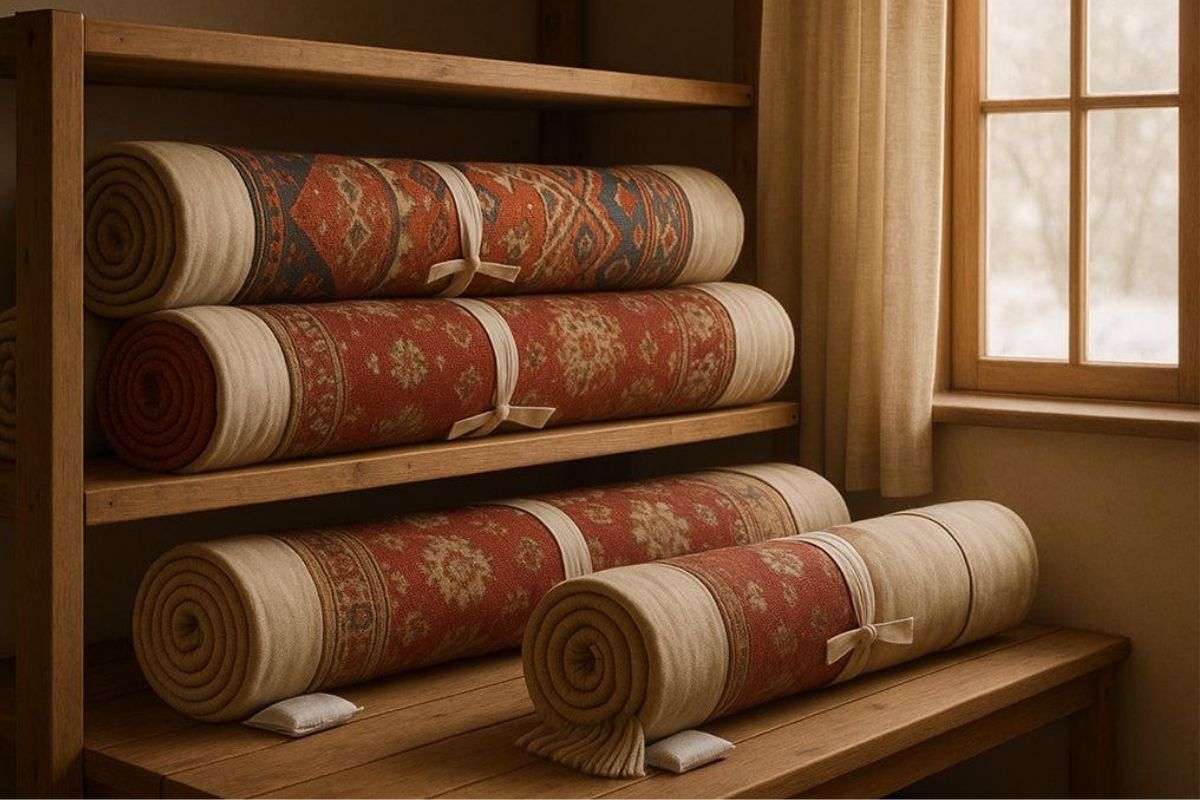
    Clean it and let it dry completely, then roll it, never fold it, with the pile facing in. Wrap it in a breathable material such as a cotton sheet or muslin rather than sealed plastic, and keep it off the floor in a dry, ventilated space out of direct sun. Check on it two or three times over the storage period rather than shutting the door and forgetting about it. Wool is a protein fiber, and the two things that actually damage it in storage are moisture trapped against the fiber and a dark, undisturbed space that carpet moth larvae find ideal. Get those two conditions right and time alone does very little harm.

    Why wool behaves differently in storage than a synthetic rug would

    Wool is a protein fiber, structurally closer to hair than to a plastic filament, and that single fact is what every piece of manufacturer wool-care guidance is built on. A synthetic rug rolled up in a garage for a year is mostly indifferent to the experience. A wool rug is not. The fiber absorbs and holds moisture more readily than synthetic pile, which is why a damp storage space produces mildew on wool well before it would show on a nylon or polypropylene rug. The same protein structure, keratin, is also the food source for carpet moth larvae. That is a separate risk from moisture, but it is made worse by the same conditions: dark, still, and undisturbed for months at a time. The University of Kentucky Extension Entomology fact sheet on clothes moths (ENTFACT-609) notes that "edges and undersides of rugs, or sections beneath furniture are more likely to be attacked," precisely because those are the areas that go longest without disturbance. A rolled rug in storage is that same condition applied to the entire piece.

    Before it goes anywhere: clean it and let it dry completely

    Storing a soiled rug is the single most avoidable mistake here. Body oils, food residue and pet dander left in the pile are exactly what draws moths to a stored rug, and rug-manufacturer storage guidance, Jaipur Rugs' own care guide is one example, is consistent on this point: clean the rug, either a thorough two-sided vacuum or a professional wash, before it goes into storage rather than after it comes back out. Cleaning products that quietly destroy wool covers what is safe to use on the fiber if you clean it yourself, and the same rule applies here as everywhere else on this site: test any product on a hidden corner first, and if the rug is old, valuable or naturally dyed, a professional wash before storage is the safer route. Washing a wool rug at home, or not walks through that decision.

    Drying matters as much as cleaning. A rug that goes into storage even slightly damp is a rug that grows mildew inside its own wrapping, out of sight, for months. Air it in a dry space until it is genuinely dry all the way through, not just dry on the surface, before you wrap anything.

    Roll it, don't fold it

    A hand-knotted rug is built from knots tied onto foundation threads, and a fold puts a sharp, permanent crease across every one of those threads in a single line. Rolled storage spreads the same mechanical stress evenly around a curve instead of concentrating it at a crease, which is why rug-manufacturer and rug-care guides are consistent on rolling over folding for anything beyond a few days. Roll with the pile facing inward, and use a wide cardboard or plastic tube as a core if you have one. A tighter roll puts more stress on the foundation than a looser one does.

    Wrap it right: breathable, not sealed plastic

    This is the point where storage advice most often contradicts itself, and it is worth resolving directly. Plastic sheeting feels protective. For long-term storage of a wool rug, it is closer to the opposite: a sealed plastic wrap traps whatever moisture is already in the fiber, or that gets in through a temperature swing between seasons, against the wool for months at a time. That trapped moisture is what produces both the musty smell and the fiber breakdown that ruins a stored rug. Rug-manufacturer storage guidance is consistent that a rug should be wrapped in something breathable, a cotton sheet or muslin, that lets residual moisture escape instead of sealing it in.

    That is not the same recommendation as the plastic wrap used during an active moth treatment. Professional guidance for treating an infestation that is already present, such as the routine published by Sonya Winner Rug Studio, does call for wrapping a treated rug in plastic for one to two weeks at a time between a spray application and a re-check. That is a short, active step, not a way to store a clean, dry rug for a season. It is an easy mix-up, since both involve plastic and both involve wool. The difference is duration and purpose: days to weeks during active treatment, never months of passive storage.

    A cedar block or a lavender sachet tucked into the wrapping is a reasonable, mild addition. Extension entomologists generally describe cedar and lavender as deterrents rather than a treatment for an infestation that is already established, since neither is a registered pesticide, so add one if you like but don't rely on it if you already suspect moths are active. If that is the situation you are actually in, carpet moths: how to tell if you have an active infestation is the page to read before you wrap anything.

    Where to keep it

    Dry and ventilated matters more than any specific room. A climate-controlled closet or a spare room beats a damp basement or an uninsulated attic that swings from freezing to hot across the year, because both standing damp and repeated condensation from temperature swings feed the same mildew risk as sealing a rug in plastic. Elevate the rolled rug off the floor, on a shelf or a pallet rather than directly on concrete or bare boards, and keep it out of direct sun even while it is only waiting to be moved, since sun fading does not pause because a rug happens to be propped against a window.

    Checking on it while it's stored

    A rug that gets checked periodically is a rug where a problem is caught at a few square inches instead of spreading through the whole roll. Unroll it, look and smell, two or three times over a season or a year rather than only at the end. This is also the moment you would catch the earliest sign of either mildew, a musty smell or discoloration, or moths, fine webbing, small pale cases, sandy grit near the edges, all covered in detail on the carpet moth infestation page.

    When to call a professional before storing, not after

    The riskiest version of this whole process is storing an old, valuable or naturally dyed rug without a professional clean first, because a stain or residue that would be routine to address before storage becomes a much harder problem after months sealed against the fiber. How to care for a Moroccan wool rug sets out the wider routine this fits into, and a specialist rug cleaner, not a general carpet cleaning service, is the right call for anything you are not confident handling yourself.

    FAQ

    Can I store a wool rug in a plastic storage bag?
    Not for long-term storage. A sealed plastic bag traps any residual moisture against the fiber, and that trapped moisture is what produces mildew and odor over months. Wrap it in a breathable material like cotton or muslin instead.

    How often should I check on a stored wool rug?
    Two or three times over the storage period is a reasonable interval, enough to catch mildew or an early moth problem before it spreads through the whole rolled rug.

    Should I fold or roll a wool rug for storage?
    Roll it, with the pile facing inward. Folding puts a permanent crease across the knots and foundation threads at the fold line, which rolling avoids.

    Do cedar blocks stop moths from getting into a stored rug?
    They act as a mild deterrent rather than a treatment. If you already suspect an active infestation, cedar alone will not resolve it. Check for the signs of active damage first.

    How long can a wool rug safely stay in storage?
    There is no fixed safe limit as long as it went in clean and completely dry, is wrapped in breathable material, and is checked periodically. The conditions matter far more than the duration itself.

  • How to Get Rid of Carpet Moths in a Wool Rug

    How to Get Rid of Carpet Moths in a Wool Rug

    Clean the rug hard, take away the dark and the stillness, then use cold or a professional cleaner. In practice that means vacuuming both faces of the rug and the floor underneath it, working the edges and everything that sits beneath furniture, then sealed freezing for items small enough to fit a freezer, or a specialist rug cleaner for the rug itself. Sprays, foggers and mothballs are the popular answer and the weakest one, for reasons the extension services state plainly, and mothballs carry a legal restriction most people have never read.

    This page covers treatment of a hand-knotted wool rug. It does not identify insects, and it does not give a chemical protocol. Where a number appears below, the source that published it is named next to it.

    First, work out whether the carpet moths are still active

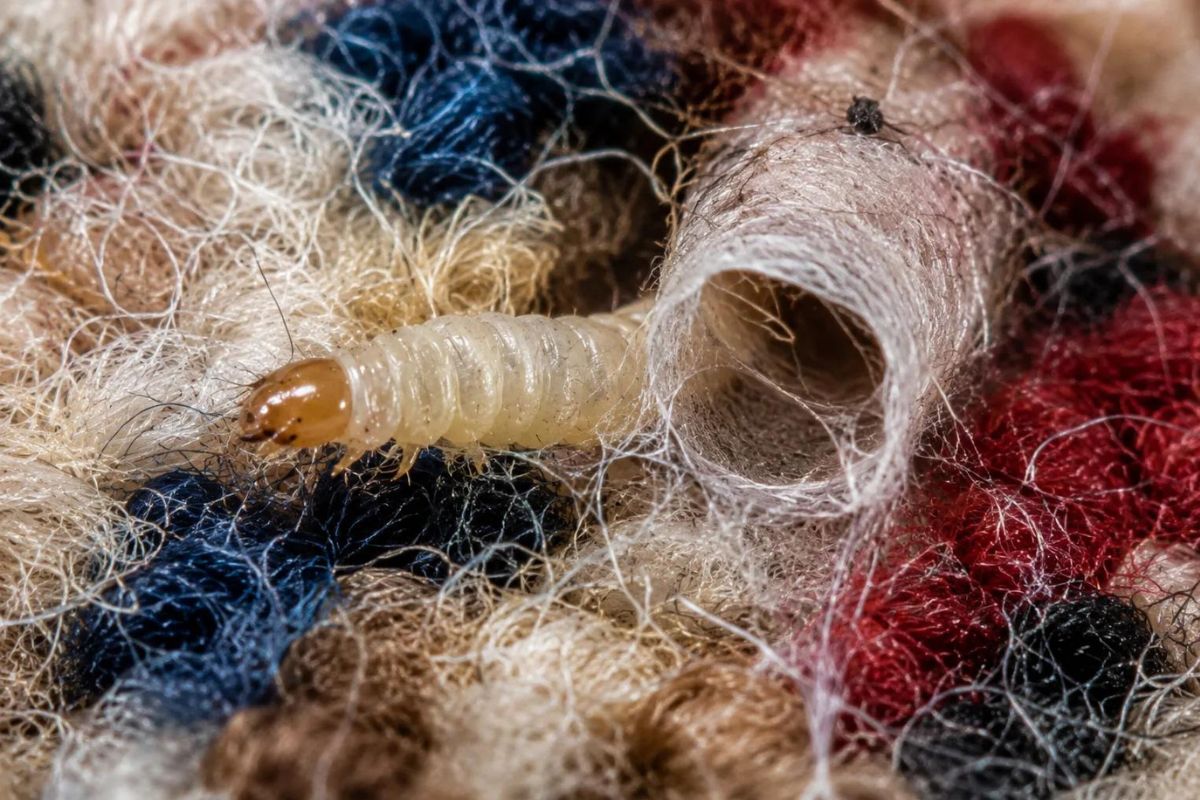
    Treatment and repair are different jobs. Bare patches with no webbing, no casings and no grit are usually damage that stopped years ago, and they need a repair conversation rather than a treatment. Fine silk webbing low in the pile, small pale cases at the base and sandy grit along the edges mean it is active now, and that is what the rest of this page is for. If you have not made that call yet, how to tell whether a carpet moth infestation is active sets out the signs and where to look for them.

    If wool items elsewhere in the house are also being eaten, this has stopped being a rug problem and become a household one. That belongs with a pest control professional, not with a rug site.

    Why the rug is the target, and why the room is the real problem

    The larvae feed on keratin, the protein in wool, hair and feathers. Synthetic pile is not food. A hand-knotted wool rug is, and a fleece that has kept its natural grease is a better meal than a heavily processed one, which is an uncomfortable side effect of everything that makes good rug wool worth paying for.

    Location does the rest. The University of Kentucky's entomology fact sheet on clothes moths (ENTFACT-609) puts it in one sentence: "Edges and undersides of rugs, or sections beneath furniture are more likely to be attacked." Larvae want dark and undisturbed. A rug that has not moved since it was laid supplies both, and the open center of the room, which is the part everybody cleans, is the part they were never in.

    That is why the treatment is mostly about the parts of the rug you never look at.

    Vacuuming is the treatment, not the preparation

    Most pages treat vacuuming as step zero before the real work. It is closer to being the real work. UC IPM's Pest Notes on clothes moths says of clearing an infested room, "The vacuum cleaner is the best tool for most of this cleaning," and ENTFACT-609 says vacuuming floors, carpets and inside heating vents "effectively removes larvae as well as hair and lint, which could support future infestations."

    Done properly on a rug, that means all of this:

    • The underside of the rug, not just the top. Turn it over.
    • The floor beneath the rug, including the gaps between boards and the edge of the room where the floor meets the baseboard.
    • Under every piece of furniture standing on it, which means moving the furniture rather than reaching around it.
    • The perimeter of the room, behind doors, and any heating vents nearby.
    • Slowly, and more than once over the same ground. Larvae sit at the base of the pile, so surface passes miss them.

    Then dispose of what you collected. UC IPM's instruction after vacuuming an infested area is to "dispose of the bag's contents promptly, since it can include eggs, larvae, or adult moths." Empty it outside, into a bag you seal, and do not leave a full canister sitting in the house.

    One caution specific to a hand-knotted piece: a rotating beater bar can chew fringes and loosen knots, which is a separate problem from the one you are trying to solve. Vacuuming a wool pile rug without damaging it covers the settings and the direction of travel.

    Cold: the one home treatment with published parameters, and the sources disagree

    Freezing is real, non-chemical and standard practice in museum collections. It also comes with four different sets of numbers depending on who you ask, so here they are side by side rather than blended into one confident figure.

    Source What it publishes
    UC IPM, Pest Notes: Clothes Moths Enclose the item in a plastic bag and place it in a freezer "for several days at temperatures lower than 18°F"
    University of Kentucky Entomology, ENTFACT-609 Infested items "need to be held at minimum temperature of 0 degrees Fahrenheit for at least one week"
    National Pesticide Information Center (Oregon State University) "Non-washable items can be placed in a Ziploc bag and frozen for 2 weeks to kill the insects"
    MuseumPests.net, Integrated Pest Management Working Group A freezer reaching minus 20°F (minus 29°C) for "a minimum of 72 hours", or "14 days in a domestic freezer at minus 20°C (minus 4°F)"

    The pattern is consistent even where the numbers are not: the colder the freezer, the shorter the hold, and a domestic appliance needs a long one. If you are working from the freezer in your kitchen rather than a deep freeze, the two-week figures are the safer end to plan around.

    Two details from the conservation guidance are missing from almost every page that ranks for this, and both change the outcome.

    Seal it before it goes in, and thaw it still sealed. The museum guidance is that objects "should be sealed in plastic either using re-sealable plastic bags or polyethylene plastic sheet sealed with tape," and after removal "should be allowed to acclimate to room temperature, still completely wrapped, until they are at room temperature, at least 24 hours." Unwrapping a frozen textile in a warm room puts condensation into the fibers, which is a different kind of damage from the one you started with.

    Speed of cooling matters. The same guidance stresses rapid cooling, and the extension literature notes that insects cooled slowly develop resistance to freezing. A freezer that gets there fast is doing more than one that drifts down overnight.

    What cold does not solve is size. A room-sized hand-knotted rug does not fit in a kitchen freezer, and the trade answer is a commercial chest freezer or a professional treatment. Cold is genuinely useful for a small rug, a runner, or the wool items around the rug that started or spread the problem.

    Heat and laundering, and the line where they stop

    Heat kills the same life stages and appears in the same sources, but every published parameter is written for something that fits inside an appliance. UC IPM gives heating an infested item "in an oven for at least 30 minutes at temperatures higher than 120°F," and laundering "for 20 to 30 minutes in water that is at least 120°F." The National Pesticide Information Center's version is to launder in hot water for 20 to 30 minutes, and to dry clean what cannot be laundered.

    Read those as instructions for clothing, blankets and small stored woolens. Do not put a rug in an oven. That is a fire risk and it is not what the guidance describes. A hand-knotted wool rug is also not a machine-wash item in the first place, for reasons that have nothing to do with moths: washing a wool rug at home, or not covers what water does to knots, foundation and dye in a hand-woven piece.

    Steam cleaning is recommended constantly on the pages that rank for this query, usually by companies selling steam machines or moth treatments. We could not find a university extension or conservation source that publishes a steam temperature or dwell time for clothes moth larvae in a rug, so this guide does not state one. Heat plus moisture on wool also carries its own risk of felting and dye movement, which is worth weighing before pointing a machine at a four-figure object.

    The chemical route, and why this page will not write you a protocol

    This is where most search results reach for a spray, and it is the part worth slowing down on.

    Sprays underperform on this pest, and entomologists say so. ENTFACT-609: "Insecticide sprays tend to be of limited use for clothes moths, since the pests are often within materials where sprays cannot penetrate." That is the whole problem in one line. The larvae are down at the base of the pile, on the underside of the rug and under the furniture. A total release fogger, the kind sold as a bug bomb, is a spray that settles from above onto exposed surfaces, so the same objection applies to it with more force, not less.

    Mothballs are a pesticide with a legally binding label, and the label is narrower than people assume. The National Pesticide Information Center states that mothballs "are only to be used in airtight containers," that "the gasses they create may pose a risk to people and pets," and that these pesticides "produce a gas that is toxic to people or animals if they breathe it in." Every registered pesticide sold in the United States carries the statement "It is a violation of Federal law to use this product in a manner inconsistent with its labeling," and FIFRA section 12(a)(2)(G) makes it unlawful "to use any registered pesticide in a manner inconsistent with its labeling." Scattering naphthalene or paradichlorobenzene mothballs under a rug, along a closet floor or around a room is not a labeled use of an airtight-container product. It is not a clever workaround either. It is the use pattern the label exists to prevent.

    The hazard is not theoretical. NPIC's naphthalene fact sheet records headaches, nausea, dizziness and vomiting after exposure to the vapors, hemolytic anemia in some cases, and an EPA classification of naphthalene as a possible human carcinogen. It also notes that "small children and pets are at risk of eating mothballs, because they look like candy or other treats," and lists lethargy, vomiting, diarrhea, loss of appetite and tremors in dogs that have eaten them. A rug sits at floor level, in the room where the toddler and the cat live, often near where people eat. That is the wrong place for a fumigant designed for a sealed trunk.

    So the position here is simple. Atlas Rug Guide does not publish an insecticide protocol for a rug, and has no treatment product to sell you instead. If you decide a chemical treatment is the right call, read the label of the specific product, follow it exactly, and bring in a licensed pest control professional, who is trained on those labels and carries the responsibility for applying them. That is not a hedge. The label is the law, and no website is entitled to override it on your behalf.

    Two smaller things worth knowing before you buy anything. Monitoring traps are sold widely and are a detection tool that tells you adults are around, which is a different question from killing larvae already in a rug. And whatever you do end up applying, check it against the fiber first, because cleaning products that quietly destroy wool will turn one problem into two.

    When to hand it over, and what to ask

    Two different professionals solve two different halves of this.

    A specialist rug cleaner treats the rug. Look for one that handles hand-knotted wool specifically. Ask whether their moth treatment is cold, heat or chemical, and if it is chemical, ask for the product name and read its label yourself. Ask what they do about the fringes and the foundation, and whether they will report back on damage that needs repair rather than only cleaning around it.

    A licensed pest control professional treats the house. That is the right call when other wool items are affected, when the problem returns after a thorough clean, or when the infestation is in the room rather than in one object.

    This guide does not publish treatment prices. They vary by region, by rug size and by whether repair is involved, and a number invented here would be worse than no number at all.

    Keeping carpet moths from coming back

    Prevention is unglamorous and it is most of the answer, because everything above is a response to conditions that took months to build.

    • Move the rug. Rotate it, lift the corners, shift the furniture standing on it a few times a year. Larvae need stillness.
    • Vacuum the parts nobody vacuums, on the same schedule. Under the sofa, along the edges, the underside.
    • Deal with stored wool, since a forgotten box of woolens in the same room is a reservoir that will restock the rug.
    • Store a rug clean and sealed, never dirty and never loose in a dark loft corner. Soiling and body oils in the pile make it more attractive, not less.
    • Look at it. A check twice a year catches an infestation while it is a few square inches instead of a repair bill.

    The full routine, including the vacuuming and rotation schedule this depends on, sits in how to care for a Moroccan wool rug.

    FAQ

    What actually kills carpet moths in a rug?
    Thorough vacuuming of both faces of the rug and the floor beneath it removes eggs, larvae and the debris that feeds them. Beyond that, cold treatment works on items that fit in a freezer, and a specialist rug cleaner handles a rug that does not. Sprays are described by University of Kentucky entomologists as of limited use, because larvae sit inside materials sprays cannot reach.

    Does freezing kill carpet moths?
    Yes, and it is standard practice in museum collections, but the published parameters vary. UC IPM says several days below 18°F, the University of Kentucky says at least one week at 0°F, the National Pesticide Information Center says two weeks in a sealed bag, and the museum pest guidance says 72 hours at minus 20°F or 14 days at minus 4°F. Seal the item in plastic first, and let it return to room temperature still sealed.

    Are mothballs safe to use on a carpet or rug?
    No, and in most cases it is not a labeled use. NPIC states mothballs are only to be used in airtight containers and that the gas they release is toxic to breathe. Federal law makes it a violation to use a registered pesticide in a manner inconsistent with its labeling, and mothballs left where children or pets can reach them are a poisoning risk on top of that.

    Do bug bombs or foggers work on carpet moths?
    They are poorly matched to the pest. The larvae feed at the base of the pile and under the rug, and a fogger deposits on exposed surfaces from above. Extension guidance already describes ordinary sprays as of limited use for the same reason.

    Should I call a pest controller or a rug cleaner?
    A rug cleaner if the problem is confined to the rug. A licensed pest control professional if other wool items in the house are affected, or if it keeps returning after a thorough clean. They are solving different halves of it.

    Will steam cleaning get rid of carpet moths?
    It is widely recommended by companies selling steam equipment and treatments, but we found no extension or conservation source publishing a temperature and dwell time for it on a rug, so this guide does not claim one. Heat and moisture together also risk felting and dye movement in wool.

  • Moroccan Rug Repair: Fringe, Edges and Holes Explained

    Moroccan Rug Repair: Fringe, Edges and Holes Explained

    Most damage on a hand-woven Moroccan rug is not a hole in the middle. It starts at an edge, and it starts because the parts that look like decoration are actually the parts holding the rug together. Understanding that one thing changes what counts as a repair and what counts as covering the problem up.

    This guide explains what each kind of damage is, structurally, and what a restorer is actually doing when they fix it. It does not price the work, it does not name a workshop, and it does not tell you whether your particular rug is worth restoring. We have not handled your rug, and this site does not appraise, authenticate or value anything.

    The fringe is the warp, and that is the whole point

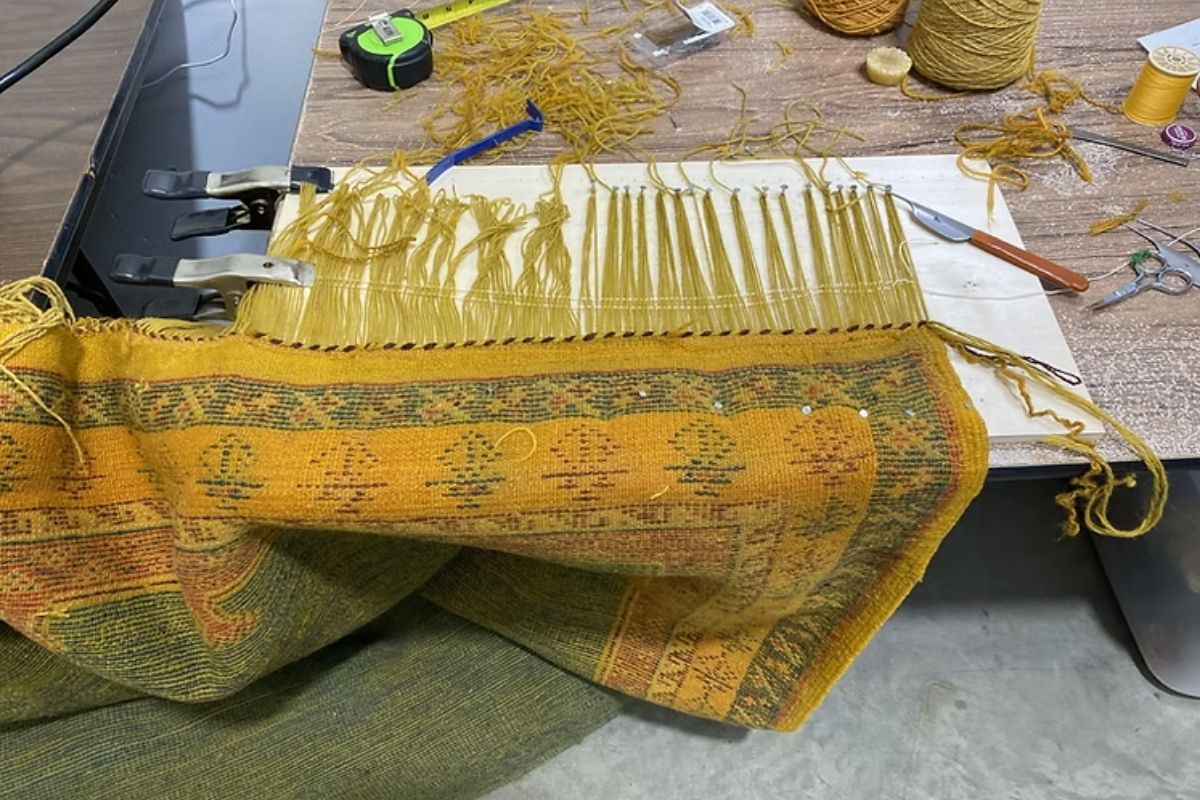
    On a hand-knotted or hand-woven rug, the fringe is not sewn on. It is the ends of the warp, the set of long threads that were strung on the loom before a single knot was tied. Every knot in the rug is tied around those threads. Every weft pass runs between them. The fringe you can see is the last few inches of the structural skeleton, left loose where the rug came off the loom and usually secured with a knotted or braided finish.

    Two consequences follow, and they are the reason this page exists.

    First, losing fringe is not a cosmetic event. A rug shedding fringe is a rug losing the ends of its warp, and once the securing finish at the end of the field goes, the wefts at that end have nothing holding them in place. They start to slide out. Behind them, the end rows of knots lose their anchoring and come away too. The rug does not stop at "no fringe." It carries on unraveling into the field, one row at a time, from the end inward.

    Second, a fringe that has been sewn on is a decoration and not a repair. A machine-made fringe tape stitched across the end of a rug replaces the look of the fringe and does nothing for the warp behind it. That may be exactly what a rug's owner wants, and there is no dishonesty in choosing it, but it should be chosen knowingly. If the end of the rug is unraveling, a stitched-on fringe hides the symptom while the cause continues.

    The honest repair at that end of the rug is to secure the warp ends again: to re-form the knotted or overcast finish that stops the wefts from migrating. A restorer may also rebuild a short band of the field where knots have already been lost, working new wefts and knots into the existing warp. That is real reweaving, it is slow, and it is priced accordingly.

    If you are not sure whether what you are looking at is a knotted pile rug, a flatweave, or a piece that mixes both techniques, that distinction changes what a repair even means, and our guide to flatweave and pile construction is the place to settle it before you get a quote.

    Side edges: the selvage, and why it goes first on one side

    The long sides of a rug are finished differently from the ends. Rather than loose warp ends, the sides carry a selvage: the outermost warp threads, usually bundled and wrapped or overcast with yarn so the edge is solid rather than raw.

    Selvage wear is the most common damage a Moroccan rug in daily use will show, and it is often worse on one side than the other. That asymmetry is usually explained by where the rug sits: the side nearest a doorway, a chair that gets pushed back, or a vacuum's turning point takes more abrasion than the side against a wall.

    When the wrapping yarn wears through, the bundled warps underneath are exposed. They abrade, then break, and the edge starts to open. A restorer's response is to re-wrap the selvage with new yarn over the existing warps, matching color as closely as the available wool allows, and to replace any broken warps in the bundle before wrapping over them. A rug that has been re-wrapped well shows a slight difference in tone along the repaired stretch. That is normal and it is not a sign of a bad job.

    What to avoid is the improvised version: sewing the opening edge shut with a household needle and thread, or running a bead of adhesive along it. Both pull the edge out of line, both are hard for a restorer to undo later, and adhesive in particular stiffens the wool and can discolor it.

    Holes: what caused it decides what is done about it

    A hole in the field of a rug is a symptom with several possible causes, and a restorer will want to know which one before touching it.

    Wear-through happens where the pile has been walked down to the foundation over years, usually in a traffic line or under a chair leg. The knots are gone, the warp and weft are exposed, and eventually they break.

    Moth damage looks different. Carpet moth larvae eat the wool pile, and they do it where they are undisturbed: under furniture, along the edge against a wall, on the underside of a folded rug. Moth damage is often a patch of bare foundation with the pile grazed away around it rather than a clean hole, and it is frequently accompanied by fine debris and silken casings. If that is what you have, the repair is the second job, not the first: an active infestation will eat the new wool as happily as the old.

    Burns, tears and pet damage are localized and usually obvious from their shape.

    For any of these, a restorer has two broad options.

    • Reweaving rebuilds the missing structure in place: new warps where warps are broken, new wefts, and new knots tied in the original technique, then the new pile trimmed to the height of the surrounding rug. Done well it is close to invisible from above and visible from the back, which is where a restorer's work usually shows.
    • Patching cuts a piece from a donor rug of similar construction and stitches it into the opening. It is faster and cheaper. It is also a compromise, because the patch's own warp does not continue into the rug's warp, so the join is a line of stress rather than a continuation of the structure.

    Neither is wrong. Which one is appropriate depends on the rug, on where the damage sits, and on what the owner wants from the piece. What we will not do here is tell you which one your rug deserves, or what either should cost. Rug restoration is priced by the hour and by the area, it varies enormously between workshops and between countries, and any figure published on a page like this one would be a number you could take to a workshop and find wrong.

    The flatwoven end bands are a separate problem

    Many Moroccan rugs, including a great many pile rugs, finish at each end with a band of flatweave before the fringe begins. On a piece that is flatwoven throughout, the whole rug is that structure. Flatweave has no pile to wear down, so it fails differently: the weft yarns abrade and part, and where two color blocks meet you can find slits along the join, which in some flatweaving traditions are structural rather than damage.

    That last point matters before you ask for a repair. A slit at a color boundary may be how the piece was made. Our guide to Moroccan kilims and hanbels covers the flatwoven end of the tradition and what its normal construction looks like, and it is worth reading before you describe something to a restorer as a fault.

    What to do before you call anyone

    Four things, in order, and none of them costs anything.

    1. Stop the damage spreading. If an end is unraveling, keep the rug off that end's traffic line and stop vacuuming over it with a rotating brush. If wefts are visibly sliding out, that end can be temporarily secured by a restorer far more cheaply than it can be rebuilt later.
    2. Rule out moths before you rule out wear. Check the underside, the parts under furniture and the edge against the wall. Moth treatment comes before repair, always, and it is a separate job.
    3. Photograph the front and the back of the damage. The back is where a restorer reads the construction, and most of the questions you will be asked over email are answerable from a back photograph.
    4. Ask the workshop what they will actually do, in the terms above: re-wrapping, re-securing warp ends, reweaving, patching, or a sewn-on fringe. If the answer is "we will fix the fringe" and no further detail is offered, ask which of those two fringe jobs is meant. It is a fair question and a good workshop will answer it plainly.

    What this guide deliberately does not tell you

    There is no cost figure anywhere on this page, no square-inch rate and no per-knot rate. There is no recommendation of a workshop, a country to send the rug to, or a shipping method. And there is no judgment on whether a given piece is "worth" restoring, because that depends on what the rug means to the person who owns it as much as on what it would sell for.

    What is worth saying plainly, and what most of this niche will not say, is that the vocabulary is loose. "Restoration," "conservation," "repair" and "re-fringing" are not defined or certified terms in this trade. Nobody regulates them. Two workshops can use the same word for different work at different prices, which is why the useful question is never "do you do restoration" but "what exactly will you do to this edge." That is the same problem that runs through the rest of this site's buying material, and if you have not read our explanation of what the trade's descriptive words do and do not mean, what a Berber rug actually is is the place that starts.

  • Carpet Moths: Is the Damage to Your Rug Still Active?

    Carpet Moths: Is the Damage to Your Rug Still Active?

    Something probably was living in it. The question that matters is whether it still is, and the signs that answer it are specific. Active looks like fine silk webbing across the pile, small pale tubular cases roughly 1 to 2 mm long tucked into the base, and sandy grit along the edges. Historic looks like clean-edged bare patches with none of that debris present. The damage is done by larvae, not by the adult moths you occasionally see, and they live where it is dark and undisturbed, so the middle of your floor tells you almost nothing.

    Why wool, and why Moroccan rugs

    Carpet moth larvae eat keratin, the protein in wool, hair and feathers. Synthetic carpet is not food. A hand-knotted wool rug is.

    Two things make these rugs a common target. They are undyed or naturally dyed wool with lanolin still present, which is exactly what the larvae are looking for, and they are frequently placed where a rug sits for years without being moved, under a bed, beneath a heavy sofa, in a spare room. Larvae need darkness and stillness, and a rug that never moves supplies both.

    None of this is a comment on the quality of the rug. Good wool is more attractive to them, not less.

    Where to look, because the middle of the room tells you nothing

    If you inspect the open floor and find nothing, you have learned nothing. Do this properly and it takes ten minutes.

    • Lift the corners and the edges. Look at the base of the pile along the whole perimeter, and at the underside of the rug.
    • Move the furniture. Under a sofa, under a bed, behind a chest of drawers. This is where infestations are found.
    • Check the darkest, least walked part of the room, including behind doors and in the corners of a room that is rarely used.
    • Look at the base of the pile, not the surface. Part the pile with your fingers. Larvae feed at the bottom, cutting fibres near the foundation, so the surface can look intact while the pile is being cut out from underneath.
    • Take a torch. It is genuinely easier to see webbing and casings with a directed light.

    Doing this two or three times a year is the whole of moth prevention, and it happens naturally if you vacuum under the furniture rather than only the open floor.

    The signs of an active infestation

    These mean it is happening now.

    Silk webbing. Fine, slightly sticky strands spun by larvae as feeding tunnels, usually low in the pile and along edges. This is the clearest single sign.

    Larval cases. Small pale tubes, described in the pest and rug literature as roughly 1 to 2 mm long, tucked into the base of the pile. Case-bearing species carry these around with them.

    Sandy grit near the edges. Larval waste, and a strong indicator of active feeding. It is gritty rather than soft, which is what distinguishes it from ordinary shedding.

    Live larvae. Small, pale, grub-like, at the pile base. Unambiguous.

    And three weaker signs, which suggest but do not confirm:

    Small dark specks on or under the rug, which are droppings.

    Shed skins, translucent and shell-like, near damaged areas.

    Adult moths in dark corners or flying weakly around a room. Adults do not eat wool and their presence is circumstantial rather than proof, though it is a reason to inspect properly.

    The signs of damage that has already stopped

    Old damage is common on second-hand and vintage rugs and is not an emergency.

    The pattern is a bare or thinned patch, often near an edge or where furniture stood, with no webbing, no casings, no grit and no live larvae when you part the pile and look at the base. The exposed foundation threads look clean rather than dusty or webbed.

    If you find that and nothing else, this is a repair conversation rather than a pest one. It is worth vacuuming the area thoroughly and checking again in a few weeks to confirm nothing new appears, but there is no urgency and nothing to treat.

    The distinction matters commercially too. Old moth damage on a rug you are being sold is a condition issue that should have been disclosed, which is why it is on the list in twelve questions worth asking any rug seller.

    What to do this week if it is active

    This page diagnoses; it does not treat. Treatment involves either insecticides with their own handling instructions or a freezing protocol with specific temperatures and durations, and this guide will not publish figures for either without a named source in front of it. What follows is the sensible immediate response.

    • Stop it spreading. Do not carry the rug through the house shedding larvae. If you move it, roll it and wrap it.
    • Vacuum thoroughly, both sides of the rug and the floor underneath, along the edges and into the perimeter of the room. Empty the vacuum outside immediately and dispose of the contents in a sealed bag.
    • Check everything else made of wool in the same room and nearby: other rugs, and stored wool items. If the problem extends beyond the rug, this is a household pest question and belongs with a pest-control professional rather than with a rug site.
    • Call a rug cleaning specialist or a pest-control service. A specialist rug cleaner can treat the rug itself, and will tell you honestly whether the damage needs repair as well.
    • Follow the manufacturer's instructions on any product you use, and do not improvise. Wool is also vulnerable to the wrong cleaning chemistry, as cleaning products that quietly destroy wool sets out, so a moth problem is easy to compound with a cleaning problem.
    • Then keep moving the rug. Regular vacuuming under furniture is what prevents the next one.

    If what you found looks more like even, soft fibre loss across the whole rug rather than localised gritty damage, it is probably not moths at all: why your new wool rug sheds covers the difference. For the full routine, how to care for a Moroccan wool rug. And for what makes a fleece worth protecting, judging wool quality without a lab.

    FAQ

    How do I know if carpet moths are still active in my rug?
    Look for fine silk webbing, pale tubular cases roughly 1 to 2 mm long at the base of the pile, sandy grit along the edges, or live larvae. Bare patches with none of that debris are usually old damage.

    Where should I look for carpet moths?
    Dark, undisturbed places: under furniture, along the edges, the underside of the rug, and behind doors. Larvae avoid light and traffic, so the open floor tells you little.

    Do adult moths damage the rug?
    No. The damage is done by the larvae feeding on wool. Adults are a reason to inspect properly rather than proof of active damage in a particular rug.

    Can carpet moths damage a synthetic rug?
    They eat keratin, so wool, hair and feathers are the target. Purely synthetic pile is not food, though blends and any wool content are.

    What should I do first if I find an active infestation?
    Vacuum both sides of the rug and the floor beneath it thoroughly, empty the vacuum outside into a sealed bag, check other wool items nearby, and call a rug cleaning specialist or pest-control service rather than improvising a treatment.