Blog

  • The Rug Burn Test: What It Proves, and Doesn’t

    The Rug Burn Test: What It Proves, and Doesn’t

    The burn test can tell you, imperfectly and under controlled conditions, whether a fiber is protein or plastic. That is the whole of what it does. It cannot tell you how old a rug is, where it was made, who made it, whether it was hand-knotted, or whether it was chemically treated to look aged, which are the questions Moroccan rug buyers actually have. This guide does not recommend running it, and the most repeated version of the advice, that pure wool "will not light," is wrong in a way that costs buyers money.

    Where the claim comes from and why it matters

    Two of the buying guides on page one for Moroccan rug advice in August 2026 tell readers to take a lighter to a fiber and report that the flame will not light pure wool but will melt a synthetic. One of them is a travel-tour operator's blog, one is a well-known Morocco travel site. Neither cites anything.

    Wool is comparatively flame resistant. That is a real property and a large part of why it has been used in carpets for centuries. There is a body of textile literature on the burning behavior of wool carpets, including work indexed under the title "Burning Behavior of Carpets: The Advantages of Wool and Flame-Resistant Wool." Comparatively flame resistant is not the same statement as fireproof.

    The practical consequence is specific and predictable. A buyer holds a flame to a fiber from a genuine wool rug, expecting nothing to happen, sees it catch and burn, and concludes the rug is synthetic. The advice has produced a false negative on a real rug. Someone acting on it walks away from a genuine piece or, worse, uses it to argue the price down on a seller who was telling the truth.

    What the test actually shows, at best

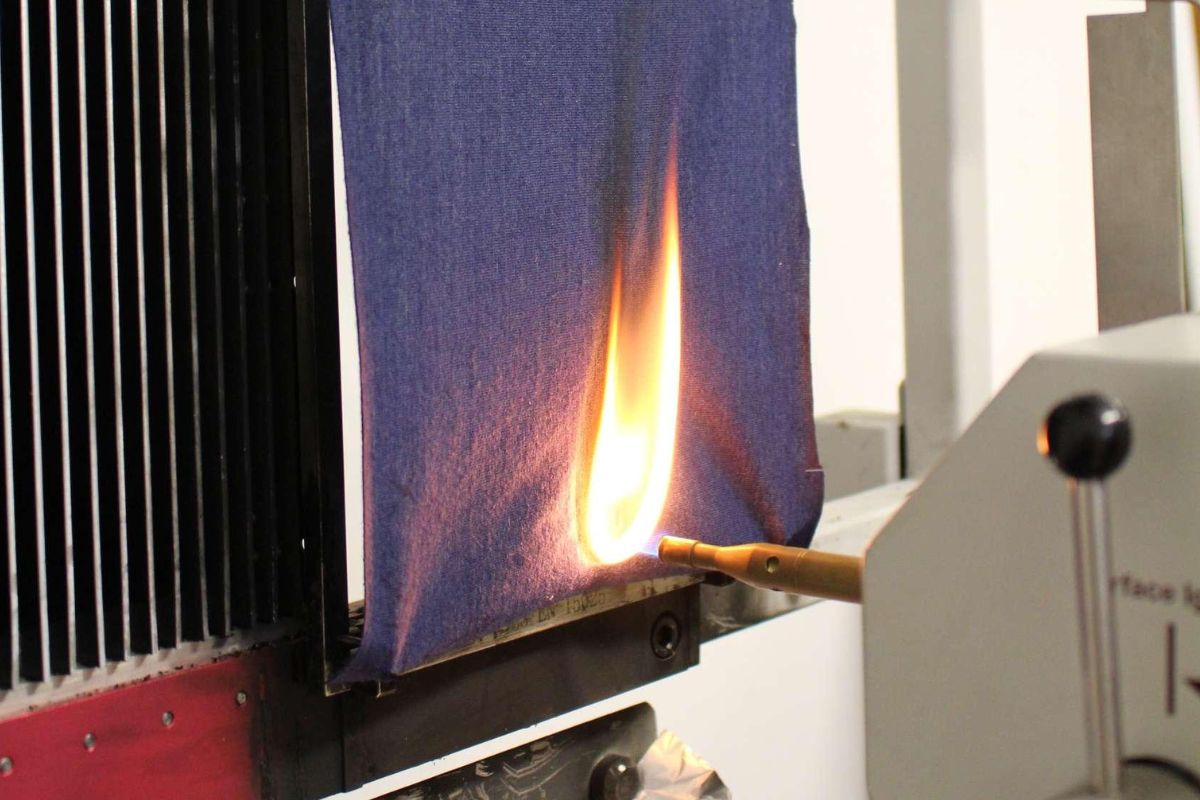
    In a controlled setting, protein fibers and plastics do behave differently. Protein fibers such as wool are harder to ignite, tend to burn slowly and self-extinguish, smell like burning hair, and leave a brittle ash that crushes to powder. Synthetics such as polypropylene and nylon ignite more readily, burn faster, smell acrid or plastic-like, and leave a hard melted bead.

    That is a genuine difference and the reason the test exists at all. Note what it is a test of: fiber chemistry. It is a materials identification, not an authentication.

    Even at that job it has known limits, and even sources that recommend it concede them. Blended fibers have to be separated before testing, because a wool and synthetic blend gives a mixed and unreadable result. And a single strand from one corner tells you about that strand, not about a rug that may use different fibers in pile, warp and weft.

    Why not to do it

    Three reasons, in order of how much they should matter to you.

    It is not your rug. If you are testing in a shop, you are taking a lighter to someone else's property, and taking a strand to test means damaging it first. A seller who agrees is being accommodating, not proving anything.

    It is an open flame on a textile. You may be holding a four-figure wool object in an enclosed retail space with other flammable stock. This site does not publish a protocol for doing this and will not, because there is no version of the instruction that is responsible to give.

    It settles a question you can settle better another way. If fiber content genuinely matters to your decision, a laboratory fiber test gives a definitive answer on the whole rug without burning anything. Against the cost of the rug it is a small expense, and any seller confident in their description will agree to it.

    The other tests sold as proof

    The burn test is not alone. Three more circulate widely and each carries less weight than its reputation.

    The color test. One page-one source advises avoiding "hot" colors, on the theory that a red "hot as a tomato" is machine dyed while a red "as a tulip" is vegetable dyed. Dye chemistry does not divide that neatly, natural dyes produce a wide range of intensities depending on the plant, mordant and process, and a judgment made by eye about a hue is not evidence of anything. Moroccan rug colors: where the palette comes from covers what can honestly be said about the palette.

    The wet cloth rub. Rubbing a damp white cloth on the pile to see whether color transfers is often presented as proof of synthetic dye. It is not. Natural dyes can and do bleed, and a color run is not evidence of a fake. It is covered properly in natural or synthetic dye: how to check, and why bleeding proves nothing.

    The price test. "Too cheap means fake" is the most repeated claim in the niche and the least supported. It is examined in how to buy a Moroccan rug without getting taken, alongside the documented economics that contradict it.

    What these four have in common is that they are quick, they feel like expertise, and they produce a confident answer to a question they do not address.

    What to do instead

    Spend your effort on the checks that actually resolve something.

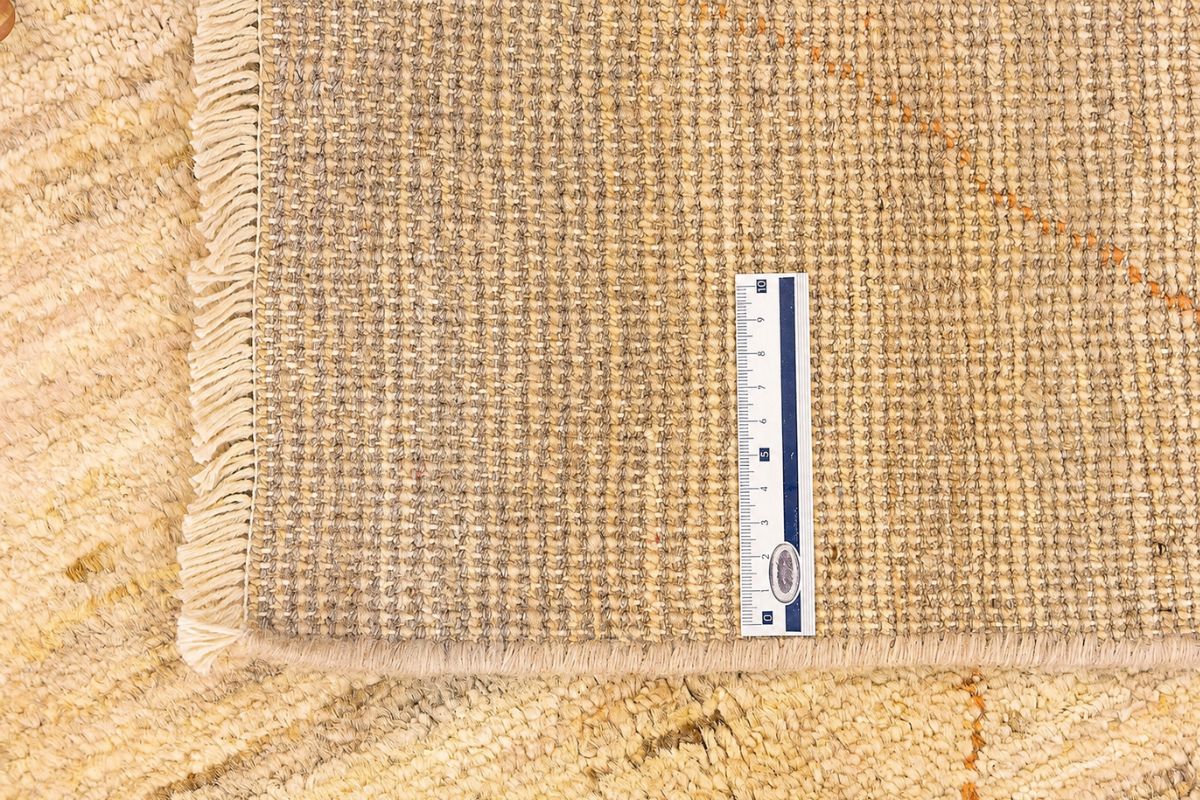
    • Look at the back. Construction is the one authenticity question you can settle yourself with certainty, and it has direct financial consequences. What the back of the rug shows covers it.
    • Ask what the seller can document, rather than what they assert. Region, town and cooperative are answerable. Tribe and decade usually are not.
    • Treat the aged look as a look. Fading can be manufactured in weeks by processes that are documented, which how new rugs are made to look old sets out.
    • Pay for a fiber test if fiber matters. It is the only version of the burn test question that gives a real answer.
    • Get claims in writing before paying. A written description is something you can act on later. A shop-floor flame is not.

    If you want the full set of questions hiding inside the word, is my Moroccan rug authentic breaks it into the four that have different answers.

    FAQ

    Does pure wool burn?
    Yes. Wool is harder to ignite than most synthetics, tends to burn slowly and self-extinguish, and smells of burnt hair. It is not fireproof, and advice that says a flame "will not light" wool is wrong.

    Should I do a burn test on a rug in a shop?
    No. It damages property that is not yours, it is an open flame on a textile in an enclosed space, and it answers only a fiber question that a laboratory test answers properly.

    What does the burn test actually prove?
    At best, whether a single strand is a protein fiber or a plastic one. It proves nothing about age, origin, tribe, construction or chemical treatment.

    How can I be sure my rug is wool?
    A laboratory fiber test is the definitive answer. Feel and appearance are suggestive but not conclusive, and blends are specifically designed to be hard to judge by hand.

    Does color bleeding mean the dyes are synthetic?
    No. Natural dyes bleed too, so a color run is not evidence of a fake. This is one of the most common false claims in the niche and it has its own page here.
  • What “Vintage” Means on a Moroccan Rug Listing

    What “Vintage” Means on a Moroccan Rug Listing

    In the rug trade generally, "vintage" conventionally describes a piece roughly thirty to eighty years old, with "semi-antique" and "antique" sitting above it. That is a trade convention, not a regulated definition, and no authority enforces it. In the Moroccan market specifically the word has largely detached from age altogether and now describes an appearance: faded, muted, softened color. The Anou Cooperative, a weaver-owned organization in Morocco, stated the position directly in a post of 14 December 2020: "Moroccan vintage rugs don't really exist," at the volume and prices the online market offers.

    Two answers, and page one only gives you the first

    Search this question and you get a tidy vocabulary lesson. Dealer sites and rug lexicons, including Nazmiyal, Jozan's rug lexicon, Matt Camron, Rug & Kilim and others, broadly agree on a set of bands, and several are honest enough to add that the lines are widely used but not perfectly standardized.

    That answer is genuinely useful. If you are talking to a dealer, it tells you what they probably mean.

    What it does not tell you is whether the word on the listing in front of you has any relationship to the age of the object. In this particular category, very often it does not. Both answers are true at once, and you need both.

    What the trade conventionally means

    The bands you will see quoted, and the sources for them are rug dealers and trade lexicons rather than any standards body:

    • Vintage: roughly thirty to eighty years old. The term is a relatively recent addition, covering pieces that are neither new nor antique.
    • Semi-antique: roughly fifty to seventy-five years old, sometimes described as the sweet spot, with some patina but better condition than a true antique.
    • Antique: at least eighty years old by most accounts, with a hundred years often treated as the threshold for a classic antique.

    The bands overlap, different dealers draw them differently, and a piece one seller calls semi-antique another will call vintage. That inconsistency is not fraud. It is the ordinary looseness of trade vocabulary.

    Why none of it is enforceable

    There is no licensing body for rug dealers, no registry of Moroccan rugs, and no independent verification step anywhere in the chain between the loom and the listing. The words are marketing categories that the trade has settled into by habit.

    Customs authorities and auction houses do use age thresholds for their own purposes, and those have real consequences, but they apply to declarations made to those institutions rather than to what a shop writes on a tag.

    The practical upshot: "vintage" on a listing is a claim by the seller, at the same evidential level as "beautiful." If it is carrying a price premium, you are paying for an unverified assertion unless something else backs it up.

    The Moroccan exception: the word came loose from age

    Here is the part the vocabulary guides do not cover, and it is specific to this market.

    The look associated with age in Moroccan rugs, muted color and softened contrast, can be produced deliberately in a matter of weeks. Anou's December 2020 post describes the methods used by the middlemen who supply the online market: rugs covered in dirt and walked on, laid out in the sun for extended periods, washed in a one-to-one water and bleach solution, sometimes treated with sulfur-heavy chemicals to speed the process, and in some cases blow torched to force fading. A follow-up post of 3 September 2021 adds that chemicals of this kind were banned by US rug washing facilities in the 1980s after causing lung complications in workers.

    The market logic follows. Genuinely pre-2000 Moroccan pieces are collector items and are priced accordingly, so a large, cheap, readily available supply of "vintage" rugs on Etsy and Instagram cannot mostly be what the word implies. How new rugs are made to look old covers Anou's account in full.

    Written in 2026, this describes the market as it stands now. It is the kind of thing that changes, and this page should be re-checked rather than assumed permanent.

    What a seller can actually prove about age

    Very little, and it is worth knowing the difference between proof and confidence.

    Things that are not evidence of age: faded color, softness, uneven wear, a worn patch, the presence of natural dyes, a seller's certainty, or a certificate issued by the seller. Every one of those can be produced or asserted.

    Things that count for something: a documented chain of ownership, a photograph of the rug in a dated setting, an auction or estate record, a purchase receipt from decades ago, or provenance from a named collection. These are rare in this market, which is precisely why they matter when they exist.

    What an expert can add: a textile conservator or independent appraiser examining the piece in person can assess construction, dye chemistry and wear in ways that narrow the range. That is a judgment by a qualified person, not a date stamp, and it costs money. It is still worth more than anything you or this site can conclude from an image.

    What to ask before you pay a vintage premium

    • "How old do you believe this is, and how do you know?" The second half is the question. "It came from a dealer in Marrakech who said so" is a real answer, and it tells you the claim is second-hand.
    • "Has this rug been washed or treated?" Chemical washing is standard in the trade and a straight seller will say so.
    • "Will you put the age claim in writing on the invoice?" A seller confident in a claim will. One who will not has told you something useful without saying it.
    • "What is your returns policy if the description is wrong?" More useful than the age claim itself, especially buying online or abroad.
    • Decide whether you actually want age. If you like the faded look, buy the faded rug and pay for the look. The premium is the only part of this that requires the word to be true.

    For the wider set of risks see how to buy a Moroccan rug without getting taken, and for what "authentic" means once age is set aside, is my Moroccan rug authentic. If it is the palette you are drawn to, where the Moroccan rug palette comes from is the honest version of that story, and what "Berber rug" actually means covers another word doing more work than it should.

    FAQ

    How old does a rug have to be to be called vintage?
    By trade convention, roughly thirty to eighty years, with antique starting around eighty to a hundred. The convention comes from dealers and rug lexicons and is not enforced by any authority.

    Are most "vintage" Moroccan rugs actually old?
    Often not. The Anou Cooperative, a weaver-owned organization in Morocco, wrote in December 2020 that Moroccan vintage rugs "don't really exist" at the volume and prices the online market offers, and described the processes used to age new rugs artificially.

    Is a chemically washed rug a bad rug?
    Not necessarily, and washing is standard across much of the trade. The problem is paying an age premium for the result of a process, and the environmental and labor costs documented alongside it.

    What is the difference between vintage and semi-antique?
    Semi-antique is usually given as roughly fifty to seventy-five years and vintage as thirty to eighty, so the bands overlap. Different dealers draw the line differently and neither term is standardized.

    How can I verify a rug's age before buying?
    Ask for documentation rather than an opinion: ownership history, dated photographs, auction or estate records. Failing that, an independent appraiser examining the piece in person can narrow the range. Nothing else in this market verifies age.

  • How New Rugs Are Made to Look Old in Morocco

    How New Rugs Are Made to Look Old in Morocco

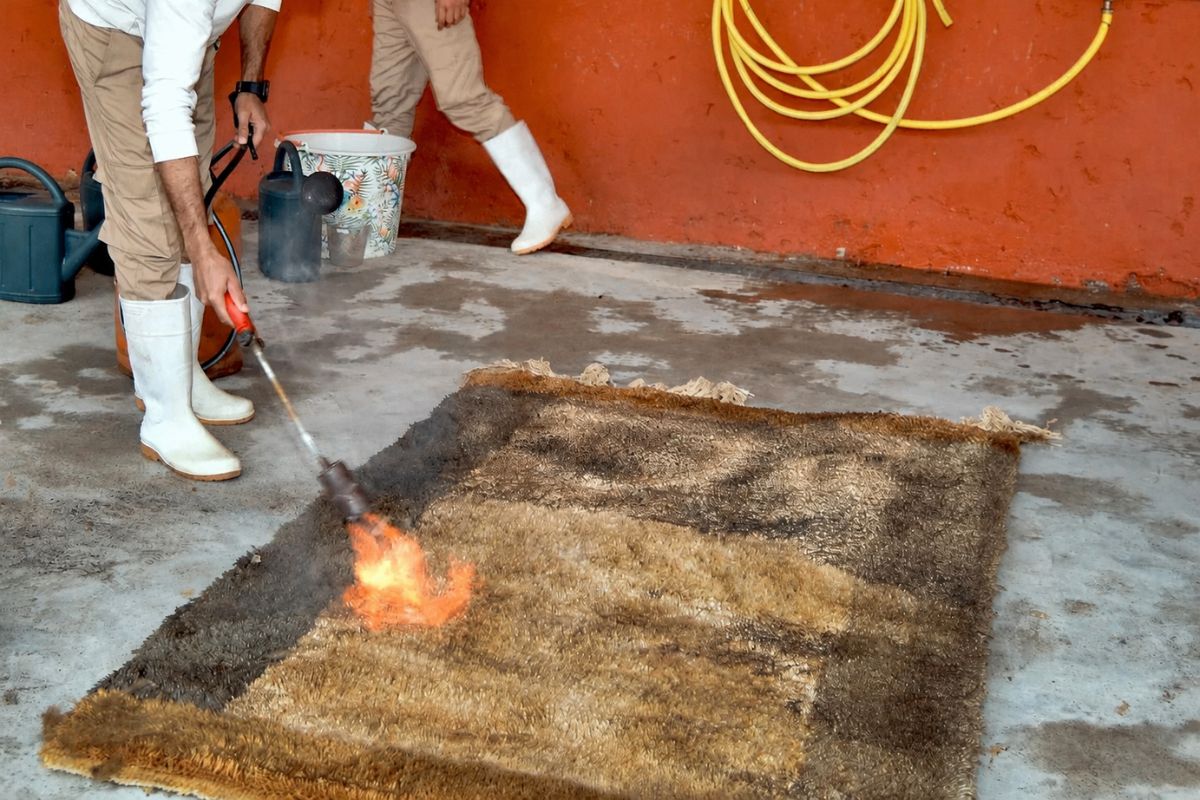
    Most Moroccan rugs sold online as “vintage” are new rugs that have been treated to look old. The account below comes from the Anou Cooperative, a weaver-owned organization in Morocco, which described the process in a blog post of 14 December 2020: rugs covered in dirt and walked on, laid out in the sun, washed in a one-to-one water and bleach solution, sometimes treated with sulfur-heavy chemicals to shorten the process, and in some cases blow torched to burn out plastics and force color fading. Their summary was blunt: “Moroccan vintage rugs don’t really exist.”

    Who says this, and why their account carries weight

    This site went looking for independent reporting on artificial ageing in the Moroccan rug trade in August 2026. There is almost none. Page one for the question is the Anou Cooperative’s own blog, a travel listing for the cooperative, and one US rug dealer and cleaning firm whose description of bleach odor and heavy top-side fading corroborates the account from a trade perspective.

    No newspaper covers it. No consumer body covers it. No rug seller’s blog covers it, which is not surprising, because most of them are selling the product in question.

    Anou is a national service cooperative and part of a network of Amazigh (Berber) weaving and artisan cooperatives, where artisans sell directly rather than through intermediaries. They are not a neutral party: they have an interest in the alternative model they run, and they say so openly. What they are not is a seller of the rugs they are describing. In a market where every other source has inventory to move, an organization owned by the weavers themselves is the closest thing to an independent account that exists on this question.

    The processes, in Anou’s own description

    The 14 December 2020 post describes a supply chain in which middlemen, most of them women according to Anou, commission rugs from weavers and then process them for the online market. The techniques it names:

    • Dirt and foot traffic. Weavers are instructed to cover the finished rug in dirt and walk over it.
    • Sun exposure. The rug is laid out in the sun for an extended period to fade the color.
    • Bleach washing. A one-to-one water to bleach solution, which Anou says takes something like 100 liters to fully soak a large wool rug, applied one to three times on average.
    • Sulfur-heavy chemicals. Used to cut down processing time, with a toxicity Anou describes as not well understood.
    • Blowtorching. Rugs “literally blow torched to burn out plastics” and to promote color fading.

    Anou names Khenifra, Kenitra and Taznakht as production hubs for this, and Instagram and Etsy as the sales channels. Their follow-up post of 3 September 2021 adds that chemicals used in this kind of washing “have been banned by US rug washing facilities since the 1980s” after causing lung complications in workers.

    None of this is invented by this site, and none of it is generalized beyond what Anou wrote. It describes an industry practice, not any particular shop.

    The cost that never appears in the listing

    The environmental account is the part of this that no seller mentions, and Anou is specific about it.

    Bleach does not biodegrade. In Anou’s words, for every rug on Etsy and Instagram, that is “countless liters of bleach poured directly into the rivers that the artisans who made the rug depend on.” The 2021 post reports that streams in the Khenifra region “now run with brine and are no longer potable,” and describes this as a worsening problem rather than a historical one.

    There is a human exposure side too. Anou notes that the people demonstrating the washing process wear boots, and observes that this is for a reason. This site is not in a position to assess the occupational risk and does not attempt to.

    The cooperative also documents that a different way is possible: Cooperative Lfarah produced faded, vintage-style rugs using full-exhaust dyes and sustainable mordants with no chemicals, and their pilot washing techniques cut water use by roughly half against standard practice.

    What this means for the rug already in your house

    The honest answer is that this site does not know what is in your rug, and neither does anybody else who has not tested it.

    What can be said: chemical washing is widespread in this trade, the processes described above leave the rug looking exactly as intended, and there is no way to tell by eye whether a given piece went through them. Anou’s own point about the sulfur-heavy chemicals is that the effects are not well understood, and that uncertainty is part of the honest answer rather than something to paper over.

    What this guide will not do is offer you a home test or a treatment. There is no reliable kitchen-table way to detect chemical residue in wool, and neutralizing protocols circulating online are not something this site is qualified to endorse. If you are concerned about a specific rug:

    • Ask the seller directly whether the rug was chemically washed, and ask for the answer in writing. Many will say yes, because it is normal in the trade.
    • Air it thoroughly, outdoors if you can, before it goes into a bedroom or a child’s room. Ventilation is the one measure that is safe, free and universally recommended for new textiles.
    • Speak to a professional rug cleaning service, one that does not sell rugs, if a smell persists. They handle chemically washed pieces routinely and can tell you what they are seeing.
    • Speak to a clinician, not a rug site, if anyone in the household has symptoms you associate with the rug. That is a medical question and this guide has no standing to answer it.

    Why a new rug smells of chemicals covers what different smells actually indicate, including the separate case of adhesive off-gassing in tufted rugs.

    What it means for what the weaver was paid

    The distressing is also where the money separates from the maker, and this is the part that explains the rest.

    Anou’s December 2020 post describes artisans earning as little as 5 dirham a day, which the cooperative characterizes as under 5% of minimum wage, and receiving payment only for the weaving. The processing that transforms a new rug into a saleable “vintage” one, and multiplies its resale price, happens after the weaver is out of the transaction.

    That fits the wider picture from AFP’s reporting of December 2024, carried by outlets including Business Recorder, which described weavers in southern Morocco traveling to a weekly market to sell to middlemen who set the prices, with a large rug going for around 250 dirhams, roughly 24 US dollars at the time. Ijja Benchri, a weaver from Taznakht quoted in that reporting, said a single carpet took two to four weeks and that she had no choice but to accept what was offered.

    Taznakht rugs and the cooperatives behind the name covers the organizations working against that pattern.

    Can you tell, looking at a rug?

    Usually not, and anyone who tells you they can from a photograph is overstating.

    Some things are suggestive rather than conclusive. A strong bleach or chlorine smell is a signal. Fading that is much heavier on the top surface than in the depth of the pile, or that sits oddly against unfaded areas, is consistent with a surface treatment rather than decades of light. Uniform ageing across a whole rug is less likely than uneven wear from real use.

    But each of these can have another explanation, and a well-executed treatment produces exactly the appearance it is meant to. That is the point of it.

    Which is why this cluster keeps returning to the same conclusion: buy the rug in front of you for what it is, and treat the age story as unverified unless there is documentation behind it. What “vintage” actually means on a listing covers the vocabulary, and how to buy a Moroccan rug without getting taken covers the full set of failure modes. If it is the faded palette you are drawn to, where the Moroccan rug palette comes from is worth reading first.

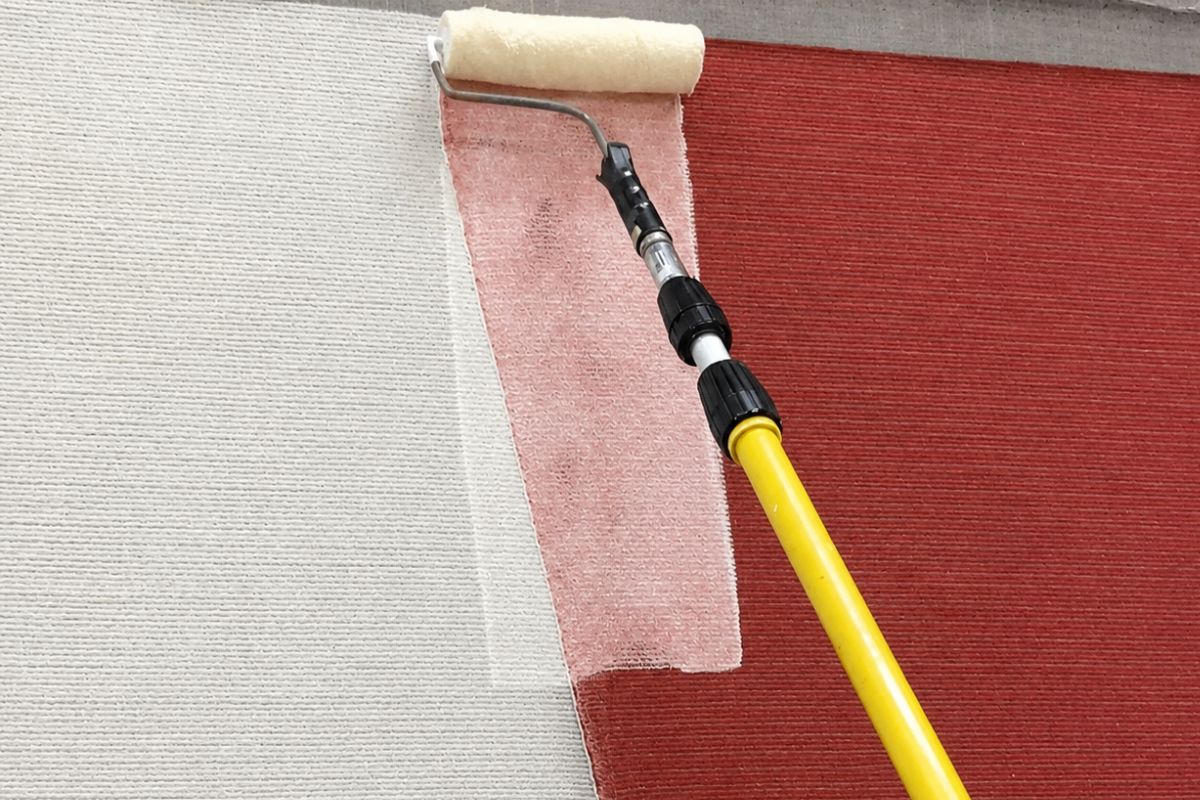
    Photo credit/source: Nina Roberts; the article identifies the image as “Rugs are washed and torched. Photo: Nina Roberts.

    FAQ

    Are most vintage Moroccan rugs fake?
    The Anou Cooperative, a weaver-owned organization in Morocco, wrote in December 2020 that “Moroccan vintage rugs don’t really exist” at the volume and prices the online market offers, and described the processes used to age new rugs artificially. This site cannot say what proportion of any given seller’s stock that covers.

    What chemicals are used to age Moroccan rugs?
    Anou names a one-to-one water and bleach solution and sulfur-heavy chemicals used to speed the process, and reports that chemicals of this kind were banned by US rug washing facilities in the 1980s after causing lung complications in workers.

    Is a chemically washed rug dangerous to have at home?
    This site does not know and will not guess. Anou itself says the toxicity of some of the chemicals involved is not well understood. Air a new rug thoroughly, ask the seller in writing what was done to it, and consult a professional cleaner or a clinician rather than a rug website if you have a specific concern.

    Can I tell if my rug was artificially aged?
    Usually not by eye. A bleach smell, or fading much heavier on the surface than in the depth of the pile, is suggestive but not conclusive. A well-executed treatment looks exactly like age, which is its purpose.

    Does buying from a cooperative avoid this?
    Cooperatives such as Anou publish what their members are paid and describe their own washing and dyeing methods, which is more transparency than most of the chain offers. This site does not rank or recommend individual sellers and has no commercial relationship with any of them.

  • Why a New Rug Smells of Chemicals

    Why a New Rug Smells of Chemicals

    A new rug that smells of rubber or glue is almost always telling you how it was built. That smell comes from the styrene-butadiene rubber latex adhesive used to hold the pile in place on hand-tufted and some machine-made rugs, and hand-knotted rugs, which are held together by knots and use no adhesive, do not produce it. A different smell, sharp and bleach-like on a rug sold as vintage, points somewhere else entirely: the chemical washing used to make new Moroccan rugs look old. The nose is doing identification work here, not just complaining.

    Two different smells, two different meanings

    This is the distinction almost nothing online makes, and it is the useful part.

    Rubber, glue, burnt-tire, or a faint sweetish chemical smell. This is adhesive off-gassing. It is a construction signal. If you were told the rug was hand-knotted, this smell is at odds with that description and is worth raising with the seller.

    Bleach, chlorine, or a sour chemical smell, usually on a rug sold as vintage. This is not adhesive. It is consistent with the chemical washing documented in the Moroccan trade, covered in how new rugs are made to look old.

    Wet wool, farmyard, or a musty smell. This is often just wool being wool, particularly when a rug has been rolled and wrapped for shipping, or lanolin reacting to humidity. It usually clears with air and is the least concerning of the three.

    Working out which one you have narrows the question considerably before you do anything else.

    Where the rubber smell comes from

    Hand-tufted rugs are made by punching yarn through a fabric backing. Nothing is knotted, so the pile has to be locked in place, and that is done with a latex adhesive spread across the underside, usually covered by a second canvas backing.

    As that adhesive cures it releases volatile organic compounds. The one most associated with the characteristic new-carpet smell is 4-phenylcyclohexene, usually shortened to 4-PCH, which forms during the polymerization of the styrene-butadiene backing adhesive. UL's Chemical Insights group publishes a technical brief on the compound. It is detectable by the human nose at very low concentrations, which is why a small quantity of adhesive can make a whole room smell.

    The practical consequence for a buyer: a strong rubber smell is good evidence of a glued backing, and a glued backing means tufted or machine-made rather than hand-knotted. What the back of the rug shows tells you how to confirm it visually in about ten seconds.

    Is it harmful? The honest state of the evidence

    This is where the sources genuinely disagree, and publishing the disagreement is more useful than picking a side.

    On one hand: 4-PCH is detectable at concentrations measured in parts per billion, and accounts in the indoor air quality literature associate exposure with headaches, eye irritation and nausea in building occupants, with the most cited case being complaints at an EPA headquarters building after carpet installation. There is also work noting that 4-PCH can react with indoor ozone.

    On the other hand: carpet emissions ranked among the lower overall contributors to indoor air quality problems in EPA-era studies, and following laboratory testing and government review no connection was established between 4-PCH and a specific adverse health outcome.

    What is not in dispute: there is no OSHA permissible exposure limit for 4-PCH. LEED guidance references a maximum concentration figure for indoor air quality testing purposes, which is a building standard rather than a health threshold. And people do report symptoms they attribute to new carpet smell, whether or not a causal mechanism has been established.

    So the honest answer is that the smell is unpleasant, common, and not demonstrated to be harmful at household levels, and that the evidence is not strong enough to promise anybody it is harmless either. If someone in your home has asthma or a chemical sensitivity, treat the uncertainty as a reason for caution rather than reassurance.

    How long it lasts, and what actually helps

    Retailer and industry guidance generally puts the off-gassing period for good quality adhesives at a few days to about two weeks with proper ventilation. Lower-grade latex can carry on for months, and a rug that spent weeks sealed in plastic during shipping will smell worse on unrolling and take longer to clear.

    What helps, in order:

    • Air, and a lot of it. Unroll the rug outdoors on a dry day if you can, or in a garage, porch or spare room with the windows open and a fan running. This is the single effective measure and everything else is secondary.
    • Time and patience. The smell curve falls steeply in the first days.
    • Keep it out of a bedroom or nursery until it clears. A simple precaution that costs nothing.
    • Vacuum gently once the rug is in place, which lifts trapped fibers and helps circulation through the pile.

    What this site will not recommend: vinegar soaks, baking soda protocols presented as neutralizing a VOC, ozone generators, or any home chemistry aimed at the adhesive. Wetting a rug with a glued backing risks the adhesive and the backing itself, ozone generators carry their own indoor air quality problems, and none of it addresses the compound in the way it is usually claimed to. Follow the manufacturer's or retailer's own care instructions first.

    When the smell is a reason to return the rug

    The smell is not only an air quality question. It is also a description question.

    If the rug was sold to you as hand-knotted and it smells strongly of adhesive, those two facts are hard to reconcile, because hand-knotted construction uses no adhesive. Check the back. If you find a glued canvas backing, you have a documentation problem rather than a ventilation problem, and that is a conversation with the seller about the description rather than something to air out on a balcony.

    If the smell has not meaningfully faded after several weeks of good ventilation, that is also grounds to go back to the retailer. Persistent odor is commonly attributed to lower-grade adhesive, and most sellers would rather handle a return than a review.

    Get the original description in writing if you do not already have it. Is my Moroccan rug authentic covers what a seller can and cannot actually document, and how to buy a Moroccan rug without getting taken sets out the wider set of risks. If you are choosing between constructions in the first place, flatweave or pile is a good place to start.

    FAQ

    Why does my new rug smell like rubber?
    Almost certainly styrene-butadiene latex adhesive off-gassing from a glued backing, which means the rug is hand-tufted or machine-made rather than hand-knotted. The compound most associated with the smell is 4-phenylcyclohexene.

    Do hand-knotted rugs smell?
    Not from adhesive, because they contain none. A hand-knotted wool rug may smell of wool or of storage, and a Moroccan piece sold as vintage may smell of the chemical wash used to fade it, which is a different issue.

    Is new rug smell toxic?
    The evidence is genuinely mixed. Some indoor air quality accounts associate 4-PCH exposure with headaches and irritation, while EPA-era review did not establish a link to a specific health outcome, and there is no OSHA exposure limit. Ventilate well, keep the rug out of bedrooms until it clears, and speak to a clinician rather than a website about symptoms.

    How long does the smell take to go away?
    Retailer and industry guidance generally says a few days to about two weeks with good ventilation, and longer for lower-grade adhesive or a rug shipped sealed in plastic.

    Should I use vinegar or baking soda on it?
    This site does not recommend home chemistry on a rug with a glued backing. Wetting it risks the adhesive and the backing, and ventilation is what actually reduces the smell. Follow the manufacturer's care instructions.

  • Knots Per Square Inch: What KPSI Really Tells You

    Knots Per Square Inch: What KPSI Really Tells You

    Knots per square inch measures one thing honestly: how fine a pattern a weave is capable of resolving. It is a real and useful metric in the tradition it comes from, where detailed curvilinear designs need a dense weave to render a curve without it turning into a staircase. It does not measure quality, it does not measure durability, and on Moroccan pile rugs, which are geometric, sparse and often deliberately open, it is close to the wrong question. This guide publishes no KPSI figure of its own for any Moroccan style, for reasons set out below.

    What the metric counts

    KPSI applies only to hand-knotted rugs. You count the knots along one inch horizontally, count the knots along one inch vertically, and multiply. A weave with ten knots across and twelve down is 120 KPSI.

    You count on the back, where the knots are visible, and on a genuine hand-knotted piece the count varies slightly from place to place because a person tied them. That variation is normal. A single measured square inch is a sample, not a specification, and where a rug is quoted at an exact figure, someone has usually rounded a range into a number that sounds like a fact.

    The convention is well documented and not controversial. It appears in the general reference literature on knot density and in the explainers published by rug dealers and manufacturers.

    What it genuinely predicts: design resolution

    Think of it as the weave's resolution. Every knot is one point of color, so the number of knots per inch sets how much detail can exist in that inch.

    This matters enormously for a certain kind of rug. Fine floral and curvilinear Persian and Oriental designs, with tendrils, arabesques and shaded medallions, need a high knot count to render those curves smoothly. At a low density the same design would come out blocky. That is the real reason high-KPSI weaving is prized in those traditions: not because the rug lasts longer, but because it can carry designs a coarser weave cannot.

    It is also a straightforward proxy for labor. More knots per inch means more knots in total, which means more weeks at the loom, which is a legitimate part of what a fine Persian rug costs.

    What it does not predict

    Three things, and the dealer explainers largely agree on this, which is worth noticing.

    Quality. A higher figure does not make a better rug and a lower figure does not make a worse one. Several dealer and manufacturer guides state this outright, including explainers published by Jaipur Rugs, TSAR Carpets and Sharafi & Co. When even the trade says the metric is misunderstood, a seller pushing a number at you is departing from their own trade's guidance.

    Durability. This is the most common misconception. Knot density enables elaborate design rather than adding strength, a point made explicitly in Landry & Arcari's guidance on knots and density. What actually governs how a rug wears is the quality of the wool, the tightness and evenness of the weave overall, the pile height, and how the rug is used and cared for.

    Wool quality or worth. A densely knotted rug in poor, brittle wool is a poor rug. Fiber quality and knot count are independent variables, and the one that matters more day to day is the wool.

    Why it barely applies to Moroccan rugs

    Here is the category error, and it is the reason this page exists.

    Moroccan pile rugs are geometric. Their design vocabulary is diamonds, lozenges, lines, crosses and open fields, and much of the visual character comes from the pile itself: high, loose, shaggy, with the wool doing the work rather than the pattern resolution. Beni Ourain in particular is defined by an open, high pile and sparse line work. Applying a fineness metric to that is like judging a wool blanket by thread count.

    The dealer literature actually concedes the principle. The point that knot density is crucial for detailed curvilinear floral patterns and much less important for geometric tribal designs appears in the trade's own explainers. Moroccan rugs are the textbook case of the second category.

    When this site searched specifically for KPSI figures or benchmark ranges for Moroccan and Beni Ourain rugs in August 2026, page one returned seller collection pages and no figures at all. There is no established Moroccan KPSI benchmark to shop against, which is a useful thing to know before somebody quotes you one.

    The one Moroccan knot-count claim in circulation

    There is an exception, and it is instructive.

    One specific pair of numbers does circulate: a knot count for Beni Ourain and a higher one for Beni Mrirt, used across seller pages to explain why Beni Mrirt costs more. This guide went looking for the source of that figure and found the same numbers repeated across four competing sellers' websites, phrased differently and landing in the same range, with no citation behind any of them. No lab measurement, no named researcher, no cooperative source. Repetition across competitors looks like corroboration and is not.

    The full working is in what the Beni Ourain and Beni Mrirt knot-count claims actually rest on, which also sets out what genuinely does differ between the two, because plenty does. The underlying idea that a denser weave takes more wool and more labor is entirely reasonable. Treating an uncited number as a specification is not.

    How to use the number if a seller quotes one

    • Ask how it was measured, and over what area. A real answer describes counting on the back and a range. An exact figure with no method behind it is marketing.
    • Ask what they think it tells you. If the answer is "it means better quality," they have said something the trade's own explainers contradict.
    • Judge the wool instead. Feel it. Springy, slightly greasy with lanolin, resilient under pressure. That tells you more about how the rug will live than any density figure.
    • Judge the weave for evenness, not fineness. Consistent tension and a rug that lies flat matter more than knots per inch.
    • Do not pay a premium for a number nobody will source. If the density claim is doing the work of justifying the price, ask what else justifies it.

    For the checks that do settle something, see what the back of the rug shows and is my Moroccan rug authentic. For the wider set of buying risks, how to buy a Moroccan rug without getting taken, and for the style itself, the Beni Ourain rug guide.

    FAQ

    What is a good KPSI for a Moroccan rug?
    There is no established benchmark, and this guide publishes no figure. Moroccan pile rugs are geometric and often deliberately openly knotted, so knot density is not the metric that describes them well.

    Does a higher knot count mean a better rug?
    No. Dealer and manufacturer explainers state this themselves. Higher density allows finer pattern detail and reflects more labor, but wool quality, weave evenness and construction matter more for how a rug performs.

    Does KPSI affect how long a rug lasts?
    Not directly. Knot density enables elaborate design rather than adding durability. Wool quality, overall weave tightness, pile height and use are what govern wear.

    How is KPSI measured?
    Count knots across one inch and down one inch on the back of the rug, then multiply. On a hand-knotted piece the count varies from place to place, so a single exact figure is a sample rather than a specification.

    Why do sellers quote knot counts for Beni Ourain and Beni Mrirt rugs?
    Because a specific pair of figures circulates widely across seller sites. This guide looked for the original source of those numbers and could not find one cited anywhere, which is covered in detail on the Beni Ourain versus Beni Mrirt page.

  • Judging Moroccan Rug Wool Quality Without a Lab

    Judging Moroccan Rug Wool Quality Without a Lab

    Your hand can tell you four useful things about rug wool: whether it has lanolin still in it, whether it springs back, whether it was hand-spun or machine-spun, and whether it feels alive or dry and chalky. Those are real signals and they matter more to how a rug wears than any knot count does. What your hand cannot tell you is whether the fiber was good to begin with, because chemical washing changes exactly the properties this test reads. On a Moroccan rug sold as vintage, that is not a footnote.

    Why wool is the thing to judge

    If you only learn one quality check, make it this one rather than the number on the tag. Wool quality governs how the pile recovers from a footstep, how it holds colour, how much it sheds, whether it mats in a traffic path, and how it ages over decades. Knot density, by contrast, mostly governs how fine a pattern the weave can carry, which barely applies to geometric Moroccan designs at all. What KPSI does and does not tell you sets out why.

    The good news is that the trade broadly agrees on what good wool feels like, and the descriptions are consistent across dealer and specialist sources. The catch is that every one of those sources is selling rugs, and the checks are written as reasons their stock is good. The checks are still valid. Read them knowing who wrote them.

    Lanolin: sheen, coolness, spring

    Lanolin is the natural grease in a sheep's fleece. It repels water and dirt, and wool that retains it behaves noticeably better in a rug.

    What to feel for. Run your palm flat across the pile. Wool with lanolin in it has a soft, low sheen rather than a bright shine, feels slightly cool to the touch, and has a faint smoothness that is not slipperiness. Press down with your fingertips and release: the pile should come back rather than staying flat. Grip a small area and let go, and it should recover its shape.

    The trade description that matches this is consistent across sources: good hand-spun wool is rich in lanolin, has a soft sheen, feels cool and springy, and bounces back under pressure. Lanolin also helps the rug resist dirt and staining in ordinary use, which is a practical benefit rather than a romantic one.

    Hand-spun or machine-spun

    This one you can feel, and it is worth learning because it changes the character of the whole rug.

    Hand-spun yarn comes out unevenly, because a person is drawing it. Run your hand across the pile and it reads as slightly bumpy, with subtle variation along a single strand. That irregularity is also why hand-spun wool takes dye unevenly, producing the gentle banding across a field that the trade calls abrash.

    Machine-spun yarn is consistent. It feels softer and smoother precisely because the machine produced an even strand. Specialist sources make the further point that machine processing is thorough enough to strip much of the natural lanolin out of the fiber, which is the trade-off: more uniform, less protected.

    Neither is automatically better for every purpose. Hand-spun generally wears well and looks more alive. Machine-spun can be perfectly serviceable. What matters is whether the rug was sold to you as one and is the other.

    The signs of poor or dead wool

    Poor wool announces itself once you know the vocabulary.

    It feels dry rather than supple, sometimes chalky, sometimes with a faint squeak when you rub it between finger and thumb. It does not spring back when pressed. It looks flat rather than having any sheen. Short, brittle fibers work loose, so the rug sheds persistently well past the settling-in period and mats in walked areas.

    The trade term worth carrying is tabatchi, or dead wool, which specialist sources describe as wool taken from sheep that were already slaughtered rather than shorn from a living animal. It is widely reported as brittle and prone to exactly the shedding and matting above. This guide is repeating a trade distinction here rather than a laboratory one, and it is not something you can confirm by eye on a specific rug.

    What chemical washing does to all of this

    Here is the part the trade sources leave out, and on Moroccan rugs it undercuts the whole test.

    The processes used to make new rugs look old work directly on the fiber. The Anou Cooperative, a weaver-owned organization in Morocco, described them in a post of 14 December 2020: a one-to-one water and bleach solution, roughly 100 litres to soak a large rug, applied one to three times on average, sometimes with sulfur-heavy chemicals to speed things up. A bleach wash of that strength strips lanolin and can leave wool feeling exactly as the section above describes poor wool: dry, flat, without spring.

    So a rug can feel lifeless because the fleece was poor, or because the fleece was fine and the rug was washed hard to produce a faded look. The hand test cannot separate those two, and no one can tell you which happened from a photograph. It runs the other way too: heavy conditioning can make mediocre wool feel better than it is.

    The honest conclusion is narrower than the trade's. Your hand tells you the wool's condition now, which is what you will actually live with. It does not tell you the fiber's original quality or how it got this way. How new rugs are made to look old covers the processes in full.

    What to ask, since the hand test has limits

    • "Has this rug been washed, and how?" Chemical washing is normal in this trade and a straight seller will say so. The answer tells you how to read what your hand just told you.
    • "Is the wool hand-spun or machine-spun?" Then check the answer against the pile. A mismatch is worth pursuing.
    • Ask about shedding. Some settling is normal on a new hand-knotted rug. Persistent shedding months later is a fiber problem.
    • Look at the pile in a walked area if the rug is genuinely old. Real wear tells you more about the wool than a fresh corner does.
    • Get the description in writing before paying, so a wool claim is something you can act on later.

    For the checks that settle construction rather than fiber, see what the back of the rug shows. For the dye half of the same question, natural or synthetic dye. And for the wider set of risks, how to buy a Moroccan rug without getting taken. The style with the strongest reputation for wool is covered in the Beni Ourain rug guide.

    FAQ

    How can I tell if rug wool is good quality?
    Feel for a soft low sheen, a cool touch, and spring that returns when you press the pile. Dry, chalky wool that stays flat and sheds persistently is the opposite signal.

    What is lanolin and why does it matter in a rug?
    It is the natural grease in a sheep's fleece. Wool that retains it resists dirt and moisture better, feels springier, and generally wears longer. Heavy processing and chemical washing strip it out.

    Is hand-spun wool better than machine-spun?
    Not automatically. Hand-spun is uneven, retains more lanolin, and gives the rug abrash and character. Machine-spun is smoother and more uniform but more processed. The problem is only when one is sold as the other.

    What is tabatchi or dead wool?
    A trade term for wool taken from sheep that were already slaughtered rather than shorn. It is described in the trade as brittle and prone to shedding and matting. This guide could not verify it on any specific rug and reports it as a trade distinction.

    Can a bleach wash make good wool feel bad?
    Yes, and that is the main limit of the hand test on Moroccan rugs. The strong washes documented in the trade strip lanolin, so a rug can feel dry because of what was done to it rather than because the fleece was poor.

  • Natural vs Synthetic Rug Dye: Bleeding Proves Nothing

    Natural vs Synthetic Rug Dye: Bleeding Proves Nothing

    If a rug bleeds, it tells you the dye was never properly fixed into the fiber. It does not tell you whether that dye was natural or synthetic, and it is not evidence that the rug is a fake. This matters because the opposite claim, that natural dyes do not run so a color run proves synthetic dye, is stated outright on seller pages and is contradicted by the rug trade's own specialist sources. A properly mordanted natural dye stays put. A badly fixed dye of either origin bleeds.

    Where the false claim comes from

    The claim is convenient. It gives a seller a quick on-the-spot test whose result they can predict, and it lets the word "natural" carry a premium.

    The trade's own literature does not support it. Nazmiyal's page on color runs in rugs makes the point directly: early synthetic reds, and contemporary red dyes too, are prone to running, but the existence of a red color run does not preclude a natural origin. Other specialist and professional-cleaning sources on the same question converge: clean, easy bleeding is the single most useful indicator of a poor dye job, natural or synthetic, and properly mordanted natural reds do not bleed.

    So the test is real, it just answers a different question than the one it is sold as answering. This is the pattern across this whole cluster, and it also applies to the burn test, which is likewise asked to prove far more than it can.

    What actually causes a color run

    Dyeing wool is not simply staining it. The dye has to bond to the fiber, and for most natural dyes that requires a mordant, a metallic salt that fixes the colour in place. Get the mordanting right and the colour is genuinely locked into the wool. Get it wrong, skip it, or overload the fiber with more dye than it can bond, and the excess sits on the surface waiting for water.

    Synthetic dyes have their own fixing requirements, and the same logic applies. Some early synthetic reds were notoriously fugitive, which is where a good deal of the folklore comes from, and the trade's own accounts note that red remains the most run-prone colour family across both dye types.

    The variable is process quality, not chemistry of origin. A cheap dye badly fixed will bleed, fade harshly, or in the worst cases damage the wool itself. That is the thing worth avoiding, and it is not what the natural-versus-synthetic argument is about.

    Why age makes natural dyes less stable, not more

    There is a second reason a genuinely old, genuinely naturally dyed rug can run, and it is the exact opposite of the romantic story.

    Specialist and professional cleaning sources describe natural dyes as more sensitive to heat, moisture and chemical exposure than modern synthetics, and note that age and oxidation make them progressively less stable. So an old rug with real vegetable dyes can bleed under a cleaning approach that a newer synthetic-dyed rug would shrug off.

    The practical consequence is not academic. It means the rug most likely to be damaged by a careless wash is the valuable one, and it is why professional rug cleaners test for colourfastness before they put water on anything. If you own a piece you believe carries natural dyes, that is a reason to be more careful with cleaning, not less.

    What you can honestly tell by looking

    Some things are visible, with limits attached to each.

    Abrash. Gentle horizontal banding across a field of colour, where the tone shifts slightly from one section to the next. It happens when hand-spun yarn takes dye unevenly or when a weaver moves between dye lots. It is a genuine sign of small-batch, hand-processed work, and it is also easy to imitate, so read it as suggestive rather than conclusive.

    Depth and variation within a single colour. Naturally dyed wool often shows subtle variation strand to strand. A flat, perfectly even field is more consistent with an industrial dye lot.

    How the colour reads at the base of the pile. Part the pile and look near the foundation. On a rug that has faded with real light exposure, the colour at the base is usually deeper than at the tip. On a rug faded by a surface treatment, the difference can be more abrupt.

    What you cannot tell by eye is the actual chemistry. Dye analysis is a laboratory procedure, and no amount of looking substitutes for it. Where the Moroccan rug palette comes from covers what can and cannot honestly be said about the colours themselves.

    What this means when a rug bleeds in your home

    First, do not conclude you were sold a fake. You have learned something about the dyeing, not about the rug's origin.

    Second, treat it as a cleaning constraint from now on. A rug that runs will run again. That means blotting rather than rubbing a spill, avoiding saturating the pile, keeping it out of situations where it will get genuinely wet, and telling any cleaner about it before they start.

    Third, if it happened during a cleaning attempt, stop and get professional help rather than escalating. Wet wool holding loose dye spreads colour further with each pass.

    And if the rug is one you were told carries natural dyes, the bleeding is not proof that claim was false. It is consistent with an old natural dye that has become unstable, with a badly mordanted natural dye, or with a poorly fixed synthetic. Those cannot be told apart at home.

    For the wider set of tests that promise more than they deliver, see how to buy a Moroccan rug without getting taken, and for the fiber half of the same assessment, judging wool quality without a lab. The chemical washing described in how new rugs are made to look old is also worth reading here, since it acts directly on colour.

    FAQ

    Do natural dyes bleed?
    Yes, they can. Properly mordanted natural dyes do not, but badly fixed ones do, and specialist sources note that natural dyes become less stable with age and oxidation. Bleeding is not evidence of synthetic dye.

    Does a color run mean my rug is fake?
    No. It means the dye was not properly fixed. That is worth knowing for cleaning, but it says nothing about where or how the rug was made.

    How can I test for natural dyes at home?
    You cannot reliably. Dye analysis is a laboratory procedure. Abrash and subtle colour variation are suggestive but imitable, and this guide does not recommend any home chemical test.

    Which colour bleeds most often?
    Red, across both dye types, according to the trade's own accounts. Early synthetic reds in particular were prone to running, which is part of where the folklore about bleeding began.

    My rug ran while I was cleaning it. What now?
    Stop rather than continuing, because wet wool holding loose dye spreads it further with each pass. Get a professional rug cleaner involved, and tell them the rug runs before they start.

  • What Actually Drives a Moroccan Rug’s Price

    What Actually Drives a Moroccan Rug’s Price

    This guide will not tell you what a Moroccan rug should cost. Not a range, not a per-square-foot figure, not a number to aim for. That is a deliberate refusal rather than a gap: the price of a specific hand-woven object moves independently on construction, size, wool, dye, condition, age, which country you are standing in, and how far along the supply chain you are buying. Any single figure published here would be wrong for most readers and stale within a year. What this page gives instead is the list of drivers and a way to compare without a benchmark.

    Why a number would be worse than useless

    A published price range does one thing reliably: it anchors you. Read "a good Beni Ourain runs between X and Y" and every rug you see afterwards is judged against that, including rugs the figure was never meant to describe.

    The pages that do publish numbers are travel blogs and sellers, and across the searches run for this cluster in August 2026 they disagreed with one another by large multiples. One travel guide claims that up to 67% of travelers pay up to four times local prices, which if true says the spread inside a single market is enormous, and therefore that a single number cannot describe it.

    There is also the freshness problem. Prices in this category move with wool costs, exchange rates, shipping costs, and fashion. A figure written today and read in two years is not a slightly out-of-date fact, it is a wrong one. So this page is dated: written in 2026, and the market description in it should be re-checked rather than assumed permanent.

    Driver one: construction, and it is the biggest

    The single largest determinant is how the rug was made, because it determines how many hours went into it.

    A hand-knotted rug is tied knot by knot over weeks or months. A hand-tufted rug is punched through a backing and glued, which is far faster. A machine-made rug is produced on a power loom in a fraction of the time. These are three different products with three different labour costs, and they are routinely sold in the same shops to buyers who do not know there are three.

    If you check nothing else, check this, because it is the one thing you can verify yourself in seconds. What the back of the rug shows explains what to look for.

    Driver two: size, and why it is not a chart

    More area means more wool and more knots, so size moves price steeply rather than in a straight line. A rug twice the area is generally well more than twice the work.

    The complication specific to hand-woven pieces is that size is not a menu. A genuine hand-knotted rug is whatever the loom and the weaver produced, so you cannot order the next size up and you cannot compare against a standard-size chart the way you can with machine-made stock. Two rugs described as roughly six by nine can differ meaningfully in actual area, and therefore in what they should cost.

    Driver three: wool and dye

    Fiber quality is the driver that most affects how the rug lives with you and the one buyers assess least. Wool with lanolin still in it, hand-spun rather than machine-spun, wears better and holds colour better, and it costs more to produce. Judging wool quality without a lab covers what your hand can and cannot tell you.

    Dye is a smaller but real factor. Natural dyeing is slower and more labour-intensive than industrial dyeing, so it legitimately costs more. What it does not do is guarantee anything about durability, and a colour run does not tell you which kind you have, as natural or synthetic dye sets out.

    Driver four: condition and repair

    Wear moves price both ways and it is not simple. Genuine, even wear on an old piece is often treated as patina and does not depress the price much. Damage does: moth holes, dry rot, rewoven sections, replaced fringes, and repairs done badly enough to show.

    Two things worth knowing. First, a professional repair is expensive, so a damaged rug at a discount is often not the bargain it looks like. Second, and specific to this category, the aged appearance you may be paying for can be manufactured rather than accumulated, which is covered in how new rugs are made to look old. Paying a condition premium for engineered wear is a real risk here.

    Driver five: where in the chain you are standing

    This is the driver no seller lists, and it may be the largest after construction.

    The documented figures at the far end of the chain are low. AFP reporting of December 2024, carried by outlets including Business Recorder, described weavers in southern Morocco selling at a weekly market to middlemen who set the prices, with a large rug going for around 250 dirhams, roughly 24 US dollars at the time. Ijja Benchri, a weaver from Taznakht quoted in that reporting, said a single carpet took two to four weeks. The Anou Cooperative reported in December 2020 that some artisans earn as little as 5 dirham a day.

    Those are not retail prices and this guide is not suggesting you can buy at them. They are the starting point of a chain that adds processing, transport, export, import, storage and retail overhead before the rug reaches you, and each of those steps is a real cost as well as a margin. Why the same rug costs four times more in a showroom walks the chain properly.

    The point for pricing is simply this: the same physical object has several legitimate prices depending on where you meet it, and none of them is the true one.

    How to compare without a benchmark price

    • Compare like for like, and construction first. A hand-knotted rug and a hand-tufted rug are not two prices for one product. Establish which you are looking at before comparing anything.
    • Get at least three quotes in the same market. Three sellers in the same city, on comparable construction and size, tells you the local range far better than any published figure.
    • Normalise for area using the actual measured dimensions of each piece, not the rounded description.
    • Treat an unexplained gap as a question, not a bargain. If one rug is much cheaper, find out what is different. Usually something is.
    • Price the claims separately. Work out what you would pay if the age and provenance story turned out to be unverifiable, because it usually is. If that number is well below the asking price, you are buying a story.
    • Ask what is included. Shipping, insurance, customs handling and returns can move the real cost substantially, especially buying abroad or online.

    For the full set of failure modes see how to buy a Moroccan rug without getting taken, and for the cooperatives that publish what their weavers are paid, Taznakht rugs and the cooperatives behind the name.

    FAQ

    How much does a Moroccan rug cost?
    This guide does not publish a price or a range, because the figure moves independently on construction, size, wool, condition and where in the supply chain you buy, and any number would be stale quickly. Compare three sellers in the same market on comparable construction instead.

    What makes one Moroccan rug so much more expensive than another?
    Construction is usually the largest factor, followed by size, wool quality, condition, and where you are buying. Two rugs that look similar can be hand-knotted and hand-tufted, which is a large real difference in labour.

    Is a more expensive rug a better rug?
    Not reliably. Price reflects the seller's position in the chain and their overheads as much as the object. A high price is not evidence of age, origin or wool quality.

    Why won't this site give me a price range?
    Because a published range anchors every rug you then look at, including ones it was never meant to describe, and because it would be wrong within a year. The method matters more than the number.

    What do weavers actually get paid?
    AFP reported in December 2024 that a large rug sold for around 250 dirhams at a weekly market where middlemen set prices, and the Anou Cooperative reported in December 2020 that some artisans earn as little as 5 dirham a day. Those are the documented figures at the start of the chain.

  • Why the Same Rug Costs More in a Showroom

    Why the Same Rug Costs More in a Showroom

    Between the loom and a showroom floor a Moroccan rug typically passes through five or six sets of hands: the weaver, a middleman at a weekly market, a processing and washing operation, an exporter, an importer, and the retailer. Each takes a margin, and several of them add something real. The weaver's share is documented and it is the smallest. This guide cannot publish a verified multiplier, because none is sourced anywhere, but it can walk the chain and say honestly which steps are costs and which are simply margin.

    Why nobody explains this

    Across every search run for this cluster in August 2026, no seller page and no travel guide describes the chain. Sellers explain their own contribution, which is reasonable. Travel guides explain haggling. The only sources that describe the chain itself are non-commercial: the Anou Cooperative, a weaver-owned organization in Morocco, and AFP's reporting from December 2024.

    That is not an accident. The chain is the one fact that reframes the whole transaction, and everyone in it has a reason not to lay it out.

    Step one: the loom, and what the weaver is paid

    The documented figures are specific and low.

    AFP's December 2024 reporting, carried by outlets including Business Recorder, described women weavers in southern Morocco travelling to a weekly market to sell their rugs, often to middlemen who set the prices. A large rug sold for around 250 dirhams, roughly 24 US dollars at the time of that reporting. Ijja Benchri, a sixty-year-old weaver from Taznakht quoted in the same reporting, said a single carpet took two to four weeks depending on size, and that alone she had no choice but to accept what the intermediaries offered.

    The Anou Cooperative reported in a post of 14 December 2020 that artisans can earn as little as 5 dirham a day, which the cooperative characterised as under 5% of minimum wage.

    Weaving is skilled work by named people in named places. Taznakht rugs and the cooperatives behind the name covers a tradition where the organizations and the numbers are actually documented, and it is worth reading alongside this page.

    Step two: the weekly market and the middleman

    The intermediary is the first margin, and Anou's account adds a detail most people would not guess: the vast majority of rug middlemen in Morocco are women.

    What does a middleman genuinely add? Aggregation, mostly. A single weaver in a mountain village cannot reach an export buyer, and someone has to consolidate stock, carry the cash, absorb the risk of unsold rugs, and know who is buying. That is a real function.

    What makes it lopsided is the bargaining position rather than the function. The weaver arrives on market day with a rug that took weeks, no alternative buyer, and no ability to wait. The buyer sets the price. That is what the AFP reporting describes, and it is why cooperatives exist as a response.

    Step three: processing, which is where "vintage" is manufactured

    This step often adds more to the resale price than any other, and the weaver sees none of it.

    Anou's December 2020 post describes what happens: rugs covered in dirt and walked on, laid out in the sun, washed in a one-to-one water and bleach solution taking roughly 100 litres for a large rug and applied one to three times, sometimes with sulfur-heavy chemicals to cut processing time, and in some cases blow torched to force colour fading. Their 2021 follow-up adds that chemicals of this kind have been banned by US rug-washing facilities since the 1980s after causing lung complications in workers, and that streams in the Khenifra region now run with brine and are no longer potable.

    The economic point is stark. A new rug becomes a "vintage" rug at this step, and the price multiplies on a transformation the maker was not paid for and, on Anou's account, did not benefit from. How new rugs are made to look old covers the processes in full.

    Steps four and five: export, import, and the showroom

    These are the steps where real costs genuinely stack up, and it would be dishonest to pretend otherwise.

    Export handling, freight, insurance, customs and duty, warehousing, currency risk, and the cost of capital tied up in stock are all real. So is the retailer's side: showroom rent in an expensive city, staff, photography, returns, cleaning and repair before sale, and the rugs that never sell at all, which the ones that do have to cover.

    A dealer who brings a rug across the world, stands behind the description, accepts returns and is still there in five years is providing something a weekly market in the Atlas cannot. That is worth paying for.

    What is a real cost and what is just margin

    The line is not where a shopper might assume.

    Genuinely a cost: freight, duty, insurance, storage, cleaning and repair, retail overhead, unsold stock, returns, and the buyer's time and expertise in selecting.

    Genuinely just margin: the story. When the provenance narrative, the tribal attribution and the age claim are doing the work of justifying the price, and none of them can be documented, you are paying for confidence rather than for anything that was added to the rug. Is my Moroccan rug authentic covers how little of that is verifiable.

    The uncomfortable middle: the processing step. It genuinely costs money and labour to bleach, sun and torch a rug into looking old. Whether that counts as value added is a judgement, and this guide's view is that it is value added to the seller rather than to the object.

    This is also why the section heading of every article in this cluster keeps landing in the same place. The markup is not automatically theft, and a chain with real costs in it is not a scam. What is hard to defend is a chain that pays the maker 5 dirham a day while selling the story of her craft as the product's main value.

    Does buying direct actually help?

    Partly, and it is worth being precise about what "direct" means.

    Buying from a cooperative that publishes what it pays its members changes who captures the margin, which is a real difference. Anou's model is built on exactly that, and its 2021 post describes Cooperative Lfarah producing faded, vintage-style rugs with full-exhaust dyes and sustainable mordants, no chemicals, and roughly half the water use of standard practice.

    Buying from a seller who says "we work directly with weavers" tells you very little on its own, because the phrase is unregulated and near-universal in this trade. The question that separates them is whether the seller can say what the weaver was paid, and answer it specifically.

    This site does not rank or recommend individual sellers and has no affiliate relationship with any of them. For the drivers behind an individual rug's price see what actually drives a Moroccan rug's price, for the souk end of the chain buying a rug in the Marrakech souk, and for the full set of risks how to buy a Moroccan rug without getting taken.

    FAQ

    How much markup is there on a Moroccan rug?
    This guide publishes no multiplier because none is independently sourced. What is documented is the start of the chain: around 250 dirhams for a large rug at a weekly market according to AFP's December 2024 reporting, before processing, export, import and retail.

    Why is the weaver paid so little?
    Bargaining position rather than the value of the work. AFP's reporting describes weavers arriving at a weekly market with no alternative buyer and no ability to wait, and middlemen setting the prices. Cooperatives exist as a response to exactly that.

    Is a showroom markup a rip-off?
    Not inherently. Freight, duty, insurance, storage, repair, rent, returns and unsold stock are real costs. What is hard to defend is a price justified mainly by an age and provenance story that cannot be documented.

    Does buying from a cooperative pay the weaver more?
    Cooperatives that publish what they pay their members offer more transparency than most of the chain. This site does not recommend or rank sellers, and the useful test is whether a seller can say specifically what the weaver received.

    Who are the middlemen in the Moroccan rug trade?
    The Anou Cooperative reported in December 2020 that the vast majority of rug middlemen in Morocco are women, and that they commission rugs from weavers and handle the processing and online selling.

  • Buying a Rug in the Marrakech Souk: What to Expect

    Buying a Rug in the Marrakech Souk: What to Expect

    Buying a rug in Marrakech is a long, social, unhurried transaction, not a retail purchase. Expect mint tea, a presentation in which many rugs are unrolled in front of you whether or not you asked, a confident story about each rug's origin and age that nobody can verify, and a negotiation with no fixed starting price. Expect the shipping question to arrive before you have finished deciding. The three things worth settling before you walk in are your budget, whether you will ship, and how you will pay.

    What this guide can and cannot tell you

    Atlas Rug Guide has never been in a Moroccan souk. Nobody here has bought a rug in Marrakech, handled the stock, or sat through the tea. That matters enough to say at the top rather than in a footnote, because a great deal of the content on this question is written in a first-person voice by people selling tours.

    What this page is: a compilation of what travel writers, tour operators and cooperative sources consistently report about the encounter, checked against the documented supply chain covered elsewhere on this site. Where those sources agree, that is noted. Where a piece of advice is folklore repeated without a source, that is noted too.

    What this page is not: an account of anyone's visit, a recommendation of any shop, or a promise about what you will pay.

    What actually happens, stage by stage

    The accounts converge on a fairly consistent sequence.

    You are invited in. Often by someone in the alley rather than the shop itself. Entering is not a commitment, and everyone involved knows that, though the social pressure is real and deliberate.

    Tea arrives. Refusing is not rude, but accepting is normal and it sets the pace. The pace is the point: the transaction is designed to be slow.

    The unrolling. Rug after rug is brought out and thrown open in front of you, frequently far more than you want to see. This is partly showmanship and partly a genuine way of finding out what you respond to. Travel guides consistently warn against showing obvious enthusiasm for one piece, and that advice is sound for a straightforward reason: it tells the seller where your ceiling is.

    The story. Each rug arrives with a provenance: a tribe, a region, an age, sometimes a symbolic reading of the motifs. See the next section.

    The number. There is no fixed price, and the first figure is an opening position. Negotiating without insulting anyone covers that part properly.

    Shipping and payment. Usually raised before you have committed, and usually presented as easy.

    The provenance story you will be told

    This is the part to prepare for, because it is delivered with total confidence and is almost entirely unverifiable.

    You will hear that a rug is from a specific tribe, that it is a specific number of decades old, that the pattern means protection or fertility or a wish for children, and that it was woven by a named person or her grandmother. Some of that may be true. None of it can be checked, and the seller in a city souk is generally several steps removed from whoever wove the rug. The documented chain runs weaver, weekly market, middleman, processing, then retail, as why the same rug costs four times more in a showroom sets out.

    Two specific cautions. Age claims should be treated as claims: the aged look can be manufactured in weeks by processes documented by the Anou Cooperative. And symbolic readings assigned to motifs are interpretation rather than settled fact, as this site says wherever the subject comes up. Is my Moroccan rug authentic covers what can and cannot be established.

    One travel guide found in this research warns specifically that a piece presented as an antique Berber rug can turn out to be factory made. That is the failure mode in one sentence, and the check for it is physical rather than conversational: look at the back.

    Paying: keep it traceable

    The single most useful discipline is to keep a record that exists outside the shop.

    • Prefer a payment method with recourse. A card transaction leaves a trail and may carry protections your bank defines. Cash does not.
    • Get a written receipt that describes the rug: dimensions, construction, any age or origin claim the seller made, and the price. If a seller will not put an age claim in writing, that is information.
    • Photograph the rug in the shop, including the back and any damage, before it leaves your sight.
    • Be cautious with deposits, and know what a deposit commits you to before you hand one over.
    • Ask about currency and any card surcharge before agreeing a figure, so the price you agreed is the price that leaves your account.

    Rules on carrying and declaring currency, and on importing goods, are set by your own country and by Morocco, and they change. Check your own customs authority rather than relying on advice from this page or from the shop.

    Shipping, and the substitution risk

    Shipping is where a good day can go wrong, and it is under-covered in the travel content.

    The risk is not usually theft, it is substitution: the rug that arrives is not quite the rug you chose. Guarding against it is straightforward and worth doing even though it feels awkward.

    • Photograph the exact rug you bought, front and back, with something for scale, before it is rolled.
    • Have the receipt describe that specific piece, with measured dimensions rather than a rounded description.
    • Ask who is actually shipping it and get the carrier and tracking, rather than a promise.
    • Understand who bears the risk in transit and whether it is insured for what you paid.
    • Consider carrying it yourself if size allows. Many rugs fold smaller than people expect, and airline baggage is often cheaper and always more certain than freight.

    Customs and duty on arrival are your own country's business and no country's rule is universal. Ask your customs authority what applies before you commit, especially on a large purchase.

    What to decide before you walk in

    • A real number you will not exceed, decided in your own currency, before any tea.
    • Whether you are shipping or carrying, because it changes what size you should even look at.
    • That you will check the back of every rug you are serious about. It is the one thing in the whole encounter that does not depend on trusting anybody. What the back of the rug shows is a five-minute read that changes what you see.
    • That you are allowed to leave. Walking out of a long presentation feels rude and is not. The tea is hospitality and it is also part of the transaction.
    • What you would pay if the story were untrue. If that figure is much lower than the asking price, the story is what you are buying.

    For the whole set of failure modes see how to buy a Moroccan rug without getting taken, and for a tradition where the organizations behind the weaving are actually documented, Taznakht rugs and the cooperatives behind the name.

    FAQ

    Is it safe to buy a rug in the Marrakech souk?
    The common problems are commercial rather than criminal: paying well above the local range, an unverifiable age or origin story, and substitution during shipping. Keeping payment traceable, photographing the exact piece and getting a written description handle most of it.

    Should I buy in Marrakech or somewhere else in Morocco?
    Some travel guides suggest smaller market towns are cheaper than the big-city souks. This guide has not verified that and does not recommend specific places to buy.

    Will the seller ship my rug home?
    Usually yes, and it is normally offered. The risk is substitution rather than theft, so photograph the exact rug front and back, get its measured dimensions on the receipt, and ask for a carrier and tracking rather than a promise.

    Can I trust what the seller tells me about the rug's tribe and age?
    Treat it as a claim. The seller in a city souk is generally several steps removed from the weaver, and the aged appearance can be produced deliberately in weeks. The construction question is the one you can verify yourself.

    Do I have to haggle?
    Prices are not fixed and negotiation is expected. There is no correct percentage to open at, and the widely repeated rules about it are not sourced to anything.