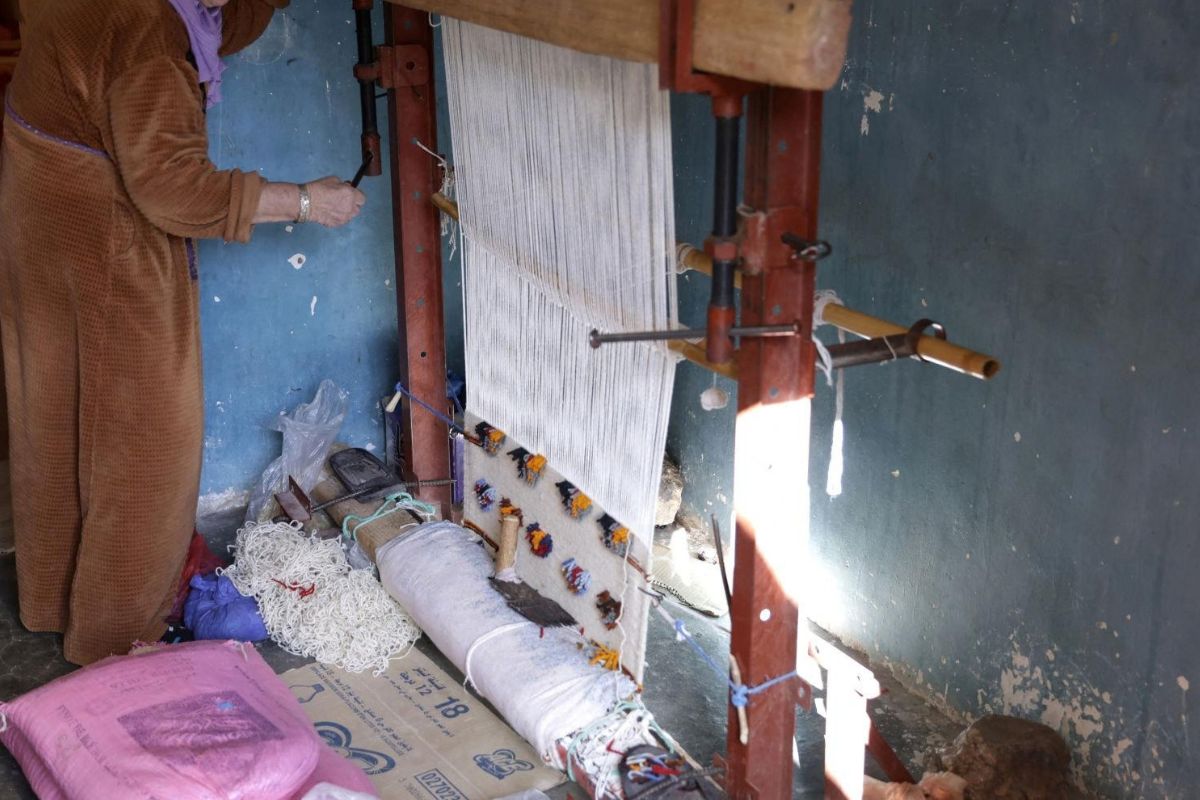
Weeks, usually, and sometimes months, but the published answers disagree because they measure different things. AFP reported in December 2024 that a single carpet takes two to four weeks depending on its size. Africanews reported in July 2025 that it takes several weeks or even months, depending on size and design complexity. Seller pages quote longer figures again, because a seller's lead time counts washing, drying and shipping as well as weaving.
This guide sets out the figures that have actually been published, explains the three different clocks hiding inside the question, and says what the time on the loom does and does not tell a buyer. It does not publish a per-square-foot rate, because no source this site could read supports one.
The published figures, side by side
Every figure below is attributed to the party that published it and was read on 11 September 2026. The two news reports are independent journalism. The two seller figures are self-reported by businesses that sell rugs, and are included because they are the only published stage-by-stage breakdowns found, not because they are verified.
| Source | Figure | What it measures | Date |
|---|---|---|---|
| AFP, via Business Recorder | Two to four weeks, depending on size | Weaving a single carpet, Taznakht | 18 December 2024 |
| Africanews | Several weeks or even months | Completing a single carpet, by size and design | 2 July 2025 |
| Berber Creations (seller) | 6 to 8 weeks for Beni Ourain, 10 to 14 weeks for Beni Mrirt | Production lead time | Undated page |
| Atelier des Atlas (seller) | 194 knot-hours of knotting; 12 weeks from order to delivery | One custom Azilal commission, 280 x 180 cm, two weavers | Undated page |
Read the columns, not just the numbers. The AFP and Africanews figures describe making a rug. The seller figures describe getting a rug to a customer. Those are not the same question, and treating them as the same is where most confusion about this topic comes from.
The three clocks inside the question
When someone asks how long to weave a Moroccan rug, they could mean any of three things.
Clock one: hands-on hours
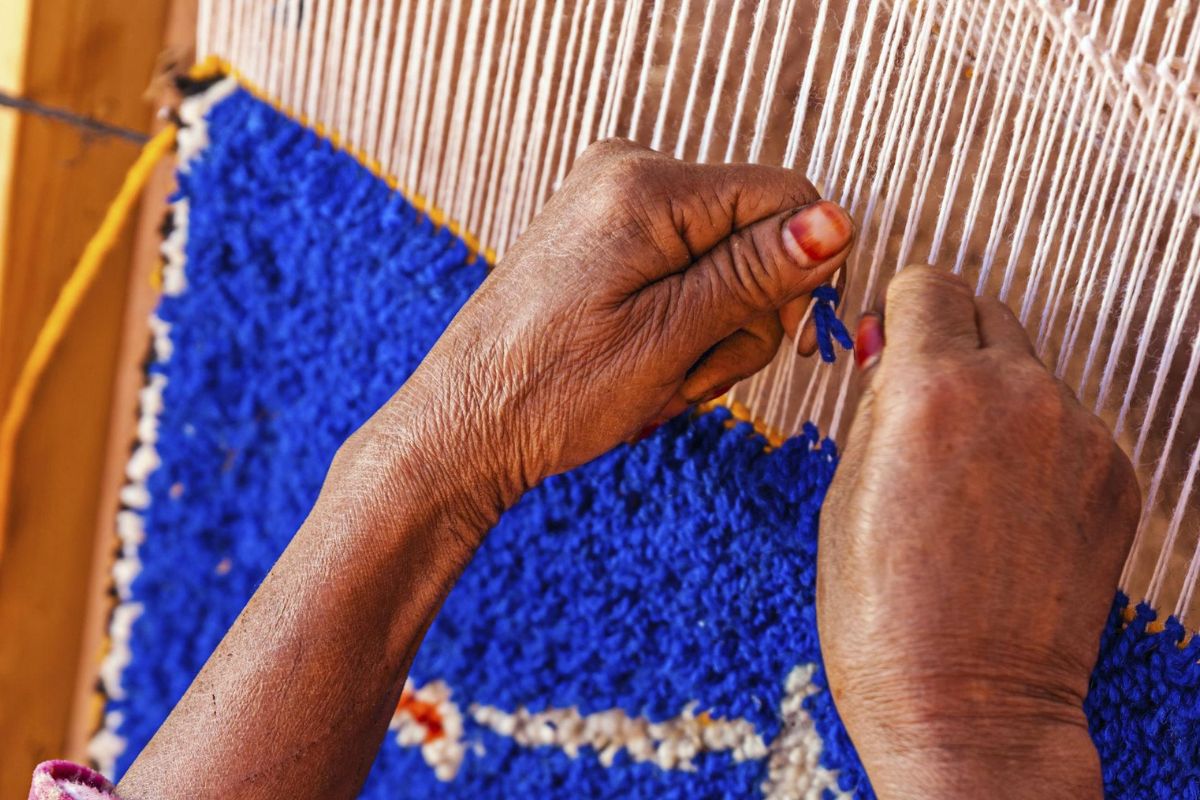
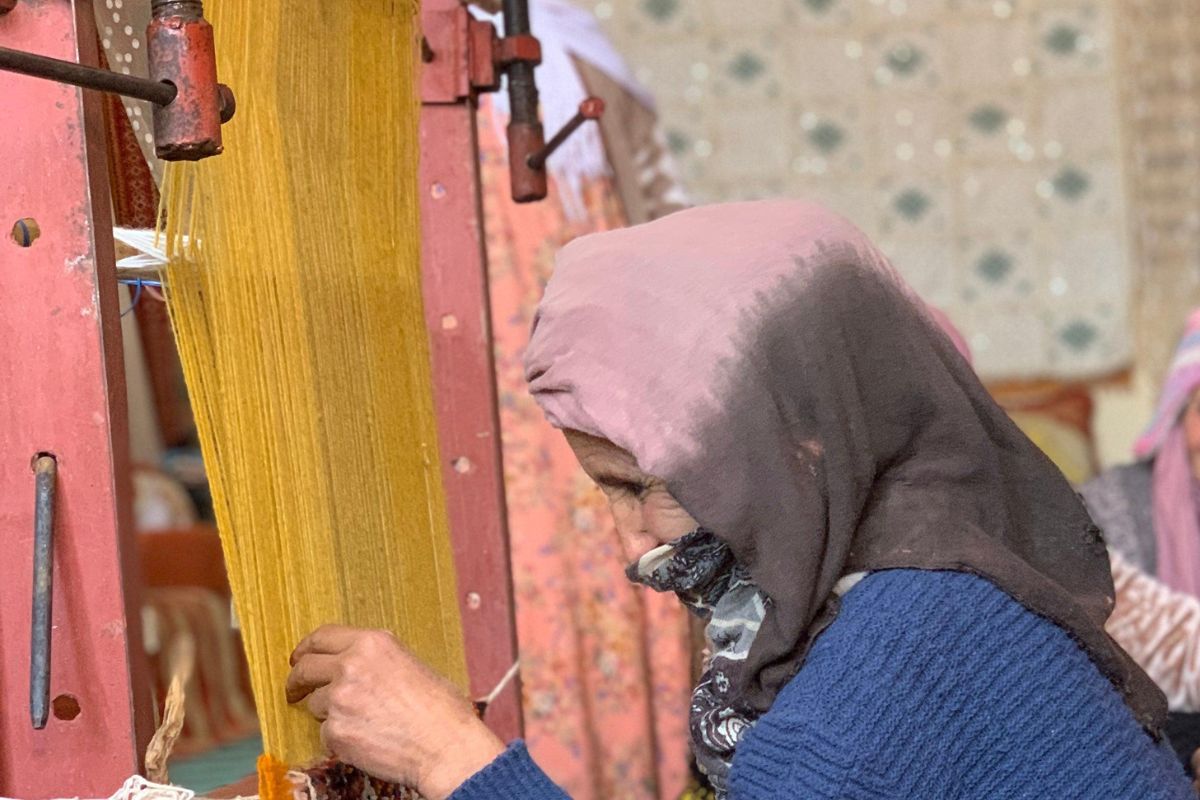
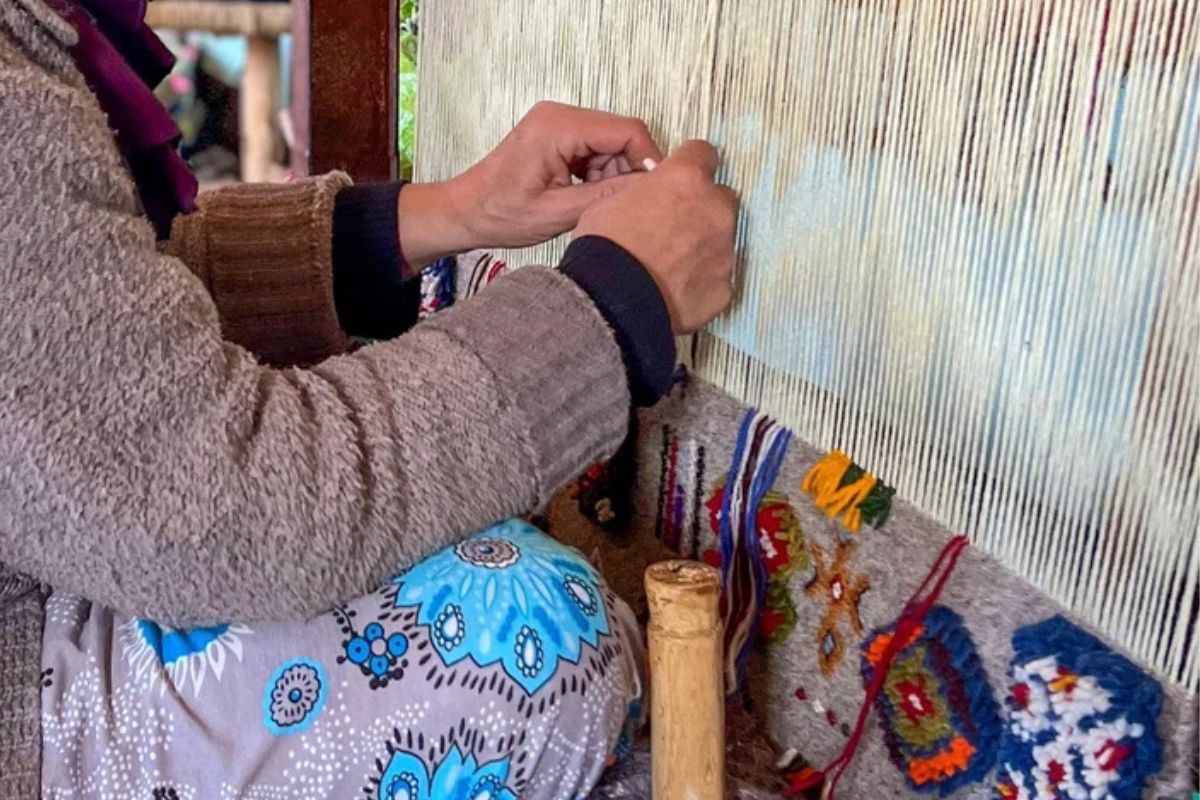
This is the labor itself: warping the loom, tying knots or passing weft, beating each row down, finishing the ends. It is the number that matters most for thinking about the weaver's work, and it is almost never published.
The one detailed breakdown found comes from Atelier des Atlas, describing a single commission. It lists about 15 hours of setup (shearing and scouring, warping 560 warp threads, dye preparation), 194 hours of knotting logged in five two-week blocks of 35 to 42 hours each, and about 24 hours of finishing, including securing the fringe, a sun-bleach and drench taking two days with 9 hours of net labor, and shearing the pile level. The seller reports about 50,300 knots in that rug.
Treat that as one seller's account of one rug. It is useful because it shows the shape of the work, not because its totals apply to any other piece.
Clock two: calendar time on the loom
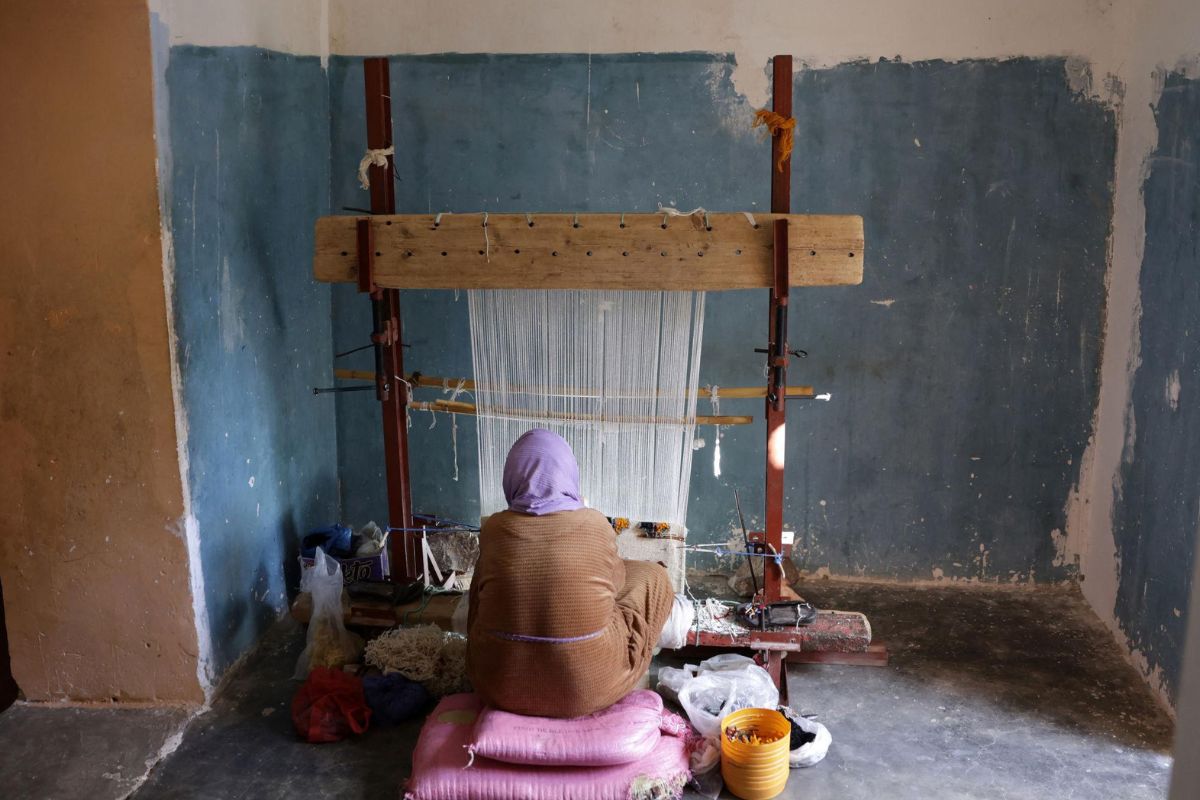
Hands-on hours are spread across real weeks. In the Atelier des Atlas account, two weavers alternated four-hour sessions, and the knotting still ran across ten weeks. A weaver is rarely at the loom for full days every day, and the calendar time depends on how many people share the loom and how many hours a week they can give it.
This is why "two to four weeks" and "months" can both be accurate. A smaller rug with two weavers working steadily finishes in weeks. A large, dense piece worked by one person in the time she has available takes much longer.
Clock three: order to door
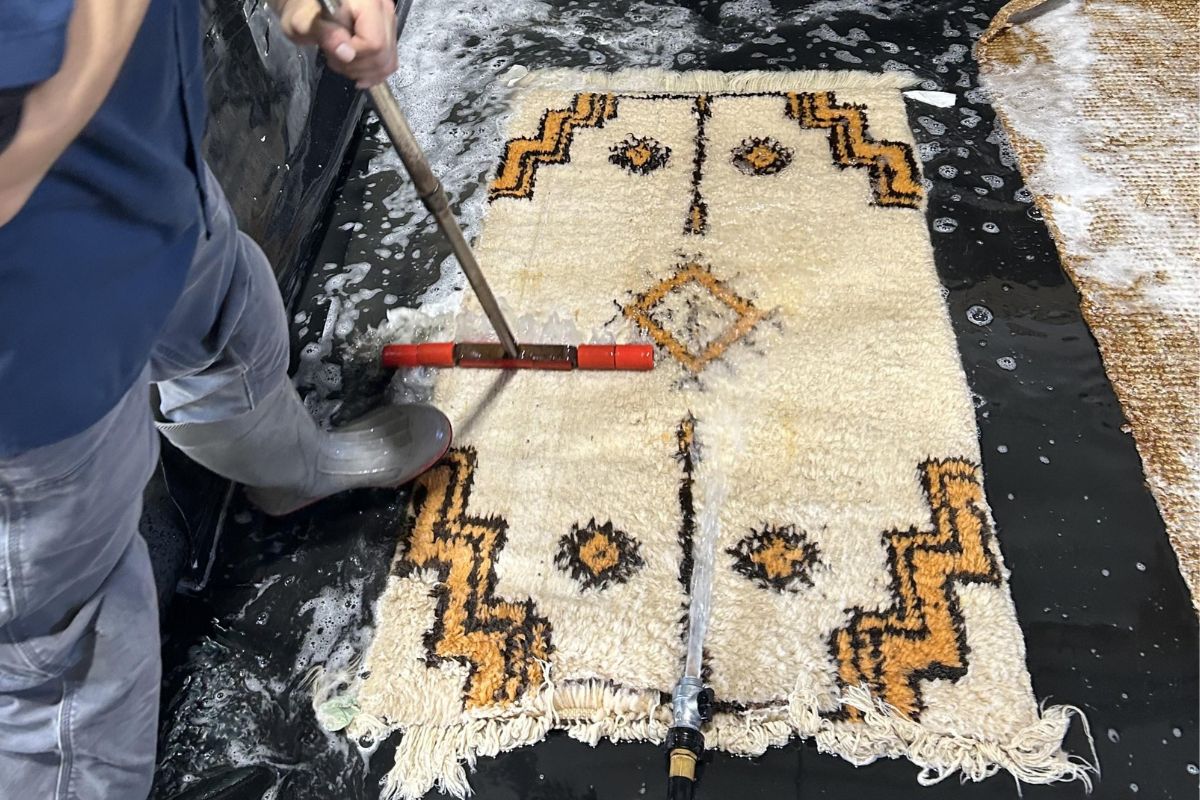
A seller's lead time adds everything after the last knot. Berber Creations lists the factors that extend its timelines: size, design complexity and knot density, custom dyeing with natural dyes, and weather, because winter conditions in the Atlas slow the drying of wool and finished rugs. Washing, drying, inspection and international shipping all sit on this clock, and none of it is weaving.
When a seller quotes twelve weeks, that is a delivery estimate. It is not a claim that a weaver spent twelve weeks at the loom.
What makes one rug take longer than another
The factors below come up in every source that explains its figure, news and seller alike.
Size. The most consistent factor. Both AFP and Africanews tie time to size first.
Knot density and pile. More knots per square inch means more knots to tie in the same area. A dense Beni Mrirt is quoted by the same seller at roughly half as long again as a looser Beni Ourain, which fits the construction difference between the two. What knots per square inch really tells you covers why that measure is contested.
Design complexity. Africanews names the complexity of the design alongside size. A plain field with a few lines is faster than a field packed with motifs that change color row by row.
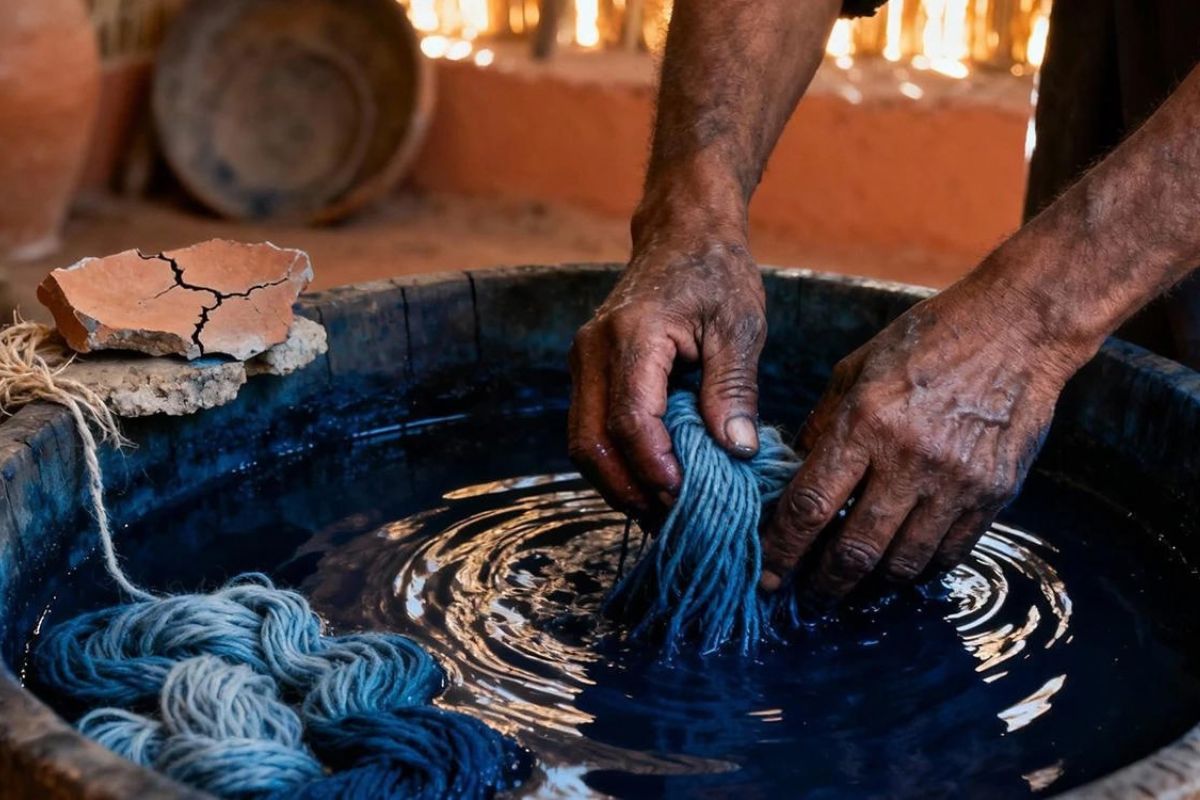
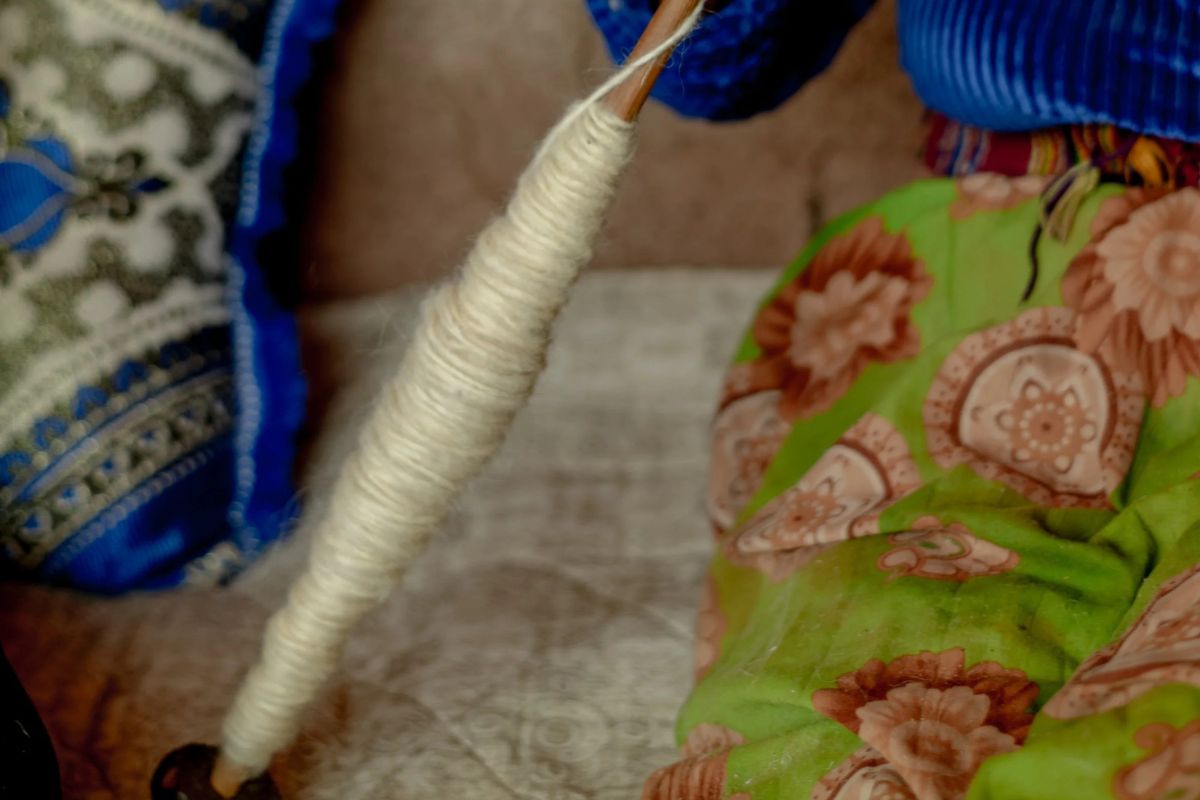
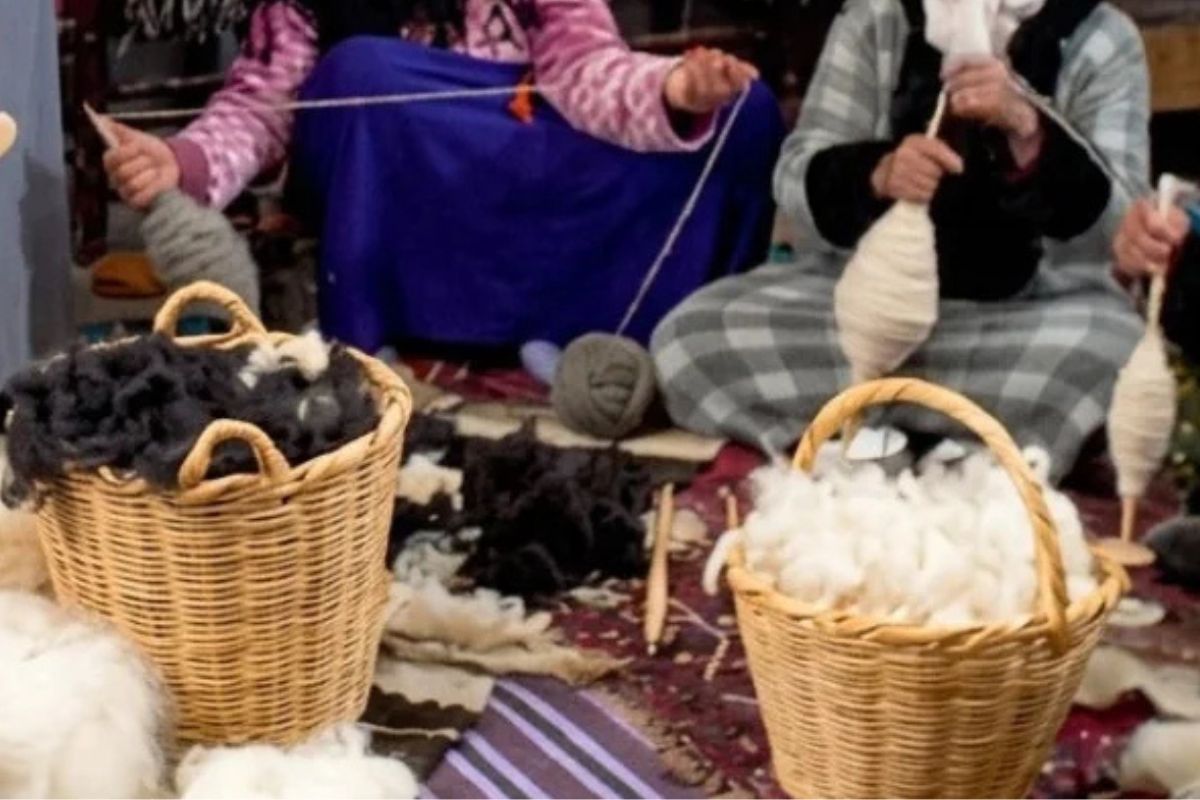
Wool and dye preparation. Hand-washed, hand-spun and plant-dyed yarn adds time before weaving starts. Whether that stage is counted at all varies by source.
Number of weavers. Two people at one loom shorten the calendar, though not the total hours.
What the time tells a buyer, and what it doesn't
Time on the loom is part of why a hand-knotted rug costs what it does, and what actually drives a Moroccan rug's price covers it alongside wool, size and the chain of sellers. But the link between weaving time and what the weaver is paid is weak. AFP's same report describes a large rug that took weeks to make selling at a weekly market for about 250 dirhams, roughly 24 US dollars at the time. The time is real. It is not what sets her price.
Weaving time is more useful as a plausibility check on a claim.
- A custom order promised in days is either coming from existing stock or is not being hand-knotted to order. Either may be fine, but you should know which.
- "Took a year to make" on a mid-size rug is a claim worth asking about. No source this site read supports a figure like that for an ordinary piece, though very large or unusually dense work could run long.
- A lead time with no breakdown tells you nothing about the weaving. Ask how much of it is weaving and how much is washing, drying and shipping.
These are all questions a good seller can answer, and they belong alongside the questions worth asking any rug seller.
Why this guide does not publish a formula
Some pages offer a rate: so many hours per square foot, or so many knots per day. This site does not, for three reasons. No independent source it could read publishes one. The figures that do exist come from single commissions described by sellers. And the variables above, especially density and how many hours a week a weaver can work, move the answer too much for one number to be honest.
What can be said with confidence is the range the reporting supports: weeks for a typical rug, longer for large or dense pieces, and delivery lead times that are longer again because they measure more than weaving.
FAQ
How long does it take to weave a Moroccan rug?
AFP reported in December 2024 that a single carpet takes two to four weeks depending on size. Africanews reported in July 2025 that it takes several weeks or even months, depending on size and design. Large or densely knotted pieces take longer.
Why do sellers quote longer times than news reports?
A seller's lead time usually counts washing, drying, finishing and shipping as well as weaving. News reports on Taznakht describe the weaving itself. They are measuring different things.
Does a Beni Mrirt take longer to weave than a Beni Ourain?
One seller quotes 6 to 8 weeks for a Beni Ourain and 10 to 14 weeks for a Beni Mrirt, citing the Beni Mrirt's higher knot density. That is a seller's lead time rather than an independent measurement, but the direction fits the construction difference.
Does a longer weaving time mean the weaver was paid more?
Not necessarily. AFP reported large rugs selling at a weekly market for about 250 dirhams, often to middlemen who set the price. Weaving time is real labor, but in that market it is not what sets the weaver's price.